Hosts serving repeated hot drinks
If tea and coffee orders arrive close together, heating, selectable pour volumes and the amount of water available between refills matter more than a long list of filtration stages.


Choose an electric countertop water purifier by the drinks you expect to serve, not by filtration-stage count alone. For repeated hot drinks, look at heating, serving volumes and refill needs; for mixed preferences, consider hot and cold output or removable pitchers. A compact portable system can suit occasional drinking-water service, provided its ready-to-pour capacity and filter upkeep fit your plans.
If tea and coffee orders arrive close together, heating, selectable pour volumes and the amount of water available between refills matter more than a long list of filtration stages.
Hot, cold and room-temperature options may be useful when guests want different drinks. A removable purified-water pitcher also lets you take water to the table or chill it separately.
An installation-free system may appeal if you want filtered drinking water without changing pipework. Check the exact model’s claims against your water supply and the quantity you expect to serve.
Start with the drinks guests are likely to request, then check how much purified water the appliance can actually provide before the next refill.
| Concern | What to check | Who this matters to |
|---|---|---|
| Repeated hot drinks | Check the selectable temperature and pour volumes. Keep feed-tank capacity separate from the amount of purified water ready to dispense. | When several guests ask for tea or coffee close together, I want controlled hot pours without frequent pauses. For around 46% of consumers, keeping hot drinks moving would be the primary concern. |
| Different serving temperatures | Confirm whether the unit produces cold water rather than only room-temperature water, and check removable pitcher capacity. | If guests prefer different temperatures, I want a way to serve each drink without preparing separate containers. Around 27% of consumers would put that flexibility first. |
| Portable filtration | Check ready-to-pour capacity, replacement-filter availability and the scope of claims for the exact model and filter. | For occasional visits, I may care more about an installation-free unit and understanding its filtration claims than instant heating. That would be the main priority for around 27% of consumers. |
A large raw-water tank does not tell you how much purified water is immediately available. Filtering and refilling can interrupt a busy round of drinks.
Compare the stated purified-water capacity and dispensing rate with the number and size of drinks you plan to serve; check how the model handles reject water.
A contaminant-reduction claim does not establish the condition of an individual property’s water or replace the checks needed for a private supply.
Check the test or certification scope for the exact model and filter. If you have a water-quality concern, establish whether the property has a public or private supply and contact the relevant supplier or local authority.
Filters need replacing on the applicable schedule, which may depend on use and water conditions.
Check which cartridges the model requires, the stated replacement intervals and whether the replacements are available where you shop.
No-plumbing setup does not remove the need for safe electrical use, and hot dispensing can cause burns.
Follow the model’s placement, first-use and cleaning instructions. Check for a child lock if children may be present, and do not use a damaged cord or plug.
The K19-H is a no-plumbing countertop RO option for hosts focused on hot drinks.
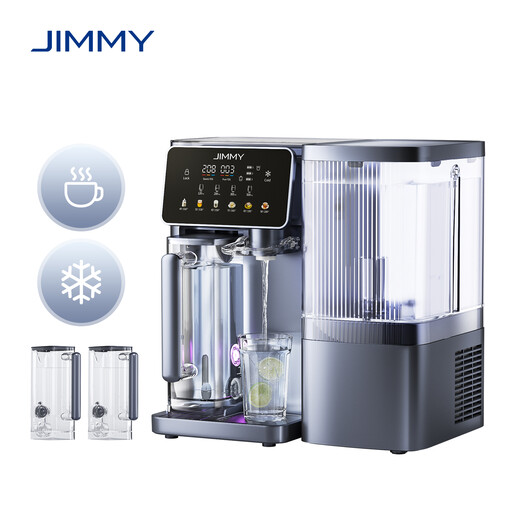
The R9 Pro combines hot, cold and ambient output with removable pitchers for varied guest preferences.
The Classic is a portable countertop RO option for preparing ordinary drinking water without installation.
The Countertop RO SMR is a compact, no-plumbing route with hot and room-temperature water.
These countertop RO options suit serving guests who want a choice of water temperatures. Compare the water available to pour, pitcher arrangement and hot-water safeguards against the way you host.
 No image available
Consider this model if guests want hot, cold or room-temperature water and you would use removable pitchers for serving.
The product title lists a 5.5 L raw-water tank, two 1 L pitchers, seven-stage filtration and UV sterilisation. The raw-water capacity is not the amount ready to pour; check dispensing capacity against the size of your gatherings.
Follow the hot-water safety instructions, particularly when children are present, and check the exact model’s filtration claims and replacement-filter requirements.
 No image available
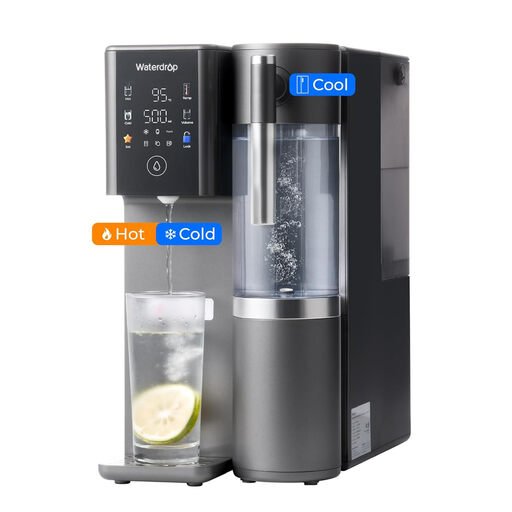
Consider this model if hot and cold requests are both likely and a detachable purified-water pitcher would help with serving.
The product title lists six temperature settings. Confirm the settings for this exact variant before relying on a particular serving temperature, and check pitcher capacity against the number of guests.
Check dispensing capacity, replacement-filter requirements and the scope of any filtration claims before choosing it for regular gatherings.
Not necessarily: a countertop purifier may be a choice about taste or serving convenience rather than a response to a known water problem. The Drinking Water Inspectorate reported that 99.98% of public supplies in England met regulatory standards in 2020–2022; that figure does not assess the water or plumbing at an individual property.
Do not rely on a domestic countertop appliance as a substitute for establishing a private supply’s condition. For private supplies in England and Wales, the Drinking Water Inspectorate says supplies must meet regulatory quality standards and local authorities monitor them through risk assessments and monitoring. If your property uses one, establish its testing and oversight before serving guests.
No: it means permanent pipework is not required, but preparation may still be necessary. Tappwater’s Countertop RO SMR instructions describe inserting the cartridge, filling the tank and flushing the unit before use; follow the first-use instructions for the exact model you buy.
Check the cartridge types, stated replacement intervals and availability for the exact purifier. Waterdrop states up to 12 months or 1,100 gallons for its K19RF filter, while JIMMY states different intervals for the R9 Pro’s pre-filters and RO membrane; usage and water conditions can affect replacement timing.
Follow the appliance’s hot-water safeguards and instructions, with adult supervision for children. The JIMMY R9 Pro listing warns about burns and damaged cords or loose sockets, while JIMMY lists a child-lock function for that model. Do not assume another purifier has the same controls.