What matters when choosing
For a short rice-cooking break, decide why you want filtered water before choosing between room-temperature and instant-hot dispensing. Either way, the water quantity and the routine of filling and maintaining the unit matter.
Instant-hot countertop purifier
Consider it when: You regularly want filtered hot water before transferring it to a rice cooker or pan.
Keep in mind: A temperature setting and a preset dispense do not establish that one dispense supplies your whole rice portion.
Room-temperature countertop purifier
Consider it when: You only need filtered water to add to a cooker or pan that will heat it.
Keep in mind: Check the purified-water container against your usual portion and allow for the separate cooking step.
No additional purifier
Consider it when: Your sole reason is a general concern about the safety of normal public mains water for cooking in England or Wales; the Drinking Water Inspectorate says that supply must be wholesome for cooking.
Keep in mind: This does not rule out filtering for a specific preference. Water that looks or smells abnormal calls for a supply enquiry, not reliance on a purifier.
| Concern |
What to check |
Who this matters to |
| Purpose of filtering |
Identify whether taste, odour or hardness is your concern, then check the exact model's filtration claims and compatible cartridge. |
If I want cooking water to meet a particular taste preference, I need to know what I expect the filter to change; around 42% of consumers put filtration and taste first. |
| Preparation speed |
Compare selectable temperatures and dispensing volumes with the water quantity and cooking method you use. |
On a short break, I want to avoid a separate water-heating step before starting the rice; roughly 33% of consumers put preparation speed first. |
| Refilling and upkeep |
Distinguish feed-tank from purified-water capacity, and check cartridge availability and how reject water is handled. |
I would rather not stop mid-preparation to refill a tank or find that the right cartridge is hard to obtain; about 25% of consumers chiefly prioritise refilling and upkeep. |
Joybuy countertop options
These two Joybuy models are countertop reverse-osmosis purifiers with hot-water dispensing. They suit a no-plumbing rice-preparation routine if their water capacity and controls match the way you cook; neither replaces the rice cooker or pan.
 No image available
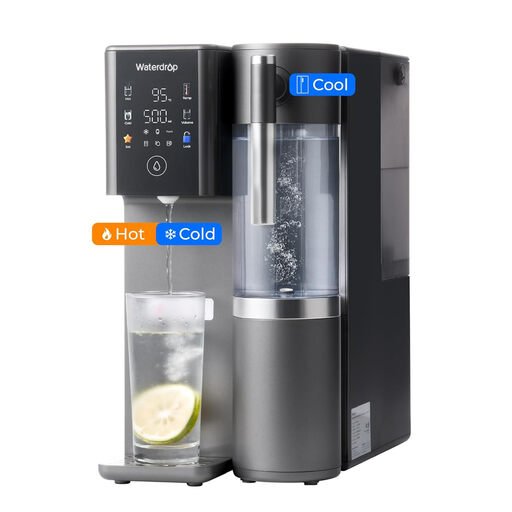
Waterdrop WD-A2 countertop RO system with portable tank
Consider this manually filled model if you want filtered water and hot-water dispensing without plumbing changes.
The product name states six temperature settings and a 3:1 pure-to-drain ratio. Check the selectable temperatures against your method, whether the detachable purified-water container holds enough for your rice portion, and which replacement cartridge it uses.
View on Joybuy
 No image available
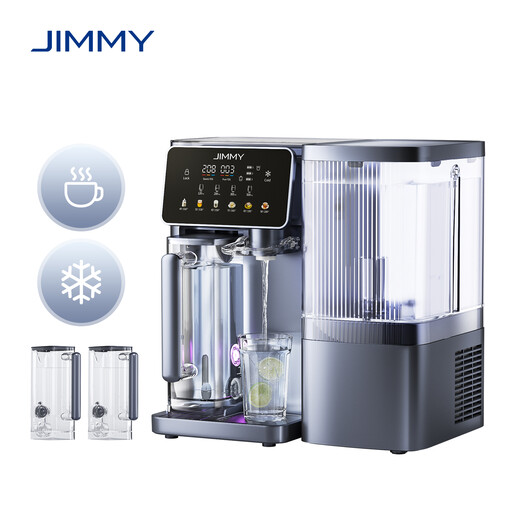
JIMMY R9 Pro countertop RO purifier with two 1 L pitchers
Consider this no-plumbing model if carrying purified water to a rice cooker or pan in separate pitchers suits your kitchen routine.
Its product name states seven-stage filtration, a 5.5 L tank, two 1 L pitchers and hot and cold dispensing. Confirm what the 5.5 L capacity measures, the available temperature and volume settings, and the compatible replacement filter before choosing.
View on Joybuy
Common questions
Do I need a purifier to make tap water safe for cooking rice?
Not generally for normal public mains water in England and Wales: the Drinking Water Inspectorate says water companies must supply wholesome water suitable for cooking, and additional home treatment is not needed as a health-protection measure. You may still choose to filter water for a specific taste or other preference.
What if my tap water looks cloudy or smells unusual?
Do not rely on a countertop purifier to identify or correct the cause. GOV.UK advises contacting your water company about abnormal supplied water, or your local council if you use a private supply.
Can an instant-hot purifier cook the rice for me?
No. It dispenses filtered water; you still cook the rice in a cooker, pan or other cooking appliance. Compare the model's temperature and dispensing volumes with the quantity your method calls for.
Will countertop reverse-osmosis purifiers all need the same filter?
No; choose the replacement cartridge specified for the exact model. Manufacturers give model-specific replacement guidance, so check the cartridge identity, stated change interval and availability before choosing the appliance.
Do I need to connect a manually filled countertop model to plumbing?
Not if the particular model is specified as installation-free and manually filled. Waterdrop describes its C1H and K19-H that way, and AquaTru lists Classic as requiring no installation; follow the instructions for the model you choose rather than applying that description to a plumbed-in unit.


