Stereo-focused hobby-room listener
You usually listen from the same chair or workbench and can make space for left and right speakers. Where the speakers and your seat can go is central to your choice.


For country music in a hobby room, choose the setup around where you listen, how you play music and how much equipment you want to accommodate; the genre alone does not call for a particular speaker type. A powered stereo pair suits a regular listening position if there is room for two speakers, while one wireless speaker keeps the initial setup compact. Passive bookshelf speakers are another stereo option if you have, or want to choose, a compatible amplifier and speaker cable.
You usually listen from the same chair or workbench and can make space for left and right speakers. Where the speakers and your seat can go is central to your choice.
You mainly play music from a phone, streaming service or computer and would rather keep the setup compact than add a separate amplifier and speaker cabling.
You already have an amplifier, or want to choose one separately, and are comfortable making room for speaker cable and the additional setup.
Decide whether you need a left-right listening arrangement or a compact single-speaker setup, then check how your music sources will connect. For passive speakers, include the amplifier and cabling in that decision.
Choose it when: You have positions for two speakers and want stereo playback without selecting a separate amplifier. KEF describes its LSX II LT as a compact pair with built-in amplification.
Allow for: Two speaker positions and mains power; check whether the supplied interspeaker cable reaches your proposed layout.
Choose it when: Compact placement and playback from a phone or streaming service take priority over a two-speaker layout. Sonos Era 100 is one Wi-Fi and Bluetooth example.
Allow for: Sonos says Era 100 needs Wi-Fi setup before Bluetooth use; creating a stereo pair later requires a compatible matching speaker.
Choose it when: You already own an amplifier or specifically want to select the amplification separately. Q Acoustics describes its 3010c as a compact passive pair.
Allow for: A compatible amplifier, speaker cable and a connection from your music source; the speakers alone are not a complete playback system.
| Concern | What to check | Who this matters to |
|---|---|---|
| Stereo layout | Measure two speaker positions and your usual seat. KEF suggests starting with speakers 1,800–2,400 mm apart and a roughly equal speaker-to-listener distance; follow the manual for the model you choose. | If I usually listen from one seat, I want to know whether the room can accommodate a left-right arrangement. Around 31% of consumers put that stereo layout first. |
| Everyday playback | Check whether your preferred phone or streaming method needs Wi-Fi, an app or another setup step. Sonos says Era 100 needs Wi-Fi setup before Bluetooth use. | When I put music on during a hobby session, I want a straightforward way to start listening without arranging separate components; around 31% of consumers prioritise that simplicity. |
| Source connections | List the devices you intend to use and match each to an input. For analogue line-in on Sonos Era 100, Sonos specifies a Line-In Adapter or Combo Adapter. | If I need to connect an existing computer, television or analogue source, that connection may determine which setup I can use. Around 23% of consumers make source compatibility their primary concern. |
| Space and components | Check where the speakers and any amplifier will sit, and account for required cables, adapters and stands. A passive pair also needs compatible amplification. | With limited shelf space, I need the whole system to fit—not just the speakers. For around 15% of consumers, space and the required components come first. |
A single speaker may suit casual listening, but a left-right stereo arrangement calls for two compatible speakers and space to separate them.
Decide whether you normally listen from one seat or move around the room. If a stereo pair matters to you, measure the proposed positions and check what is included in the purchase.
Q Acoustics 3010c is a passive speaker pair, whereas KEF LSX II LT has amplification within its speakers. Comparing the speakers alone overlooks what is needed to play music through each setup.
Check the complete set of components for either route, including amplification where required, source connections, cable and any stands.
Sonos says Era 100 must be set up on Wi-Fi before Bluetooth use. Its analogue line-in connection requires a compatible Sonos adapter.
Write down the devices you will connect, then check the exact input, adapter and setup requirements for the model you intend to buy.
A planned stereo pair is useful only if you can position both speakers in relation to your listening seat. KEF recommends experimenting with spacing and positioning.
Measure the available surfaces before choosing speakers or stands. Start with a roughly symmetrical layout and use the chosen model's manual when adjusting its position.
KEF's LSX II LT illustrates the compact powered-stereo route: it is sold as a pair with amplification in the speakers.
Sonos Era 100 illustrates a compact Wi-Fi and Bluetooth speaker that can be joined by a compatible matching speaker for stereo later.
Q Acoustics 3010c illustrates the compact passive-bookshelf route for listeners choosing their own amplification.
These products offer different ways to play music in a hobby room: tabletop or portable wireless speakers, and passive bookshelf pairs for a separate-amplifier setup. Check the number of speakers included if you intend to create a left-right pair.
 No image available
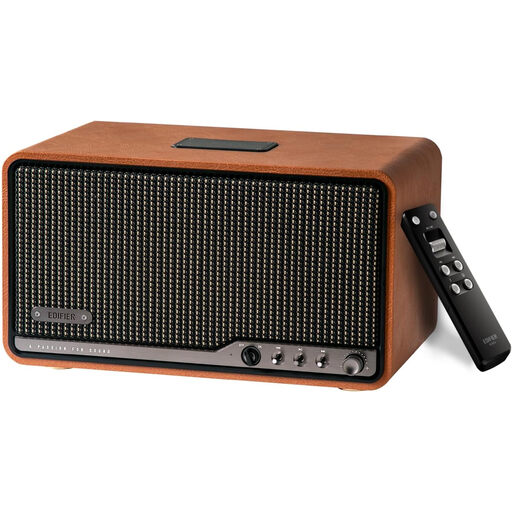
A tabletop wireless option for music in the hobby room. If you want separate left and right speakers, check how many S300 units this purchase includes and what is needed to pair two.
 No image available
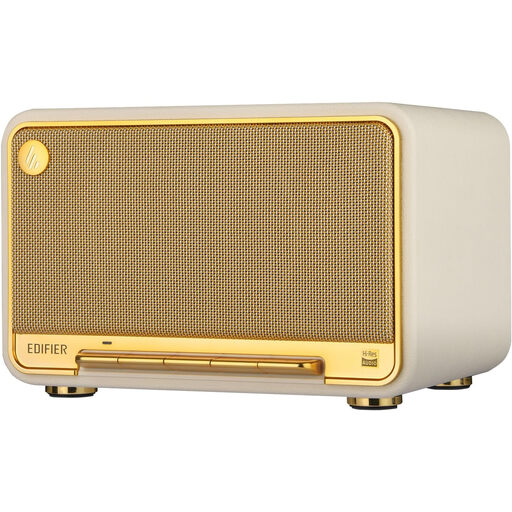
Consider this tabletop model if you want wireless playback alongside the USB-C and AUX inputs named in its title. It also lists Bluetooth 5.3, AirPlay 2, a 2.1 acoustic architecture and 60 W (RMS); confirm stereo-pair support and the applicable battery playtime if either affects your choice.
 No image available
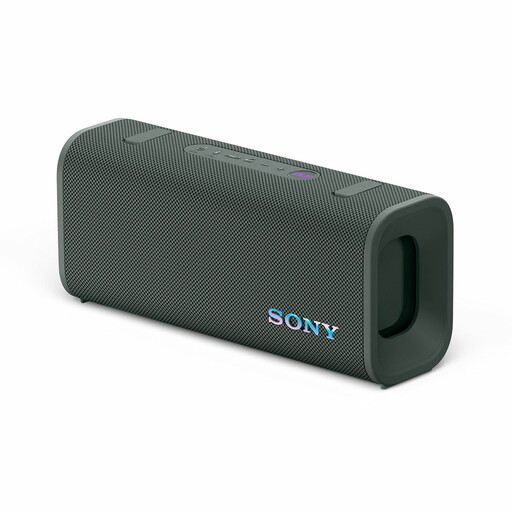
A portable wireless choice if you want to use the speaker in the hobby room and move it elsewhere. If your aim is a left-right arrangement, allow for a second ULT Field 3 and suitable space for both.
 No image available
A pair to consider if you already have, or plan to choose, a separate amplifier. The title lists a 6.5-inch mid-bass driver, 28 mm tweeter and 8-ohm impedance; check amplifier compatibility and whether speaker cable is included.
No image available
This passive pair suits a hobby-room setup built around a separate amplifier. Check amplifier compatibility, speaker placement and whether the cable needed to connect the pair is included.
Choose speakers for your room layout, listening position and music sources rather than a genre label. Also decide whether you want a single wireless speaker, a powered stereo pair or passive speakers with a separate amplifier.
Start with a roughly symmetrical arrangement around your usual listening position. KEF suggests trying speakers 1,800–2,400 mm apart, with a similar distance from each speaker to the listener; adjust the layout using the manual for your chosen model.
Yes, Sonos supports stereo pairing with two compatible Era 100 speakers. Sonos recommends spacing paired speakers 8–10 feet apart, so check whether your hobby room has suitable positions before planning to add the second speaker.
A turntable with a suitable line-level output can connect through a Sonos Line-In Adapter or Combo Adapter at the Era 100's USB-C port. Check whether your turntable has a built-in phono preamp or needs a separate phono stage.