Detail-focused country listeners
If you want to follow vocals, acoustic guitar and fiddle across a stereo image, you may be willing to make room for two deliberately positioned speakers rather than use one box.


Choose two separated speakers if following vocals and instruments across a stereo image matters most and your room has space for both. An active pair avoids a separate amplifier; passive bookshelf speakers need one, while a single app-based speaker offers a simpler one-box arrangement. Check placement and connections before choosing any of them.
If you want to follow vocals, acoustic guitar and fiddle across a stereo image, you may be willing to make room for two deliberately positioned speakers rather than use one box.
If most listening starts on a phone or computer, or the speakers will also serve a TV, you may prefer amplification and everyday connections in one compact system.
If walls, shelving or furniture restrict where speakers can go, check cabinet fit and leave yourself room to adjust their positions. KEF’s placement guidance notes that rear-ported speakers are particularly sensitive to distance from a wall.
Choose when: You want two-speaker stereo and have room for a separate amplifier and speaker cable.
Trade-off: You must accommodate and connect those extra components; a rear-ported model also calls for care near a wall.
Choose when: You want left and right speakers without adding a separate amplifier.
Trade-off: Both speakers still need suitable positions, and you must check the system’s built-in connections against your sources.
Choose when: Convenient wireless playback matters more than a separated stereo layout, or you have space to add a compatible matching speaker.
Trade-off: A single unit does not give you two separated speaker positions; pairing and analogue connections may require another speaker or an adapter.
| Concern | What to check | Who this matters to |
|---|---|---|
| Placement and bass | Measure the available speaker positions and check the exact model’s wall-clearance guidance, especially for a rear port. | If my speakers must sit close to furniture or a wall, I need a layout I can adjust without losing useful living space. Around 29% of consumers put placement first. |
| Simple setup | Decide whether you want built-in amplification, then check the streaming methods you actually use. | I mainly play music from my phone and would rather avoid separate electronics and extra cables. Around 29% of consumers make setup simplicity their main concern. |
| Stereo separation | Check whether two speakers and the listening seat can form a reasonably balanced layout. | When I listen closely to a vocal alongside acoustic instruments, I want room to position distinct left and right speakers. Around 24% of consumers prioritise stereo separation. |
| TV and other sources | Match each source’s output to a speaker or amplifier input; confirm HDMI ARC support on the TV if you plan to use it. | My speakers also need to handle a TV, computer or another music source, so a missing connection could rule out an otherwise suitable setup. Around 18% of consumers put source compatibility first. |
A speaker that fits on a shelf may still be awkward to position. KEF’s placement guidance notes that rear-ported designs can be more sensitive to the distance from a rear wall.
Measure the usable positions before ordering, consult the model’s placement guidance and allow room to adjust both speakers.
Stands or brackets may be needed if the available furniture cannot support a workable layout.
Passive bookshelf speakers need external amplification. KEF specifies a 10–150W amplifier requirement for its Q1 Meta; an active system such as the LSX II LT has amplification built in.
Check amplifier compatibility and account for speaker cable and a place for the electronics before choosing a passive pair.
A two-position stereo layout needs two suitable speakers. Sonos says a stereo pair uses compatible matching models, and analogue line-in on Era 100 requires its Line-In Adapter.
Decide whether you want one-box playback or a spaced pair, then check pairing compatibility, available positions and any adapter needed for your source.
KEF offers different routes for a small-room stereo setup: the passive Q1 Meta bookshelf speaker and the active LSX II LT wireless system.
The 3020c is a passive standmount option for listeners considering a conventional two-speaker system.
Era 100 offers an app-based compact-speaker route that can start with one unit or use compatible matching units as a stereo pair.
These choices cover a powered speaker pair, passive bookshelf speakers and compact tabletop wireless speakers. Decide whether you need separated stereo before comparing their individual connections and placement needs.
 No image available
Consider this powered speaker set if you want left and right speakers without a separate amplifier. The product title specifies 66W RMS, Bluetooth 5.3, USB-C and AUX inputs; check the TV’s outputs separately if television playback matters.
 No image available
Consider this pair if you can accommodate a compatible amplifier and want to position two speakers for stereo listening. Its title specifies a 6.5-inch mid-bass driver, 28mm tweeter, rear bass reflex, 8 ohms and a 10–120W amplifier range. Check the speakers’ fit and placement guidance before putting them close to a wall.
 No image available
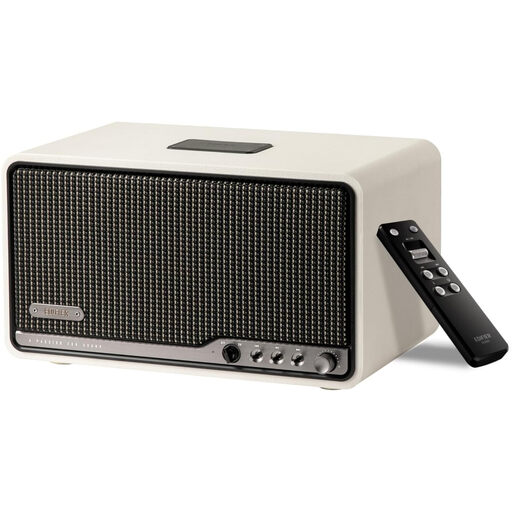
Consider the S300 if a single tabletop speaker suits your available space and wireless playback is the priority. This choice is one speaker; if you want a separated left and right arrangement, check the pairing requirements and space needed for another matching unit.
 No image available
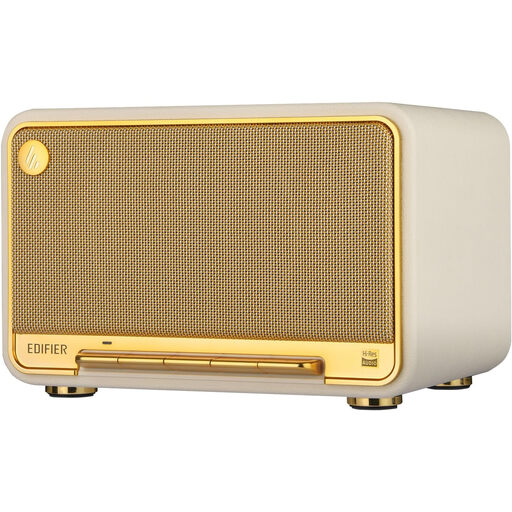
Consider this tabletop option if you want wireless music playback without planning positions for a speaker pair. Its title lists 60W RMS, Bluetooth 5.3, AirPlay 2, USB-C and AUX inputs. Check its dimensions against your surface and confirm the channel arrangement if separated stereo is important.
 No image available
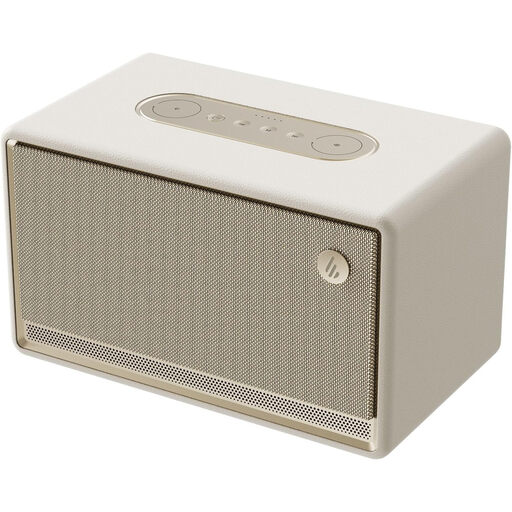
Consider this tabletop speaker when compact wireless playback takes priority over a planned two-speaker layout. Its title specifies Bluetooth 5.3 and up to 12 hours of playtime. Check the cabinet dimensions and channel configuration against your room and listening priorities.
Choose a separated pair if you want to follow vocals and instruments across left and right positions and can accommodate both speakers. A single compact speaker simplifies placement; if you later plan to pair app-based models, confirm compatibility first. Sonos, for example, specifies compatible matching models for its stereo pairing.
They may work, but wall distance needs attention. KEF’s placement guidance says rear-ported speakers are more sensitive to their position relative to walls, so start with the exact model’s instructions and try small adjustments if bass sounds indistinct.
Match the TV’s output to an input on the speaker system or amplifier. KEF specifies HDMI ARC and optical input on the LSX II LT; for an HDMI ARC connection, confirm that your television supports ARC and check its audio settings.
Ask the seller about electrical-waste take-back when buying a replacement. GOV.UK says retailers must offer take-back for waste equipment of the same type as the item purchased; check how the seller arranges it.