What should you check before buying?
Check course software and dependable computer access first. Then compare portability, file protection and connections for the places where you study.
| Priority | What to check | Your needs |
|---|
| Suitable primary device |
Check whether coursework needs a laptop or desktop-class computer, installable applications or substantial document work. Confirm access to a suitable computer if choosing a tablet. |
I need a computer I can use for essential coursework, not just notes. In Jisc’s survey of 15,398 higher-education students at 30 participating UK providers between October 2024 and April 2025, 37% reported lacking access to a suitable device at some point; that describes an access problem, not a preference for a particular laptop. |
| Course compatibility |
Ask your department which applications must run locally and which operating systems they support. Compare the required memory, storage, graphics and ports with the exact configuration; check whether a lab or virtual desktop is a workable alternative. |
My course software needs to run on the computer or through a service I can reliably access. Specialist requirements can override general university device advice, as the University of Warwick and University of York both caution. |
| Campus and home use |
Check the device’s supported operating system, wireless capability, webcam, charging needs and stated weight. Ask your university how its network and online services are accessed. |
I move between study locations and need to get online for teaching and files. In the same Jisc survey of students at participating UK providers, 60% reported Wi-Fi connectivity issues on or off campus; that figure does not rate any laptop’s wireless performance. |
| Coursework backup |
Set up regular copies of important files, keep a copy separate from the laptop and test that you can restore it. The NI Cyber Security Centre recommends three copies on two different devices, with one kept offline. |
If my laptop or a connected drive is lost or fails, I need another usable copy of my work. A single storage location does not meet that need. |
| Shared-desk connections |
Identify the monitor’s connection and any keyboard or mouse connections before choosing ports or an adapter. Check how campus study stations are accessed. |
A larger screen or separate keyboard matters to me when I regularly work at a fixed desk. The University of Portsmouth describes stations for connecting a personal laptop to a monitor, keyboard and mouse. |
Brand ranges worth comparing
A brand name cannot establish course compatibility; compare the operating system and exact configuration of any model you consider.
Apple
A macOS route to consider when your course confirms that its required applications and peripherals work on a Mac.
- Apple UK lists MacBook Air configurations with 16GB unified memory and SSD storage.
- UWE Bristol warns that some specialist university software may require Windows access; MacBook Air specifications alone cannot settle that question.
Lenovo
Lenovo UK lists student laptops alongside other device types, giving you models to compare against your course requirements.
- Its student catalogue includes laptop choices.
- Check the exact model’s operating system, memory, storage, ports and course compatibility rather than relying on a student-range label.
Dell
Dell UK lists student laptops, including 2-in-1 or detachable models for those considering that form factor.
- The catalogue lets you identify convertible models to compare with conventional laptops.
- A retail category does not establish whether a particular model runs your course software or connects to your intended display.
HP
HP UK lists laptop configurations that vary in memory and storage, so the specific model matters more than the brand label.
- HP UK’s laptop listings include configurations with different memory and storage capacities.
- Compare the selected configuration with departmental guidance before treating it as suitable for your coursework.
Joybuy laptop options
These are Windows laptop options for students considering a personal study computer. Check each configuration against your course requirements; a laptop purchase does not replace a coursework backup or confirm that a particular campus display will connect.
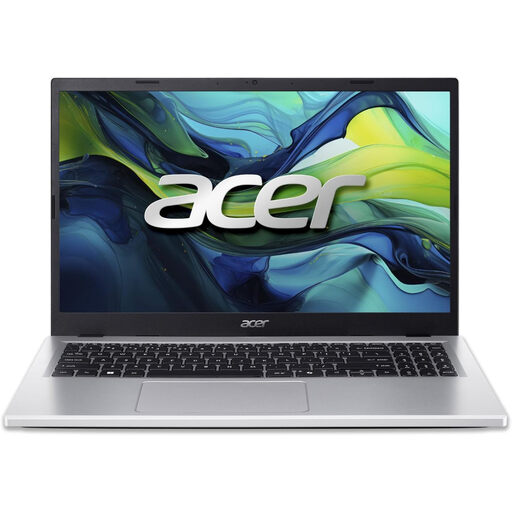 No image available
Acer Aspire Go 15 AG15-71P, Core i5-13420H, 8GB RAM, 256GB SSD
For a Windows primary study computer, compare this 8GB RAM and 256GB SSD configuration with the software and file storage your course requires. It lists Windows 11 Home, a 15.6-inch Full HD display, HDMI, USB-C and a 1.8kg weight; check the connection required by any external monitor and arrange a separate coursework backup.
View on Joybuy
 No image available
ASUS Vivobook 15 X1504VA, Core 5 120U, 24GB RAM, 1TB SSD
If you expect to keep larger course files on your Windows laptop, assess this listed 24GB RAM and 1TB SSD configuration against your actual workload. It has Windows 11 Home, a 15.6-inch Full HD IPS display and HDMI; confirm course software and monitor compatibility, and check battery runtime if you need a particular time away from power.
View on Joybuy
 No image available
Acer Aspire Lite AL15-36P-C29Z, Intel N150, 8GB RAM, 128GB SSD
For a portable Windows study setup, check whether 8GB RAM and a 128GB SSD accommodate your required applications and files before choosing this configuration. It lists Windows 11 Home, a 15.6-inch Full HD display, HDMI and a 1.53kg weight. Confirm the connection for your display and keep coursework backed up separately.
View on Joybuy
 No image available
Lenovo IdeaPad Slim 3 83K7009MUK, Ryzen 5 7535HS, 24GB RAM, 512GB SSD
Students comparing Windows configurations for course files can assess this model’s listed 24GB RAM and 512GB SSD against departmental requirements. It has a 15.3-inch WUXGA display, Windows 11 Home, Wi-Fi 6 and a stated 1.59kg weight. If you plan to use a desk monitor or need a particular battery duration, confirm those details for this model.
View on Joybuy
 No image available
ASUS Vivobook 14 X1407QA-LY003W, Snapdragon X, 16GB RAM, 512GB SSD
For study across locations, consider this listed 1.49kg Windows laptop alongside your screen-size needs. It has a 14-inch WUXGA display, 16GB RAM, a 512GB SSD, HDMI and USB4 Type-C with DisplayPort support. Confirm that every required course application works with this exact Snapdragon X configuration, and check battery runtime if it matters to your schedule.
View on Joybuy
Common questions
Can a tablet be my only university device?
Use a tablet as your only device only if your course confirms it can handle all essential work or you have dependable access to a suitable computer. UCL advises regular access to a laptop or desktop, and Loughborough University warns that the range of software accessible from tablets is limited.
When should I choose Windows instead of a Mac?
Choose a Windows configuration when your department requires Windows applications that you must run locally. UWE Bristol describes Windows as compatible with most of its university and specialist software, while its guidance cautions that Mac access to some applications may require another arrangement; confirm the requirements for your own course.
Can university computers replace a personal laptop?
They may cover some work if your institution provides the right software and access when you need it. Check computer-room hours, loan or virtual-desktop arrangements and off-campus access before relying on them; the University of Portsmouth notes that its study stations are first-come, first-served.
Should I buy a monitor, keyboard and mouse immediately?
Buy them when you expect to use a fixed desk regularly and have checked the necessary connections. The University of Portsmouth describes study stations where students connect their own laptops to a monitor, keyboard and mouse, so check what your campus already offers as well as what your laptop can connect to.
Is cloud storage enough for coursework backups?
Keep another copy of important work rather than relying on one cloud location alone. The NI Cyber Security Centre recommends three copies on two different devices, with one kept offline; set up regular backups and test that you can restore a file.


