
24/7 Customer Support

Free returns

Same-day & Next-day Delivery

Quality Guaranteed

Unlock Your Welcome Offers: FREE Delivery | Up to 80% OFF | Free 30-day JoyPlus trial
Download the APP
Choosing crackers and crispbreads can seem straightforward until you compare ingredients, allergens, pack sizes and intended uses. A product that works for a cheese board may be too fragile for dips, while a snack marketed as “wholesome” may contain more salt or sugar than expected.
This guide from the Joybuy Product Recommendation Officer focuses on practical checks rather than marketing language, helping UK shoppers choose suitable options for lunchboxes, entertaining, everyday snacks and topping with spreads.
Terms such as “wholegrain”, “natural” or “light” do not provide the full nutritional picture. Check the nutrition table per 100g, particularly fibre, salt, sugars and saturated fat. For example, wholegrain rye crispbread can offer a high-fibre option, but flavoured varieties may contain added seasoning, sugar or oil.
A product can also be suitable for a balanced diet without being designed for unlimited snacking. Portion information is useful, especially for cheese crackers, savoury crackers and richer biscuits.
Wheat, rye, barley, oats, milk, sesame, soya and nuts appear regularly in this category. A product labelled gluten-free should still be checked against the pack, particularly if you have coeliac disease or a medically diagnosed intolerance.
Under UK rules, a “gluten-free” claim generally refers to no more than 20 mg of gluten per kilogram. However, shoppers should always read the current packaging, as recipes, manufacturing sites and allergen statements can change.
Thin crispbreads may be convenient for lunchboxes but can break under heavier toppings. Delicate crackers can suit soft cheese, while robust rye crispbread is more appropriate for avocado, hummus or smoked salmon. A large pack may offer value for family use, but it can lose its crunch if not resealed properly.
Look beyond the front of the packet. For gluten-free crispbread, check whether the ingredients are based on rice, corn or other gluten-free grains, and review any “may contain” statement. Schär Gluten Free Crispbread 150g, for example, lists corn flour, rice flour and psyllium vegetable fibre, with no allergens declared in the supplied product information. It is produced in a facility that handles soya.
For rye crispbread, rye may be the only grain or part of a blend with wheat and barley. Ryvita Original lists wholegrain rye flour as its sole ingredient but contains rye and may contain traces of sesame. This makes it unsuitable for people avoiding gluten, despite its simple recipe.
Use per-100g figures to compare products fairly. Ryvita Original provides 16g of fibre per 100g and less than 0.01g of salt, according to the supplied nutrition information. Ryvita Deli Cracked Black Pepper Rye Crispbread lists 14.5g of fibre and 0.56g of salt per 100g.
Flavoured crackers can have a different nutritional profile. Ryvita Fruit Crunch contains currants, seeds and wholegrain cereals, with 11.2g of fibre and 17.6g of sugars per 100g. That may suit shoppers wanting a sweet-fruity crispbread snack, but it is not equivalent to a plain rye product.
For toppings, look for a firm base and a shape that gives enough surface area for spreads. Flatbreads and crackerbreads are convenient for dips and open sandwiches, while small individual portions can work well in lunchboxes or desk drawers.
Once opened, most products should be kept in an airtight container or tightly resealed bag. Moisture is the main cause of lost crispness, so avoid storing crackers beside kettles, sinks or other humid areas.
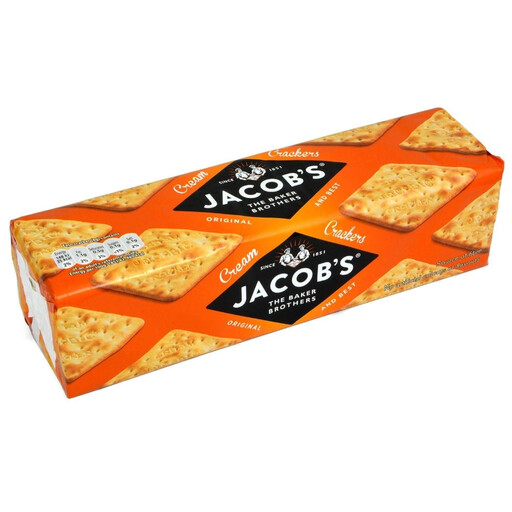
Why This Fits Their Persona: A familiar, neutral-flavoured option for households wanting one versatile pack for soups, lunches, spreads and simple cheese plates.
The 300g pack gives more everyday quantity than many speciality snack packs, while the ingredient list remains short. It is not gluten-free, so the wheat allergen is clear.
Subtle flavour, 300g pack size and 0.6g sugars per 100g according to the supplied information.

Why This Fits Their Persona: A more developed savoury choice for entertaining, grazing boards or shoppers who enjoy cheese and seed toppings in the crispbread itself.
The product details specify the grain, Emmental, seeds and organic ingredients rather than relying only on front-of-pack descriptions. Allergens include wheat, milk, oats, sesame and barley.
Contains 10g of fibre and 18g of protein per 100g, with a 200g pack suited to sharing.

Why This Fits Their Persona: A practical pantry option for shoppers seeking a gluten-free base for avocado, dips, soft cheese or packed snacks.
The supplied details identify corn and rice flours, psyllium fibre and the gluten-free positioning. Check the current pack if cross-contact information is important to you.
Neutral taste, 150g pack and 5g of fibre per 100g, making it adaptable to sweet or savoury toppings.
We have compiled a complete, real-time list of products that fully satisfy these strict selection criteria and UK safety regulations.
Neither category is automatically healthier. Compare fibre, salt, sugars, saturated fat and portion size per 100g. Plain wholegrain crispbread may provide more fibre, while some crackers offer a milder flavour and wider topping compatibility.
Store unopened products in a cool, dry cupboard. After opening, reseal the original packaging or transfer the contents to an airtight container. This helps limit moisture absorption and protects the crunch.
Look for a clear gluten-free statement and read the full allergen information. Products made with wheat, rye or barley are not suitable for a gluten-free diet. Always follow medical dietary advice and check the packaging supplied with your order.