
24/7 Customer Support

Free returns

Same-day & Next-day Delivery

Quality Guaranteed

Unlock Your Welcome Offers: FREE Delivery | Up to 80% OFF | Free 30-day JoyPlus trial
Download the APP
Choosing crackers for a lunchbox, office drawer or family gathering seems straightforward until you compare pack sizes, flavours, ingredients and allergen statements. Marketing language can make a product sound lighter, more nutritious or more versatile than it is.
The most useful approach is to focus on what is clearly stated on the label: ingredients, allergens, nutrition per serving, pack format and storage instructions. Whether you are looking for soda crackers, savoury crackers, rice crackers, prawn crackers or pretzel thins, these details help prevent disappointing purchases.
Baked crackers are not automatically low in energy, fat or salt. For example, the Garden Vegetable Soda Crackers list 476 kcal and 19.4g of fat per 100g, while the baked Nongshim Shrimp Cracker Hot lists 502 kcal and 24g of fat per 100g.
“Baked, not fried” describes the preparation method, but it does not replace checking the nutrition panel. Compare products using the same reference amount, usually per 100g, then check the actual serving size.
Plain or lightly salted crackers may still contain wheat, barley, soya, sesame or milk. Several soda crackers use malt extract, which can contain barley and gluten. Rice crackers may contain milk or soya through seasoning, while prawn and seafood snacks can include crustaceans, fish and flavouring blends.
Always read the bold allergen declaration and the precautionary “may contain” statement. This is particularly important for school snacks, shared platters and households managing food allergies.
A 300g box may offer more portions for sharing, but crackers lose their crisp texture when exposed to moisture. Smaller individually packed portions can be more practical for lunchboxes and work bags. For larger packs, look for a resealable design or transfer the contents to an airtight container after opening.
Start with the first few ingredients. Wheat flour, rice, tapioca starch and potato are common bases, but the seasoning can change the dietary suitability considerably.
A product described as vegan, vegetarian or plant-based should still be checked against the current packaging, as recipes can change.
Per-100g figures make comparisons easier, while per-pack information helps with portion planning. Pay attention to:
Do not assume a thin or airy texture means lower energy. Some light-textured prawn crackers and crisps still have relatively high fat content.
For crackers for dipping, choose pieces that are broad or sturdy enough for hummus, salsa, cheese or soup. Thin crispbreads are convenient for grazing but may break more easily.
For lunchbox snacks, consider:
For parties and picnics, larger packs such as 300g cracker boxes can be more suitable, particularly when served with dips and spreads.
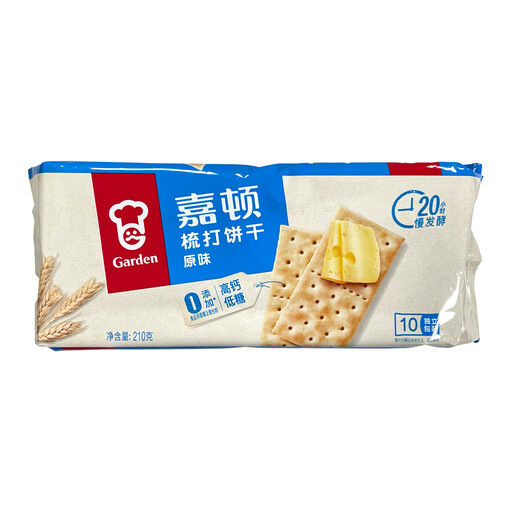
Why This Fits Their Persona: A straightforward everyday option for soup, cheese, dips or simple snacking, with a 210g pack that suits regular household use.
The product information gives clear per-100g nutrition and identifies wheat, soya and barley allergens instead of relying only on flavour descriptions.
Original lightly salted flavour; ready to eat and suitable for pairing with soups, salads, cheese and dips.
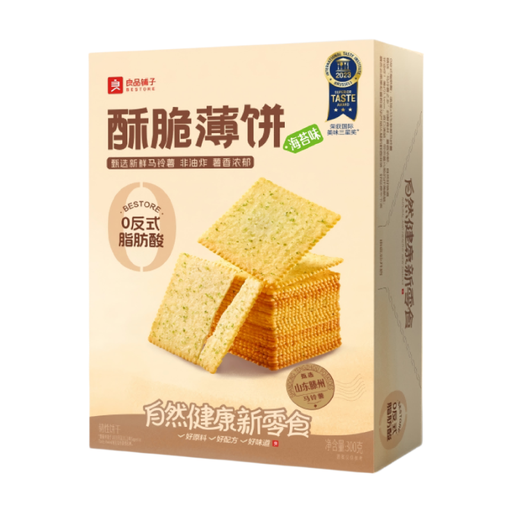
Why This Fits Their Persona: A larger sharing format for shoppers who enjoy Asian snacks, seaweed seasoning and a very thin, delicate crunch.
The 300g quantity is clearly stated, while the allergen list flags wheat, soya, crustaceans, egg and sulphites.
Extra-thin texture; seaweed flavour; designed for sharing, dipping and serving with cheese or spreads.
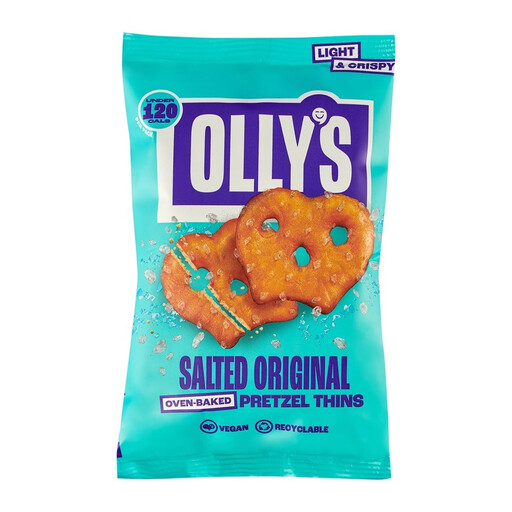
Why This Fits Their Persona: The single 35g pack is convenient for work breaks, lunchboxes, picnics and controlled portion planning.
The pack provides a stated 117 kcal serving and identifies wheat and possible traces of other allergens; the product is oven-baked rather than marketed only by texture.
35g portable pack; 117 kcal per pack; suitable for pairing with hummus, salsa, tzatziki or cheese sauce.
For stronger flavours, consider Nongshim Shrimp Cracker (Hot) 75g x 2pcs. It offers a spicy, kimchi-seasoned profile and is baked, but contains wheat, crustaceans, soya and fish, with possible traces of several other allergens.
We have compiled a complete, real-time list of products that fully satisfy these strict selection criteria and UK safety regulations.
Many are, particularly individually wrapped pretzel thins, rice crackers and small savoury cracker packs. Check the age guidance, choking warnings and allergen information before packing snacks for children. Keep opened crackers sealed to prevent them becoming soft.
Store unopened packs in a cool, dry place away from direct sunlight and moisture. Once opened, reseal the packet or use an airtight container. Follow the product’s specific guidance, as some snacks recommend consumption within a set number of days.
Not necessarily. Rice crackers can feel lighter because of their airy texture, but nutrition varies by oil, seasoning and portion size. Compare the per-100g energy, fat and salt figures rather than relying on terms such as “light” or “crispy”.