Households sharing regular tea breaks
A larger pack is worth considering when several people eat crackers over repeated sittings. Check its net weight against what the household will use, and plan how to store it once opened.


For regular household tea breaks, a larger plain cream-cracker pack makes sense if people will use it and you can store the opened crackers as directed. For an occasional plate of toppings, a smaller table-water biscuit pack may be easier to finish; choose a cracker intended for eating on its own if that is how you plan to serve it. Check the exact pack’s ingredients and nutrition information before sharing.
A larger pack is worth considering when several people eat crackers over repeated sittings. Check its net weight against what the household will use, and plan how to store it once opened.
A plain cream cracker or a subtler table-water biscuit can provide a base for cheese and spreads. The number of guests and the amount left after the visit matter more than a “family pack” description.
When crackers will be shared, compare the ingredients and precautionary allergy statements on the exact packs being served. Nutrition figures should also be compared on the same basis, such as per 100g.
Start with the amount you expect to serve, then decide whether the crackers need to carry toppings or be eaten on their own.
| Priority | What to check | Your needs |
|---|---|---|
| Pack quantity | Compare net weights, such as 125g, 150g and 300g. Where listed, check the estimated number of biscuits or servings as well. | For an occasional visit, I would rather choose an amount the group is likely to finish. For repeated family tea breaks, a larger pack may be more useful. |
| Serving style | Check whether the particular product is described as a plain base, a subtle table-water biscuit or a cracker for eating alone as well as with toppings. | If guests are adding their own cheese or spreads, I want the topping to shape the serving. At other times, we may want crackers without toppings. |
| Storage | Read the opened-pack instructions. The checked Tesco listing for Jacob’s Original Cream Crackers 300g specifies an airtight container after opening. | When a pack will last several sittings, I need a practical way to store what remains. |
| Allergy information | Read the exact pack’s ingredients and precautionary statements. For example, the checked Carr’s Table Water Crackers 125g listing identifies wheat and possible sesame presence. | Before putting out a shared plate, I need to check that the crackers suit the people who will eat them. |
| Nutrition comparison | Compare salt figures per 100g across products, then use the pack’s serving information to consider the amount being offered. Biscuit sizes can differ. | If I am comparing labels, a figure for one cracker is not enough unless the crackers are the same size. |
A larger pack can leave more crackers to store after an occasional tea visit. Net weight and the number of people eating are more useful than the pack description alone.
Estimate how much you will serve and follow the pack’s storage instructions for anything left over.
Checked product listings differ in their ingredients and precautionary statements, including possible sesame or other cereal presence on particular products.
Read the packaging of the exact crackers you intend to serve rather than substituting another plain-looking variety without checking.
Crackers can differ in size, so a per-biscuit figure does not by itself show how their salt values compare on an equal-weight basis.
Use the per-100g figures for a product comparison, then consider how many crackers you plan to put out.
These examples describe particular checked products, not every cracker sold under each brand.
The checked Original Cream Crackers come in a 300g pack for serving plain or with toppings.
The checked Table Water Crackers 125g are described by the manufacturer as subtle biscuits for serving with toppings.
The checked Tesco listing presents Ritz Original 150g for eating alone or with dips and toppings.
The checked own-label Cream Crackers 300g provide a plain option for a household plate of crackers.
The checked own-label Cream Cracker 300g is another plain format for household sharing.
The checked Classic Cream Crackers 300g offer a plain cracker format for toppings.
These packs cover cream crackers, a larger cracker pack and biscuits for serving with toppings. Compare their stated quantities with how often your household will eat them.
 No image available
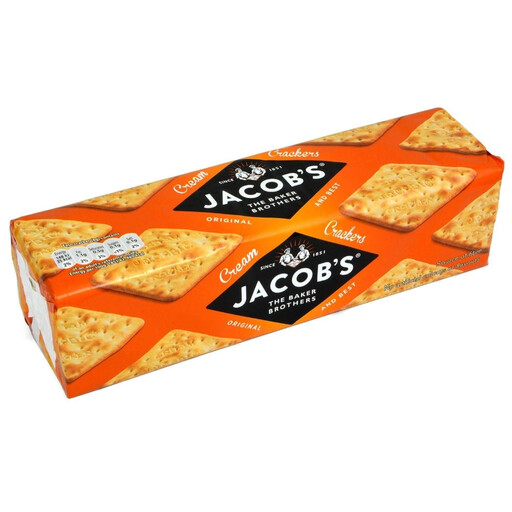
A 300g cream-cracker pack to consider for repeated tea breaks or serving with toppings. Check the pack’s ingredients for guests and follow its instructions for storing crackers after opening.
 No image available
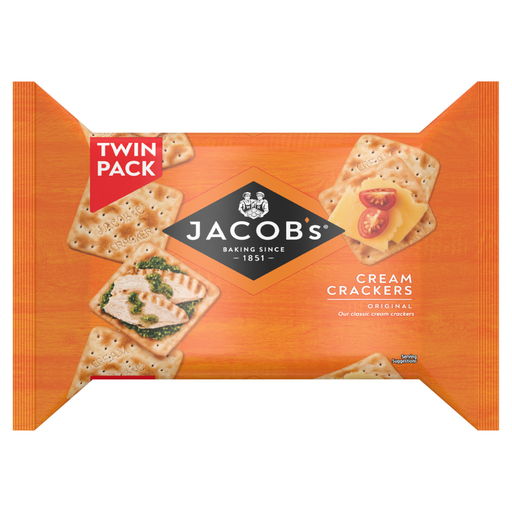
Two 200g packs provide a total of 400g for a household that expects to serve crackers on several occasions. Check the packaging for ingredients and storage instructions for each opened pack.
 No image available
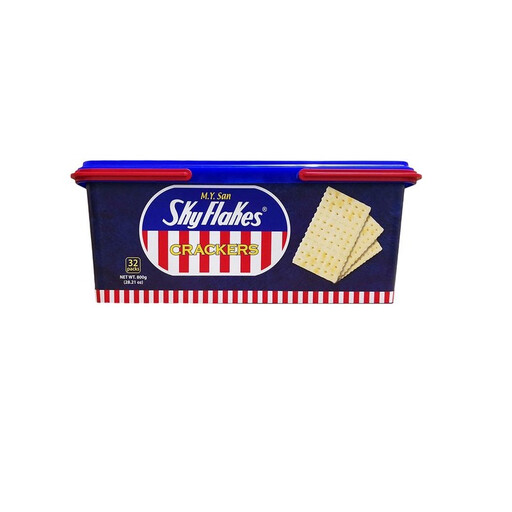
The 800g quantity is worth weighing against the number of people eating crackers and how frequently they will be served. Check the exact pack for its ingredients, packaging format and storage directions.
 No image available
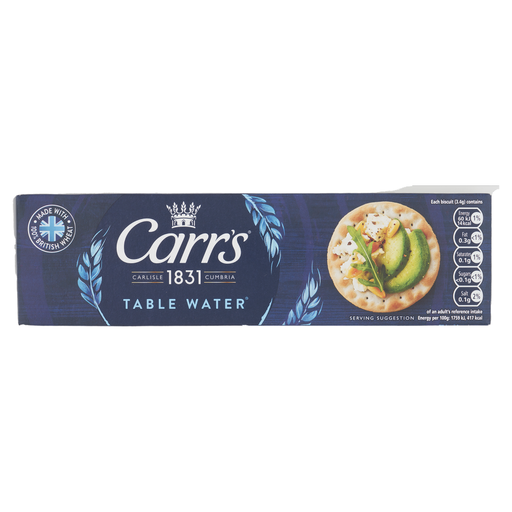
A smaller, 125g table-water biscuit pack for an occasion centred on toppings. The checked listing for this variant identifies wheat and possible sesame presence; check the pack before serving anyone with an allergy.
 No image available
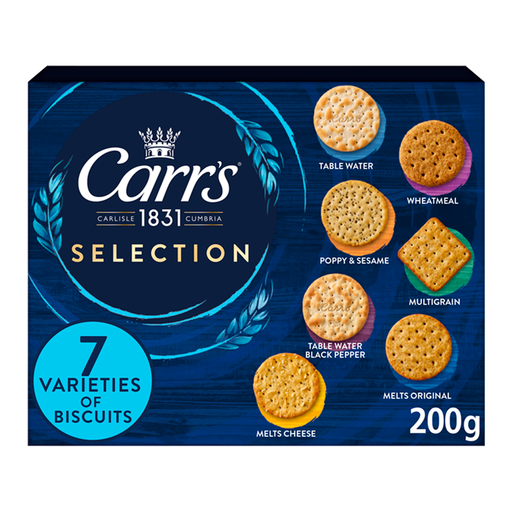
A 200g selection pack to consider when putting out crackers with toppings rather than choosing one named cracker type. Check the ingredients for each biscuit in the selection if guests have allergies.
Only if the group is likely to use that quantity or you have a plan for the remainder. Compare pack weights, estimate how much you will serve and read the storage directions before choosing a larger pack.
Follow the instructions on the particular pack. The checked cream-cracker and table-water-biscuit listings call for cool, dry storage and an airtight container once opened; do not assume the same directions apply to every product.
Check the packaging of the exact product you serve. The checked listings differ in their ingredients and precautionary statements, and online product details can change; a similar name or appearance does not establish identical allergy information.
Its size alone does not establish how its salt content compares with another product. Use the per-100g figures for a like-for-like label comparison, then consider the number of crackers you intend to serve.