
24/7 Customer Support

Free returns

Same-day & Next-day Delivery

Quality Guaranteed

Unlock Your Welcome Offers: FREE Delivery | Up to 80% OFF | Free 30-day JoyPlus trial
Download the APP
Choosing crackers and savoury snacks can seem straightforward until you compare pack sizes, ingredients, storage instructions and serving formats. A product that looks economical may contain fewer portions than expected, while a snack marketed as “light” may still be high in energy or salt.
Whether you need lunchbox fillers, entertaining essentials, meal accompaniments or convenient Asian snacks, a few practical checks can help you avoid waste and choose products that suit your household.
A large bag is not automatically better value. Compare the net weight, number of portions and whether the product is individually wrapped. Family-size snack packs can be useful for offices and lunchboxes, but smaller packets may help reduce exposure to moisture once opened.
For example, an 800g pack of individually wrapped Sky Flakes Crackers provides portable portions, while a 70g bag of prawn crackers may be more suitable for a single meal or sharing starter.
Breadsticks, crispbreads, rice crackers and prawn crackers can feel airy or delicate, but texture does not determine nutritional value. Check the nutrition table per 100g and, where available, per serving. Fat, saturates, salt and sugar are particularly useful comparison points.
Some products are designed as occasional treats, while others work better as a base for toppings or as part of a meal. A neutral crispbread may offer more flexibility than a strongly seasoned snack, but neither should be selected solely because it feels lighter.
Crackers commonly contain wheat, rye, barley, milk, soya or sesame. Prawn crackers may contain crustaceans, and flavoured snacks can include fish or other ingredients. Always read the latest packaging, especially when buying for children, guests or anyone with an allergy.
Frozen snacks have a separate risk: they require suitable freezer space and correct cooking. Products such as paratha, flatbreads and potato snacks should generally be kept at -18°C or below, cooked according to the pack instructions and not refrozen after thawing.
Look for clearly listed ingredients and highlighted allergens. If you need gluten-free crackers, check the specific gluten-free statement and current packaging rather than relying on the product name. A product made from rice or corn is not automatically suitable for someone avoiding gluten because manufacturing or added ingredients may differ.
For vegetarian or halal requirements, confirm the label and ingredient list. This is particularly important for cheese flatbreads, bacon-topped frozen snacks and flavoured Asian snacks.
The per-100g table allows a fair comparison between products of different sizes. The per-serving figure is helpful for practical planning. Individually wrapped products can make portions easier to identify, but the stated serving size may not reflect how much someone actually eats.
Use crackers with toppings thoughtfully. Cream crackers and crispbreads can accompany cheese, hummus, soup or salad, while breadsticks are convenient for sharing boards. Toppings can significantly change the overall energy and salt content of a snack.
Ambient products should usually be kept in a cool, dry place and resealed after opening. Crisp products absorb moisture quickly, so an airtight container can help preserve texture. Check the best-before date before purchasing large packs, particularly if your household snacks infrequently.
For frozen snacks, consider cooking time and equipment. Some products are suitable for a frying pan or griddle, while others require an oven or air fryer. A large frozen pack can offer convenience for families, but only if it fits your routine and freezer capacity.
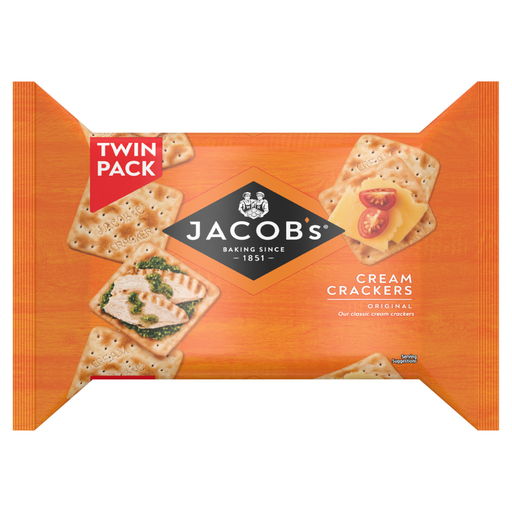
Why This Fits Their Persona: A twin pack suits households that want a familiar cupboard staple for toppings, soups and quick snacks without buying several different formats.
The two 200g packs can help keep one pack sealed while the other is in use. The ingredient list clearly identifies wheat as an allergen.
Twin-pack format; suitable for savoury toppings; 0.6g sugars and 1.3g salt per 100g as listed.
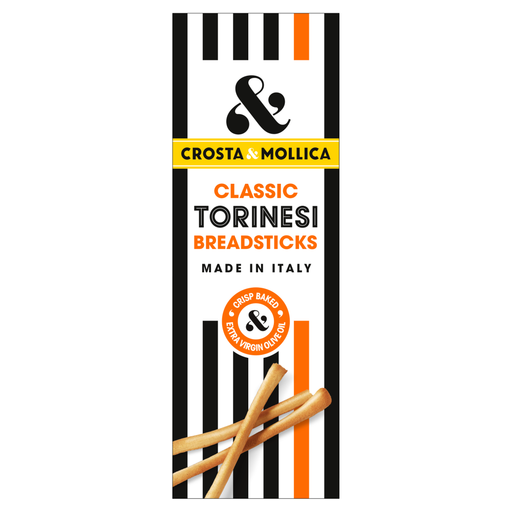
Why This Fits Their Persona: Slender Italian-style breadsticks provide a neat accompaniment for soups, salads, cheese boards and informal entertaining.
The product has a short listed ingredient set, with wheat and barley identified as allergens, making label checking more straightforward.
120g ambient pack; ready to serve; 7% extra virgin olive oil listed in the ingredients.
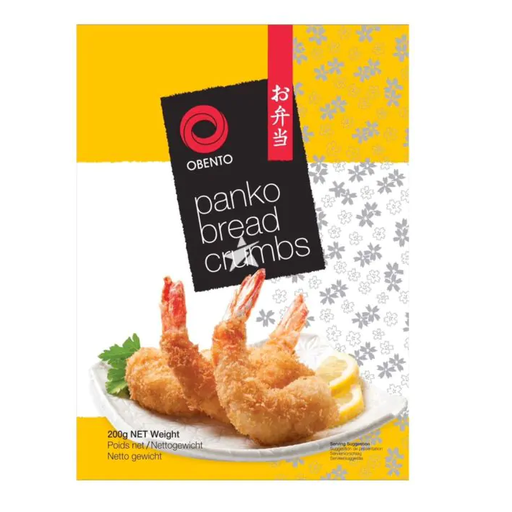
Why This Fits Their Persona: A practical pantry ingredient for shoppers who cook Japanese dishes, crumb fish or chicken or add texture to baked recipes.
It is clearly presented as a dry cooking ingredient rather than a ready-to-eat snack, so preparation and food-safety requirements are not easily confused.
200g pack; larger Japanese-style crumbs; wheat allergen clearly listed.

Why This Fits Their Persona: A corn- and rice-based crispbread option for shoppers seeking a topping base without wheat ingredients listed.
The supplied product information lists no allergens, while noting that the facility handles soya. Always verify the pack before purchase.
150g pack; made with corn flour and rice flour; 5g fibre per 100g as listed.
We have compiled a complete, real-time list of products that fully satisfy these strict selection criteria and UK safety regulations.
For international food enthusiasts, rice crackers, prawn crackers, paratha and frozen snacks provide different textures and preparation styles. For example, individually portioned Rishodo rice crackers suit desk drawers and lunchboxes, while Nongshim hot shrimp crackers offer a stronger Korean-inspired flavour and require careful allergen checking.
If you are feeding a family, compare family-size snack packs with smaller ready-to-eat snacks. For home cooking, panko breadcrumbs and frozen flatbreads may offer more practical value than buying only finished snacks. Sandwich cookies can also suit sweet-and-savoury snack boxes, although their nutrition profile differs from plain crackers.
Many are convenient, particularly individually wrapped breadsticks, rice crackers and cream crackers. Pair them with fruit, vegetables or another filling food, and check age-related choking guidance for young children. Avoid assuming that individually wrapped means nutritionally balanced.
Reseal the original packet tightly or transfer the contents to an airtight container. Store ambient products away from heat, light and humidity. Buying smaller packs may be sensible if the product is used only occasionally.
The main practical cost is freezer capacity and cooking energy rather than storage alone. Choose frozen products in quantities your household will use, keep the freezer at the recommended temperature and follow the cooking instructions. A family pack can reduce repeat purchases, but only when there is enough demand to avoid prolonged storage.