
24/7 Customer Support

Free returns

Same-day & Next-day Delivery

Quality Guaranteed

Unlock Your Welcome Offers: FREE Delivery | Up to 80% OFF | Free 30-day JoyPlus trial
Download the APP
Craft cutting dies can turn a sheet of card, fabric or paper into a repeatable shape in seconds. However, product listings often use broad terms such as “multi-purpose”, “professional” or “durable” without explaining the details that matter during everyday use. A die that suits thin scrapbook paper may not work with thicker card, while a baking cutter should never be selected using the same criteria as a metal craft die.
This guide explains the practical points to check before buying craft cutting dies, metal cutters, templates and related tools for UK-based crafting, sewing, quilting, baking and home projects.
Metal cutting dies are normally used with a compatible die-cutting and embossing machine, but machines differ in platform size, sandwich configuration and maximum material thickness. A listing may show the die’s design without clearly confirming compatibility.
Before ordering, check:
For intricate scrapbooking dies and card-making dies, a close fit between the die and the machine’s cutting area helps reduce wasted material.
Some listings describe products as both die cutting templates and embossing stencils. These functions can overlap, but they are not identical. A cutting die has a sharp raised edge designed to separate material, whereas an embossing stencil or folder creates a raised or recessed impression.
If you want a cut-out flower, letter or frame, confirm that the product is sold as a cutting die. If you want texture without removing material, check whether the item is intended for embossing only.
A detailed design may look attractive but be awkward to release from paper, especially when used with delicate card or multiple layers. Very narrow sections, tightly packed patterns and small internal pieces can take longer to clean out.
For regular projects, consider designs with:
For papercraft, carbon steel or other stated metal construction can provide a firm cutting profile. The material alone does not guarantee performance, so also check the design thickness, edge detail and intended use.
A thin metal die may be suitable for paper, lightweight card and decorative layering. It is not a substitute for a rotary cutter when cutting fabric, leather or long straight seams. Keep craft dies dry and store them flat to help reduce rust or distortion.
The number of pieces in a set is useful only when the sizes match your projects. A set of frame cutting dies in several dimensions can support layered borders, while flower cutting dies with separate petals and leaves allow you to build dimensional decorations.
For alphabet and number cutting dies, check whether the set includes:
Nesting frames are practical for creating mats and borders because several sizes can be combined without buying separate templates.
Rotary cutters and multi-angle mitre shears have exposed blades and require a different safety approach from paper dies. Look for a blade lock, protective storage method and clear material limitations. Never use craft shears on hard metal or materials outside the manufacturer’s stated capacity.
For biscuit cutters and pastry cutters, verify that the product is described for food use and follow the care instructions. Stainless steel and food-safe plastic are common materials, but buyers should still check the listing information, cleaning guidance and any relevant supplier documentation before use.
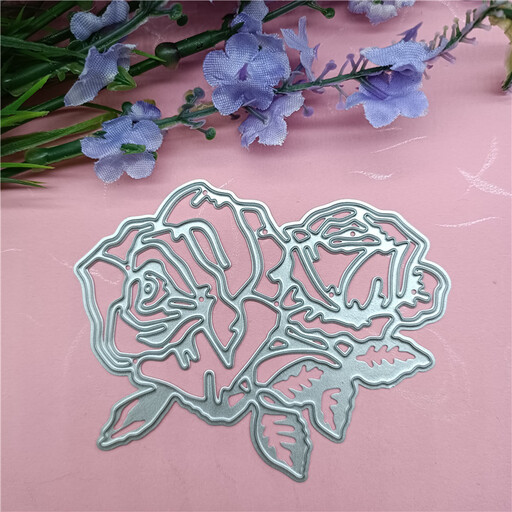
Why This Fits Their Persona: A focused floral design suits new card makers and scrapbookers who want to start with a recognisable motif rather than purchase a large mixed set.
The product is identified as a metal cutting and embossing design, making its intended papercraft use clearer than a vague multi-purpose template.
A rose-themed shape supports cards, photo albums and decorative paper layers.
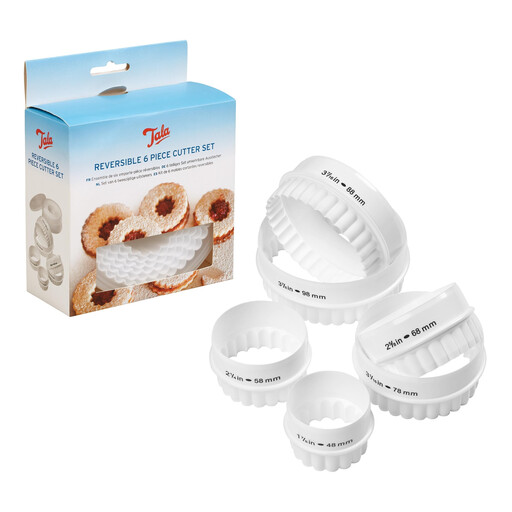
Why This Fits Their Persona: Home and professional bakers who value flexible sizing can use six graduated cutters for biscuits, scones, pastry and fondant.
The reversible design is clearly specified: each cutter offers a straight edge and a fluted edge rather than relying on an unqualified versatility claim.
Six sizes from 48mm to 98mm; stackable, BPA-free plastic is listed as dishwasher safe.
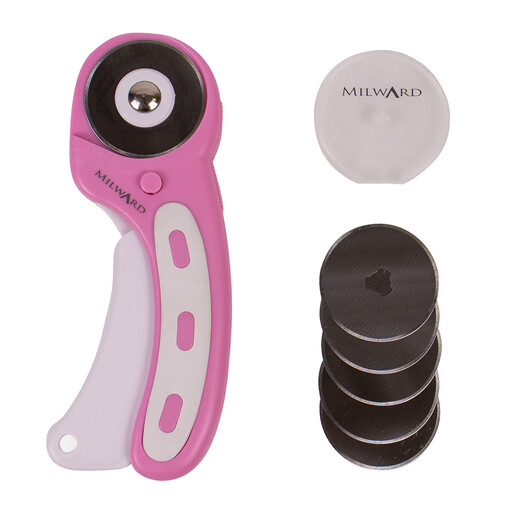
Why This Fits Their Persona: Quilters, sewists and frequent papercraft users need a tool for longer cuts across fabric, leather, paper and scrapbooking materials.
It is designed for material cutting rather than presented as a paper die and includes a safety button that locks the blade.
A 45mm steel blade, soft-grip handle and five spare blades support repeated cutting tasks.
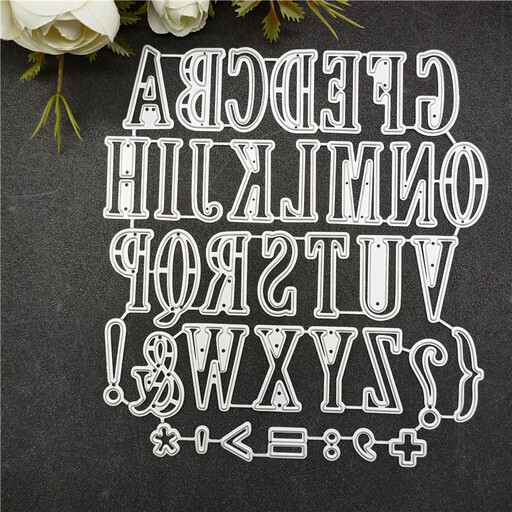
Why This Fits Their Persona: Personalised card makers and scrapbookers can create names, initials and short messages without buying individual alphabet templates.
The listing specifies 26 capital letters, making the set contents easier to assess before purchase.
Metal letter dies are suited to decorative words, birthday projects, albums and papercrafts.
For home-improvement tasks, products such as the FLORA GUARD DIY-1 Multi-Angle Mitre Shears specify a 45° to 135° cutting range, SK5 steel blades and two replacement blades. These are intended for soft materials, not hard metals.
We have compiled a complete, real-time list of products that fully satisfy these strict selection criteria and UK safety regulations.
No. Compatibility depends on the machine’s platform, cutting plates and material allowance. Check the manufacturer’s instructions and compare the die’s dimensions before buying.
Keep them clean and dry, preferably flat or in a protective sleeve. Avoid bending the metal and remove paper fibres from fine designs after use.
A rotary cutter uses a circular blade for continuous lines through materials such as fabric, paper and leather. Craft dies create a fixed shape when used with a compatible die-cutting machine. Neither tool replaces the other for every project.