Choose a sewing machine around the fabric and seams in the table runners you plan to sell, rather than stitch count alone. A model with a stated high maximum speed may appeal for repeated straight seams, while adjustable foot pressure or needle-up/down control may matter more for layered hems and accurate corners. Check the exact model’s features and supplied accessories, then sew a sample of your thickest planned seam before committing to a batch.
Who is choosing a machine?
Batch-focused craft-fair makers
If you are making several table runners, you need repeatable straight seams and manageable fabric feeding. A stated maximum stitch speed can inform your choice, but it cannot tell you how long a finished runner will take.
Makers working with layered fabrics
If your runners include backing, batting, binding or bulky seam intersections, check how the machine accommodates and feeds your thickest fabric stack. Presser-foot clearance and pressure adjustment are more pertinent checks than the size of its decorative-stitch menu.
Developing sewists focused on control
If setup and neat corners are your main concerns, look closely at stitch selection, speed control and bobbin handling. Brother, for example, lists a speed slider and needle-up/down control for its Innov-is A16; confirm that a prospective model has the controls you want.
What matters when buying?
For craft-fair table runners, start with the thickest seam you expect to sew, then decide whether batch pace or easier setup and corner control matters more to you.
| Concern |
What to check |
Who this matters to |
| Repeatable batch sewing |
Check the stated maximum speed and bobbin arrangement. Sew a complete sample runner before planning how many you can finish. |
If I have several runners to make, I need a steady pace without losing seam quality; around 36% of consumers place repeatable batch sewing first. |
| Layered seams and hems |
Check presser-foot clearance or pressure adjustment where offered, then test the thickest binding or seam intersection you plan to use. |
When my runner combines backing, batting or binding, I need the layers to feed without spoiling the finish; around 36% of consumers put layered-fabric handling first. |
| Setup and corner control |
Check speed control, needle-up/down operation and stitch-setting guidance on the exact model. |
If I am still building confidence, I need to set up the machine and pivot at corners without rushing; around 28% of consumers prioritise setup and control. |
Mistakes to avoid
-
Choosing by stitch count alone
Decorative stitches may help with a design, but their number does not show how a machine will feed a layered runner or turn a bulky corner.
Make a sample with your planned fabric, backing and thickest hem or binding before deciding which extra stitches matter to you.
-
Using maximum speed as a production target
Singer lists 1,100 stitches per minute for the Heavy Duty 4432. That model specification is not a finished-runner rate: cutting, pressing, thread changes and seam inspection also take time.
Time a complete sample runner at a speed you can control, and inspect its seams before scheduling a batch.
-
Overlooking electrical-product information
Unclear seller details or missing product information make it harder to assess an electrical machine before purchase. GOV.UK advises checking for appropriate marking and manufacturer identification.
Confirm the seller, instructions, warnings and manufacturer’s name and address. Check which marking is applicable where you will use the machine, as the requirements differ between Great Britain and Northern Ireland.
-
Leaving lint in the bobbin area
Brother’s maintenance guidance says lint and dust in the bobbin case can reduce stitching performance.
Follow your exact model’s cleaning instructions, switching off and unplugging the machine before accessing the bobbin area. Seek the manufacturer’s support for damaged bobbin-area parts.
Brands to consider for these machine routes
Singer
Singer’s Heavy Duty 4432 is a mechanical model to consider if repeated seams and bulky fabric sections are priorities.
- Singer lists a maximum of 1,100 stitches per minute, an extra-high presser-foot lifter and adjustable presser-foot pressure for the 4432.
- The stated speed does not establish finished-runner output or how your particular fabric stack will sew.
Janome
Janome’s HD2200 is a mechanical general-sewing option for makers who value adjustable foot pressure and stitch-setting guidance.
- Janome describes a solid metal body and lists adjustable foot pressure for the HD2200.
- Janome lists the HD2200 at 8.0 kg, which matters if you expect to carry the machine regularly.
Brother
Brother’s Innov-is A16 is an electronic option if managing sewing speed and pivoting at corners are priorities.
- Brother lists a slide speed control, needle-up/down button and quick-set bobbin for the Innov-is A16.
- Brother describes the model’s feed system as intended for multiple layers and heavier fabrics; test your own runner construction rather than assuming every layered seam will sew equally well.
Joybuy option for basic runner sewing
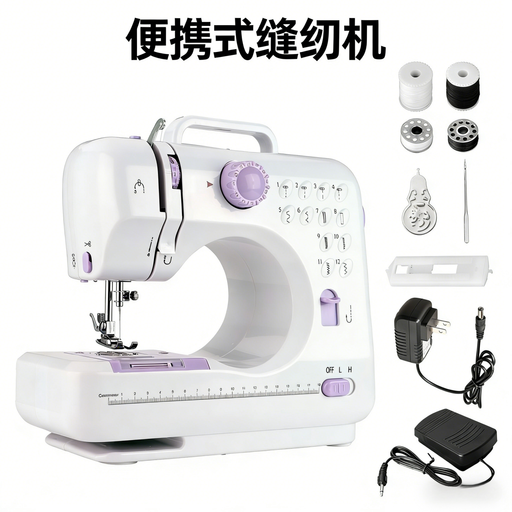
This compact machine is an option to assess for basic table-runner seams and hems. If your runners involve bulky intersections or you plan sustained batch sewing, test a representative fabric stack and check whether its controls suit that work.
 No image available
IAGREEA Mini Portable Electric Sewing Machine, 12 Stitches, Dual Power, Purple
Consider this mini machine for basic runner seams and hems if its handling suits your fabric. Its product name specifies 12 stitches, dual power and an LED light; check its controls and included accessories before purchase, and test your thickest planned seam before batch sewing.
View on Joybuy
Frequently asked questions
Should I choose a sewing machine by its stitch count?
No: for table runners, start with fabric handling and the control you need for hems and corners. Decorative stitches can serve a design, but their number alone does not show how a machine will handle batting, binding or bulky seams.
What should I check when buying an electrical sewing machine?
Check the seller, appropriate product marking, instructions, warnings and manufacturer identification. GOV.UK advises these checks for electrical goods; confirm the marking applicable to your location because Great Britain and Northern Ireland have different requirements.
Is it worth checking for recalls after purchase?
Yes. The UK Product Recalls and Alerts service allows you to search for notices affecting products you own. Keep the machine’s model identification so you can check whether a notice applies to your exact machine.
How should I look after the bobbin area during a sewing batch?
Clean it as directed by your machine’s manual, with the machine switched off and unplugged before you access the area. Brother’s support guidance warns that lint and dust in the bobbin case can impair stitching; do not continue using a scratched or burred bobbin case.


