Hosts who prefer a light cup of tea
Skimmed milk adds dairy to black tea without aiming for the fuller cup associated with a higher-fat milk. The UK Tea & Infusions Association advises brewing tea before adding milk.


Choose standard fresh skimmed milk if you want a light addition to black tea and expect to use the bottle within its labelled date. Filtered skimmed milk is worth considering for less frequent use, while unopened UHT milk can serve as a cupboard backup; neither format establishes which will taste mildest to you. If you want a fuller dairy presence in the cup, consider semi-skimmed instead.
For tea served alongside scones and clotted cream, choose the milk for the cup you want and the amount you are likely to use.
Skimmed milk adds dairy to black tea without aiming for the fuller cup associated with a higher-fat milk. The UK Tea & Infusions Association advises brewing tea before adding milk.
A smaller fresh pack, filtered skimmed milk or an unopened UHT carton may fit occasional afternoon tea. For Cravendale filtered skimmed milk, Arla states a freshness period of up to three weeks unopened and seven days once opened; follow the date and storage directions on the bottle.
Match the pack size to the cups you plan to serve and any other household use. Tesco, Sainsbury’s and Waitrose list fresh skimmed milk in different volumes, so a larger bottle need not be the default for every gathering.
Decide how light you want the tea, then choose a milk format and pack size that fit when you will serve it.
| Priority | What to check | Your needs |
|---|---|---|
| Tea body | Check whether the carton says skimmed or semi-skimmed. Brew black tea before adding milk, as the UK Tea & Infusions Association advises. | I want a lighter dairy addition to my tea; if I want a fuller cup, I would consider semi-skimmed instead. |
| Freshness | Check the use-by date and storage directions on fresh milk. Arla states that Cravendale filtered skimmed milk stays fresh for up to three weeks unopened and seven days once opened; check the actual bottle. | Milk is only an occasional purchase for me, so I want a format I can use within its labelled dates. |
| Storage format | Check whether a long-life carton can be stored in the cupboard before opening. Follow its own refrigeration and use instructions once opened. | I would like an unopened backup for a cream tea I have not planned far in advance. |
| Pack size | Compare the stated volume with the number of guests and other planned uses. Tesco lists fresh skimmed milk in 568ml, 1.136L and 2.272L packs. | For a few cups, I may prefer a smaller pack; with several guests, I can choose a volume I expect to finish. |
| Milk suitability | Read the ingredients and allergen label. Skimmed cow’s milk is not automatically lactose-free; the NHS distinguishes lactose-free dairy products from standard milk. | If milk allergy or lactose intolerance matters for someone I am serving, I need to check the specific product rather than rely on its fat description. |
Clotted cream on the scone does not change the dairy contribution of the milk in the cup. Skimmed milk may not suit someone seeking a fuller-tasting tea.
Choose the milk for the tea separately from the cream for the scone; consider semi-skimmed if more body in the cup matters.
Milk left after guests have gone still needs to be used within its labelled date and storage conditions.
Estimate how much you will pour and whether the rest has another use before choosing a pack size. A smaller pack or an unopened long-life carton may fit occasional use.
Removing fat does not make standard cow’s milk suitable for someone who needs to avoid milk or lactose. The NHS identifies lactose as a sugar found in dairy products, and the Food Standards Agency identifies milk as an allergen.
Check the exact ingredients and allergen information. If lactose-free dairy is needed, look for a product specifically labelled for that purpose.
These retailer and manufacturer ranges illustrate different skimmed-milk formats; check the individual product rather than assuming every line has the same pack size or storage requirements.
Arla’s filtered skimmed-milk range is relevant when time between milk purchases matters.
Tesco lists own-label fresh, filtered and long-life skimmed milk.
Sainsbury’s lists British fresh skimmed milk alongside other milk formats.
Asda’s listing for Cravendale filtered fresh skimmed milk provides a branded option to consider.
M&S describes its British Skimmed Milk as sourced from M&S Select Farms.
Waitrose lists Essential British Free Range Skimmed Milk and long-life skimmed milk.
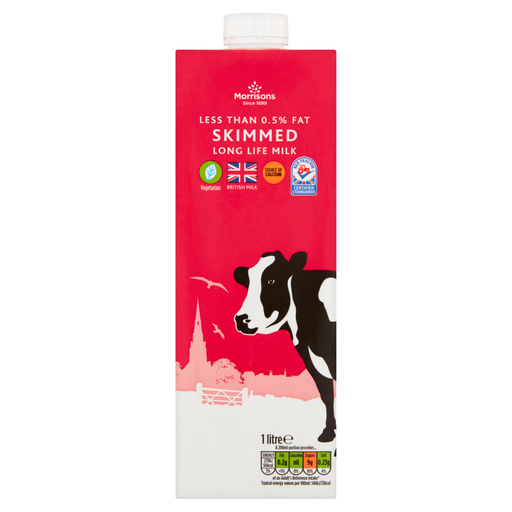
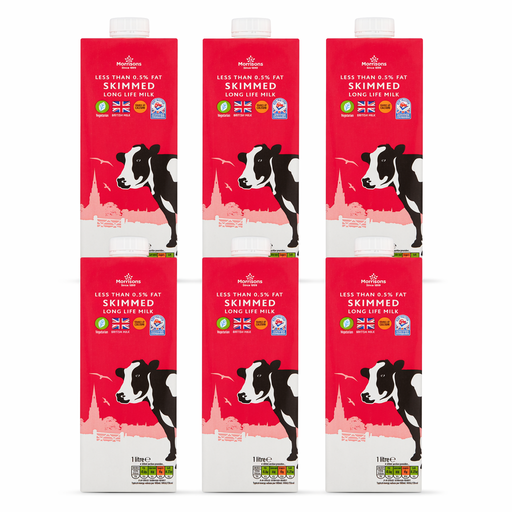
These Morrisons cartons suit shoppers considering long-life skimmed milk for an occasional cream tea. Choose between one 1-litre carton and six 1-litre cartons according to how much you expect to use; neither pack size establishes a particular taste in tea.
 No image available
A single 1-litre UHT skimmed-milk carton is an option when you want milk for a smaller cream tea. Check the carton’s date and storage instructions, including what to do after opening.
 No image available
Six 1-litre UHT skimmed-milk cartons provide separate packs for several tea occasions or other planned uses. Check each carton’s date and its storage instructions before and after opening.
Yes, if you want a light dairy addition to the tea rather than a fuller cup. The clotted cream belongs on the scone, so choose the milk for your preference in the tea itself. The UK Tea & Infusions Association advises adding milk after brewing.
Consider it if you use milk infrequently and want to compare stated freshness periods. Arla says Cravendale filtered skimmed milk stays fresh for up to three weeks unopened and seven days once opened; the bottle’s date and storage directions still apply.
Yes, a long-life carton can be an unopened backup if its label permits cupboard storage. Check its date and follow the pack’s refrigeration and use instructions after opening; the UHT format alone does not tell you how it will taste in tea.
Not automatically: skimmed describes the milk’s fat content, not its lactose status. The NHS notes that lactose-free dairy products are available for people with lactose intolerance, so check for a specifically suitable product and read its label.
Check the use-by date, storage instructions and allergen information on the pack. The Food Standards Agency warns that food stored for too long or at the wrong temperature can contain bacteria that cause food poisoning; do not rely on smell in place of the labelled date.