What matters when choosing?
Decide which flavour your guests want, then compare the exact bar’s cocoa percentage, ingredients and serving format.
| Priority | What to check | Your needs |
|---|
| White or dark |
Lindt UK describes white chocolate as containing cocoa butter, milk solids and sugar, but no cocoa solids. For a dark option, check the cocoa-solids percentage stated for the exact bar. |
I’d like chocolate that goes with the sweet, creamy side of a cream tea. If I want a cocoa-led contrast instead, I’ll choose dark chocolate. |
| Cocoa level |
Compare stated cocoa solids on the pack. Lindt UK lists a minimum of 70% for its EXCELLENCE 70% bar and 78% for its EXCELLENCE 78% bar; M&S lists a minimum of 72% for its Swiss Extra Fine Dark Chocolate. |
For guests with mixed preferences, I’d start by considering 70%. I’d offer a higher-percentage bar when I know they enjoy a stronger dark-chocolate flavour. |
| Allergens |
Read the current ingredients and precautionary allergen statements for the exact product. Lindt UK says its 70% bar may contain nuts, milk, soya and sesame; its 78% bar contains milk fat. |
Before serving a guest with an allergy, I need to check that the particular pack is suitable for them, not assume a dark bar is free from milk or nuts. |
| Serving format |
Check the bar size and whether you can portion it separately from the scones. The identified Lindt EXCELLENCE bars are 100 g each; the M&S Swiss Extra Fine Dark Chocolate bar is 125 g. |
I’d rather put out a few pieces separately so each guest can decide whether to have chocolate with their cream tea. |
Relevant brand references
These examples show why the details of an individual bar matter more than a brand name alone.
Lindt
Lindt UK lists EXCELLENCE dark bars at 70% and 78% minimum cocoa solids, both in 100 g formats.
- The stated percentages make it possible to choose between these two cocoa levels.
- Their ingredients and allergen statements differ: the 70% bar may contain nuts, milk, soya and sesame, while the 78% bar contains milk fat.
M&S
M&S identifies its Swiss Extra Fine Dark Chocolate bar as a 125 g bar with at least 72% cocoa solids.
- Its stated cocoa percentage offers another point of comparison between 70% and 78% bars.
- M&S says this product is not suitable for people with a milk, nut, peanut or soya allergy; check the current pack.
Cadbury
Cadbury describes Bournville Classic as a 100 g dark-chocolate bar.
- It provides a named dark-bar option for shoppers considering chocolate alongside a cream tea.
- Check the exact pack if a particular cocoa-solids percentage is important to your choice.
Chocolate options on Joybuy
These bars cover both choices for a cream tea: one white chocolate and dark chocolates labelled from 70% to 85% cocoa. The 85% options are worth considering when guests specifically want a more intense dark flavour.
 No image available
Green & Black's Dark Chocolate 70% 90 g
A 70% cocoa-solids dark option to consider when serving guests with mixed chocolate preferences. The 90 g bar’s listing says it may contain almonds, hazelnuts and milk; check the current pack before serving anyone with an allergy.
Joybuy
 No image available
Morrisons The Best Dominican Republic Dark Chocolate 72% 100 g
A 100 g bar labelled with at least 72% cocoa solids for guests choosing a higher-percentage dark option. Its listing identifies soya and says it may contain gluten, milk, nuts and peanuts; check the current pack for allergy suitability.
Joybuy
 No image available
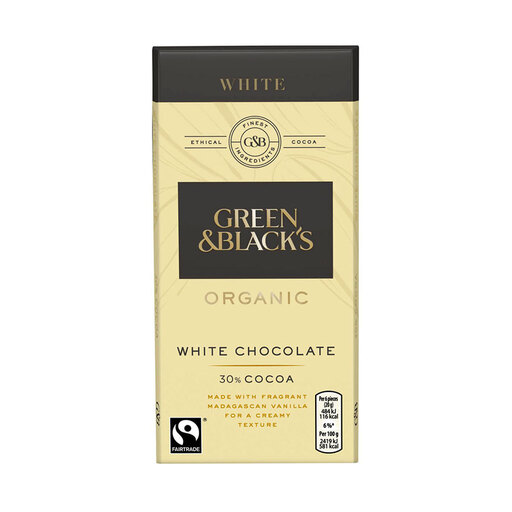
Green & Black's White Chocolate 90 g
This 90 g white-chocolate bar is the sweet, creamy route, not a high-cocoa dark alternative. Its listing identifies milk and soya and says it may contain nuts; check the current pack before serving guests with allergies.
Joybuy
 No image available
Green & Black's Dark Chocolate 85% 90 g
Consider this 90 g bar when guests already prefer intense, bitter dark chocolate; its listing states at least 85% cocoa solids. It may contain almonds, hazelnuts and milk, so check the current pack before serving guests with allergies.
Joybuy
 No image available
Morrisons The Best Ecuador Dark Chocolate 85% 100 g
This 100 g bar states at least 85% cocoa solids, making it an option for guests who specifically want that cocoa level. Its listing says it may contain gluten, milk, nuts and peanuts; check the current pack before serving anyone with an allergy.
Joybuy
Cream-tea chocolate questions
Is white chocolate the same as high-cocoa dark chocolate?
No. Lindt UK describes white chocolate as containing cocoa butter but no cocoa solids. Choose it for a sweet, creamy accompaniment; choose a dark bar with a stated cocoa-solids percentage when you want a cocoa-led option.
Which dark-chocolate percentage should I consider first?
Consider a 70% bar if guests have mixed preferences. A 72%–78% bar is an option when they already enjoy stronger dark chocolate; consider an 85% bar only if that more intense style appeals to them. Percentage is a useful selection detail, not a guarantee that everyone will prefer the same bar.
Do I need to check allergens in plain dark chocolate?
Yes. The identified products have different ingredients and precautionary statements: Lindt UK says its 70% bar may contain nuts, milk, soya and sesame, while its 78% bar contains milk fat; M&S says its 72% bar is not suitable for people with milk, nut, peanut or soya allergies. Read the current pack for the bar you intend to serve.
How can I serve chocolate with a cream tea?
Put a few pieces on a separate plate so guests can choose whether to have any. Active England Tours describes the traditional cream tea as scones with clotted cream and jam, plus tea; chocolate can remain an optional extra rather than replacing those elements.


