Choose a solid creamed coconut block when a curry or sauce needs a concentrated coconut ingredient, and measure the amount you add. For tea, cereal or drinking, an unsweetened, calcium-fortified coconut drink is a different option. If you choose a block, compare carbohydrate and saturated fat on the current label: Diabetes UK advises reducing saturated fat, and the figures listed for the compared blocks differ.
Who is this choice relevant to?
Start with how you will use the coconut: a solid cooking block and a ready-to-pour drink solve different problems.
Curry and sauce cooks
If you add creamed coconut to cooking while keeping track of carbohydrate and saturated fat, compare labels and measure the amount going into the recipe. Diabetes UK advises paying attention to portion size and reducing saturated fat.
Shoppers who prefer measured portions
A weighed piece from a block lets you use the amount your recipe calls for. Individually wrapped sachets offer another way to measure it, although you still need to check their nutrition information.
Coconut-drink buyers
For tea, coffee or cereal, compare ready-to-pour drinks rather than assuming a solid cooking block will serve the same purpose. Diabetes UK advises checking that plant-based milk alternatives are unsweetened and fortified with calcium.
What should you check before buying?
Decide whether the recipe calls for a solid block or a drink, then compare labels in the same format and work out how much you will use.
| Priority |
What to check |
Your needs |
| Product format |
Check whether the recipe needs a solid cooking block or a ready-to-pour drink. If dissolving a block, follow the directions for that product. |
I need coconut for a curry or sauce, rather than a drink for tea or cereal. |
| Carbohydrate |
Compare carbohydrate per 100g between blocks, then account for the weight added to the recipe. Sainsbury's lists 6.4g per 100g for KTC and 14g for Blue Dragon; Tesco lists 21.9g for Patak's sachets. |
When I use only part of a block, I want to know the carbohydrate in that amount, not just in the whole pack. |
| Saturated fat |
Read saturated fat per 100g and consider the recipe amount. The Sainsbury's and Tesco listings for the compared blocks range from 53.4g to 65g per 100g. Diabetes UK recommends reducing saturated fat. |
I want to compare the blocks without assuming that a lower carbohydrate figure also means a lower saturated-fat figure. |
| Portion format |
Check whether you will weigh pieces from a full block or use a stated sachet size. Tesco lists Patak's 200g product as four 50g sachets. |
Pre-divided portions would be useful if I regularly need less than a full block. |
| Ingredients and allergens |
Read the ingredient and allergen statements on the exact pack, particularly when changing brands or buying a substitute. |
I need to check that the product suits any ingredients or allergens I avoid. |
Common buying mistakes
-
Treating a cooking block like a carton drink
A creamed coconut block is a concentrated solid ingredient; a ready-to-pour coconut drink is a different format. The block may be useful in a sauce without being the right choice for cereal or coffee.
Choose the format for the intended use. If choosing a plant-based drink, Diabetes UK advises checking that it is unsweetened and calcium-fortified.
-
Choosing by a coconut or sugar claim alone
Such wording does not tell you how much carbohydrate or saturated fat your recipe portion contains. The Sainsbury's and Tesco listings for the compared blocks show different values per 100g.
Read the current nutrition panel and calculate from the weight you will add, rather than treating the whole 200g block as one serving.
-
Overlooking how the block is portioned
A full block requires you to measure the piece you use; Patak's four 50g sachets provide stated portions, which may be convenient for some recipes.
Check the amount your usual recipe calls for. Weigh pieces from a full block when a sachet would be more than you need.
-
Assuming every block has the same ingredients
Ingredient and allergen statements can differ between products, so a familiar block is not a reliable guide to a substitute.
Check the exact pack's ingredient and allergen statements before use.
Product lines to compare
Blue Dragon, KTC and Patak's are solid cooking products in the cited retailer listings; the Alpro and Koko examples are drinks for a different use.
Blue Dragon
Its 200g creamed coconut block is a solid cooking ingredient that can be dissolved to make coconut milk.
- Sainsbury's lists 14g carbohydrate and 58g saturated fat per 100g.
- Check the current pack's allergen statement before use.
KTC
Its 200g creamed coconut product is a solid block for cooking or dilution.
- Sainsbury's lists 6.4g carbohydrate and 53.4g saturated fat per 100g, the lowest stated figures for both measures among the three blocks compared here.
- Measure the amount taken from the block and check the current ingredient and allergen statements.
Patak's
Its 200g creamed coconut product comes as four 50g sachets for cooking.
- The stated sachet size makes it straightforward to identify a 50g amount.
- Tesco lists 21.9g carbohydrate and 56.6g saturated fat per 100g; check how much the recipe needs.
Alpro
Coconut No Sugars is a ready-to-pour coconut drink, not a solid creamed coconut block.
- Alpro UK lists 0g carbohydrate and 0g sugars per 100ml and states that the drink contains calcium.
- Compare it as a drink, not as a direct substitute for a concentrated cooking block.
Koko
Its Unsweetened Alternative Longlife Drink is another ready-to-pour coconut option.
- Tesco lists 0.4g carbohydrate and 0.2g sugars per 100ml and includes calcium in its product information.
- It is a drink rather than a solid ingredient for recipes calling for creamed coconut.
A solid coconut option on Joybuy
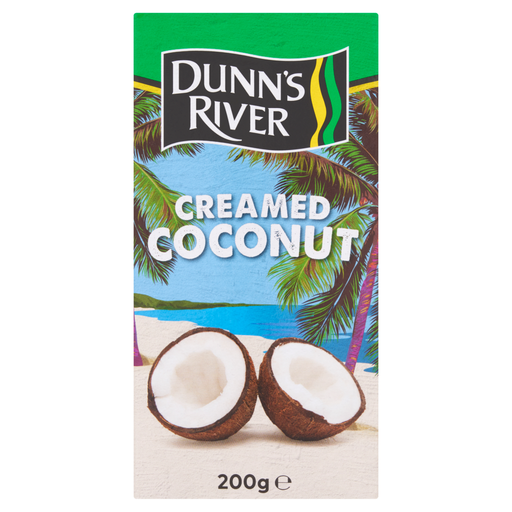
This 200g creamed coconut block fits cooking that calls for a solid coconut ingredient. Measure the amount used and consult the current pack when comparing its nutrition and ingredients.
 No image available
Dunn's River Creamed Coconut 200g
A solid coconut option for curries, sauces and soups. Weigh the amount your recipe needs, and check the current pack for carbohydrate, saturated fat, ingredients and allergens.
View on Joybuy
Frequently asked questions
Is a creamed coconut block the same as a carton coconut drink?
No. A creamed coconut block is a solid cooking ingredient that can be dissolved for recipes; products such as Alpro Coconut No Sugars and Koko Unsweetened Alternative are ready-to-pour drinks. Check which format the recipe requires.
Does a coconut block automatically suit someone managing diabetes?
No single coconut block is automatically suitable for everyone. Check the amount used, carbohydrate and saturated fat on the pack; Diabetes UK advises attention to portion sizes and recommends reducing saturated fat.
Which nutrition figures should I compare?
For solid blocks, compare carbohydrate, sugars and saturated fat per 100g, then calculate the amount added to your recipe. Do not directly equate a block's per-100g figures with a diluted drink's per-100ml figures.
When does an unsweetened coconut drink make more sense?
For tea, coffee, cereal or drinking, a ready-to-pour coconut drink is the relevant format to compare. Diabetes UK advises checking that plant-based milk alternatives are unsweetened and calcium-fortified; a drink is not a direct substitute when a recipe calls for concentrated creamed coconut.
Should I check allergens when switching coconut blocks?
Yes. Check the ingredient and allergen statements on the exact pack before use, particularly when switching brands or accepting a substitute.


