Recreational 5k runners buying a weekly snack multipack
You want something easy to pack, but need to distinguish an everyday snack from food you plan to eat shortly before running.


For a typical 5k, treat a crisp multipack as a lunchbox or later snack choice rather than relying on it as your main pre-run food. The UK Sports Institute describes eating one to three hours before running, while University College London Hospitals NHS Foundation Trust advises carbohydrate and protein with minimal fat in exercise snacks; if you are buying crisps, compare the portions, fat, salt and allergens on the packs you will eat.
You want something easy to pack, but need to distinguish an everyday snack from food you plan to eat shortly before running.
You want individual bags for packed lunches and a way to compare portion size, fat and salt without treating crisps as dedicated run fuel.
You need to check the ingredients, dietary declarations and allergen information for each flavour in the multipack.
Decide whether you are shopping for food before the run or for a packed-lunch snack. Then compare the exact packs, rather than assuming every flavour or portion is alike.
| Priority | What to check | Your needs |
|---|---|---|
| Pre-run food | Consider how long you have before running and whether the food is familiar to you. The UK Sports Institute describes eating one to three hours beforehand; University College London Hospitals NHS Foundation Trust advises carbohydrate and protein with minimal fat in exercise snacks. | Before a 5k, I want food I know I can eat comfortably, rather than choosing crisps just because they come in small bags. |
| Bag size and nutrition | Read the amount per bag, then use per-100g figures to compare different bag sizes. Check carbohydrate, fat and salt on the flavour you are buying. | For a lunchbox, I want to know what is in the bag I will actually pack, not just the figures for a sharing portion. |
| Salt and fat | Compare both nutrients on the same per-100g basis. The NHS classifies more than 1.5g salt per 100g as high in salt; McCoy's lists 32g fat per 100g for its Salted crisps. | I am comparing savoury snacks and want the label to show how their fat and salt figures differ. |
| Ingredients and allergens | Check every flavour's current ingredients, highlighted allergens and may-contain statement. Confirm that any vegan, vegetarian or gluten-free declaration applies to the product in hand. | A mixed multipack needs to meet my dietary requirements flavour by flavour. |
Crisps contain carbohydrate, but fat can be substantial: McCoy's lists 32g fat per 100g for its Salted crisps. That is a different proposition from the minimal-fat exercise-snack pattern described by University College London Hospitals NHS Foundation Trust.
Plan pre-run food separately around timing and what you are used to eating. Keep the crisp multipack for lunchboxes or another snack occasion.
A figure per bag describes that portion, not an equal quantity across different multipacks.
Check both the nutrition per bag and the per-100g figures, particularly for fat and salt.
Walkers describes its Oven Baked Sea Salt crisps as having 50% less fat than regular potato crisps. That comparison does not establish whether a bag suits your pre-run timing or usual food choices.
Use lower-fat or lower-salt claims to compare the nutrient they name, and check the actual nutrition table before choosing.
A dietary declaration for one flavour does not tell you the ingredients or allergen information for every bag in a variety pack.
Read the current label on each flavour, including highlighted allergens and may-contain statements.
Its Oven Baked and Lightly Salted lines offer two different nutrient comparisons within crisps.
Its lentil crisps provide an alternative base ingredient to its potato crisps.
Dietary declarations are available for specific products in its crisp range.
Its Crunchies range includes small individual bags.
Its Salted crisps provide a useful labelled example when comparing savoury snacks.
Its range includes crisps sold in cases of individual 35g bags.
These crisp and savoury-snack multipacks, plus a three-can pack, are options to compare for lunchboxes or other snacking rather than a selection of dedicated 5k fuel.
 No image available
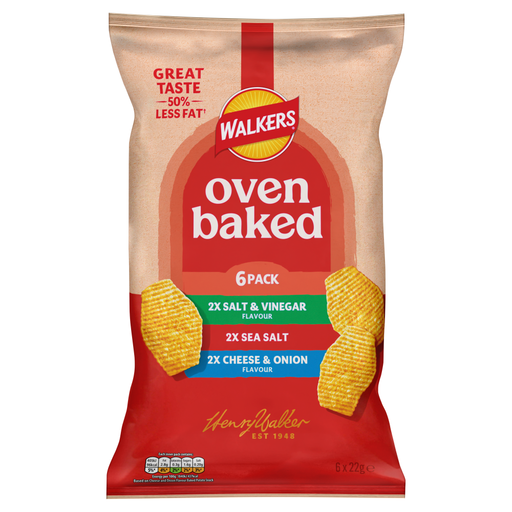
Six 22g bags provide individual portions for packed lunches. Check the nutrition, ingredients and allergens for each flavour in the variety pack; the format alone does not make crisps pre-run fuel.
 No image available
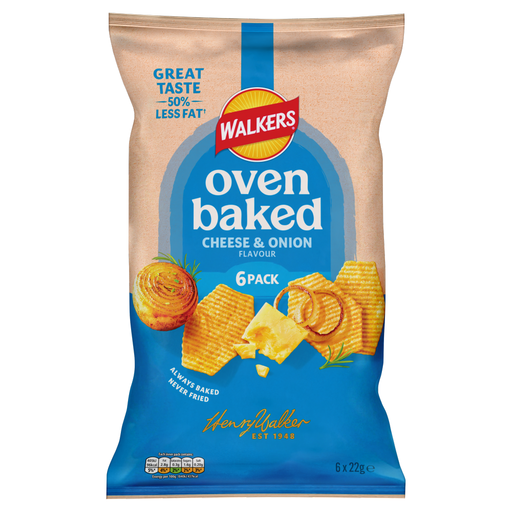
This six-pack gives you 22g bags of one flavour for lunchboxes. Read its current nutrition and allergen label before choosing it, particularly if you intend to eat a bag close to a run.
 No image available
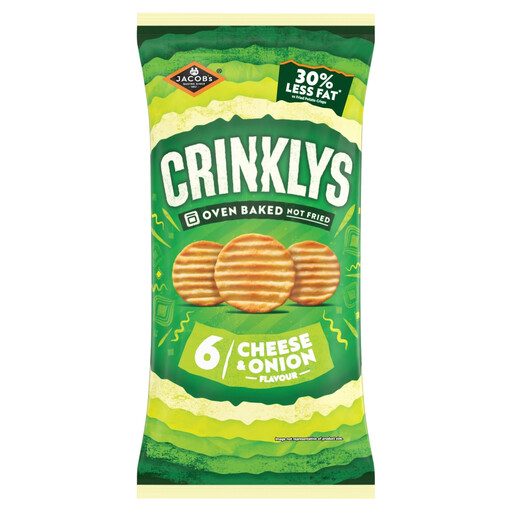
Six 23g bags make this a portioned cheese-and-onion snack option for packed lunches. Compare its fat and salt figures with other bags on a per-100g basis, and check the current allergen label.
 No image available
This pack contains three 90g cans, one in each named flavour, rather than small individual bags. If you are choosing a lunchbox portion, decide how much you will pack and check the label for each flavour.
 No image available
The six 25g bags offer individual portions for a packed lunch or later snack. Check the current ingredients, allergens and nutrition if you are comparing them with potato-crisp multipacks.
Do not rely on crisps as your main pre-run food for a typical 5k. University College London Hospitals NHS Foundation Trust advises carbohydrate and protein with minimal fat in exercise snacks, so consider timing and food you are used to eating rather than choosing a crisp bag for its convenience.
Yes, if you are buying it as a packed-lunch snack rather than dedicated run fuel. Check the bag size and its nutrition per bag, then use the per-100g figures to compare different multipacks.
Compare salt per 100g first, then check how much is in the bag you will eat. The NHS classifies food with more than 1.5g salt per 100g as high in salt; a smaller bag does not change that per-100g classification.
No. Check the exact flavour's current ingredients, highlighted allergens and may-contain statement, including every flavour in a mixed multipack. A dietary declaration addresses the product it names, not necessarily every snack from the same brand.