
24/7 Customer Support

Free returns

Same-day & Next-day Delivery

Quality Guaranteed

Unlock Your Welcome Offers: FREE Delivery | Up to 80% OFF | Free 30-day JoyPlus trial
Download the APP
Whether you are filling lunchboxes, preparing party snacks or stocking the cupboard for everyday treats, choosing the right crisps involves more than picking a familiar flavour. Pack size, allergens, ingredients and serving format can make a noticeable difference to value and convenience.
A large box may look economical, but check the number and weight of individual packs before comparing prices. A 20-pack of 25g bags provides 500g in total, while a six-pack of 25g bags contains 150g. Smaller packs may be more practical for portion control and lunchboxes, but a sharing bag can offer a different cost-per-100g calculation.
Terms such as vegetarian, vegan or baked do not automatically mean a product is suitable for every dietary requirement. Seasonings may contain milk, soya, wheat, barley or other allergens. Some crisps also carry a “may contain” statement because of the manufacturing environment.
Always check the ingredient list and allergen declaration on the packaging, particularly when buying international crisps or products containing flavour enhancers, sweeteners or seafood ingredients.
Strongly seasoned flavoured crisps may suit an evening snack or party platter but may not appeal to everyone in a family lunchbox. Sharing crisps are useful for entertaining, while individual crisp packs are easier to distribute at picnics, school lunches and office breaks. Consider whether you need classic British crisps, baked crisps, gourmet crisps or more adventurous international flavours.
For individual snacking, look for clearly stated serving sizes such as 16g, 22g or 25g packs. Multipacks can reduce the need to portion a larger bag, while 100g to 150g bags are more suitable for sharing. A 400g bag may suit frequent household use, but it should be resealed properly after opening to help preserve texture.
Potato crisps are commonly made with potatoes, vegetable oil and seasoning, but recipes vary considerably. Some products use wheat flour or potato starch rather than sliced potatoes. Check for:
For example, Morrisons Prawn Crackers contain prawns, while Lay’s Roasted Seaweed flavour contains wheat, soya, milk, crustaceans and sesame.
Nutrition panels allow a more meaningful comparison between regular, baked and speciality snacks. The Walkers Oven Baked Cheese & Onion multipack lists 437 kcal and 13g of fat per 100g, while Walkers Ready Salted lists 519 kcal and 31g of fat per 100g. These figures describe the products as supplied and should not be interpreted as a health endorsement.
“Baked” describes the preparation method, not a guarantee that a snack is suitable for every diet. Compare salt, saturated fat, sugar and serving size as well as the cooking method.
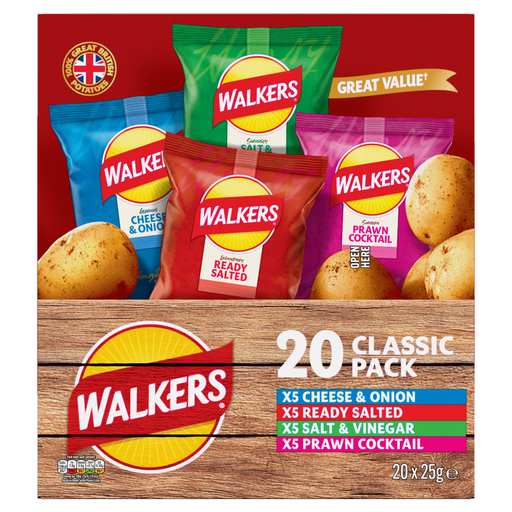
Why This Fits Their Persona: A practical cupboard multipack for families, packed lunches and everyday snacking, with four familiar flavours in single-serving bags.
The 20 x 25g format makes the total quantity clear and avoids opening a large bag when individual portions are more useful.
Contains Cheese & Onion, Salt & Vinegar, Prawn Cocktail and Ready Salted flavours; listed as suitable for vegetarians.
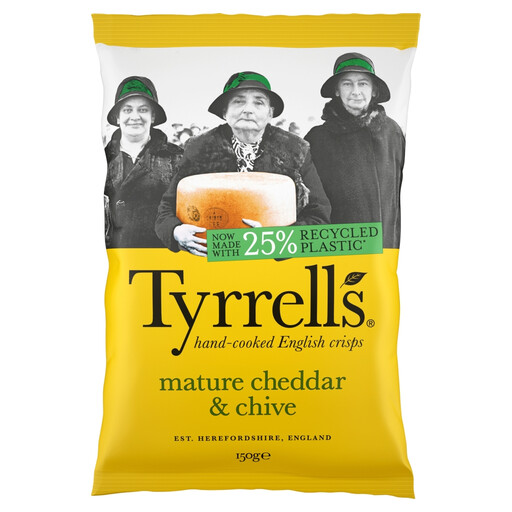
Why This Fits Their Persona: A 150g sharing bag for serving with dips, cheeses or drinks when a thicker-cut texture is preferred.
The stated 150g quantity and sharing-focused format help distinguish it from individual crisp packs.
Made with British potatoes; the listed flavour contains milk and has a thick-cut, hand-cooked format.
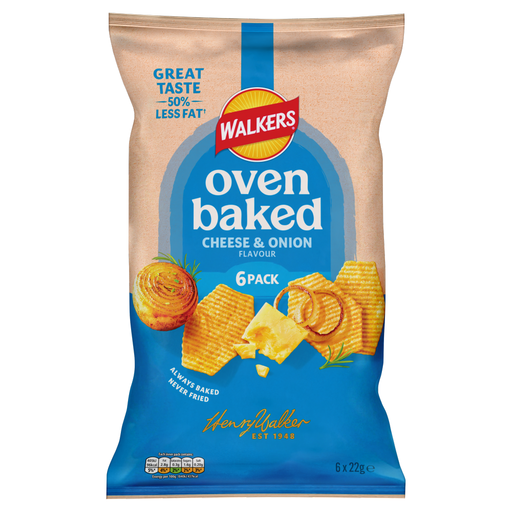
Why This Fits Their Persona: Useful for shoppers who want individual lunchbox snacks while comparing baked products with regular potato crisps.
Its baked preparation and 22g individual packs are stated clearly, so shoppers do not need to infer the format from front-of-pack wording.
Six ready-to-eat packs; the nutrition information lists 13g fat per 100g and the product contains milk.
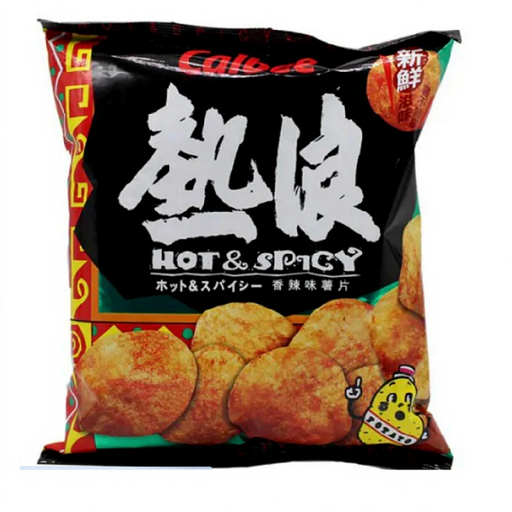
Why This Fits Their Persona: A compact option for shoppers seeking international crisps and a chilli-seasoned alternative to traditional British crisps.
The 55g net quantity makes it suitable for trying a distinctive flavour without committing to a large sharing bag.
Ready to eat; the listed ingredients are potato, vegetable oil and spicy seasoning powder.
We have compiled a complete, real-time list of products that fully satisfy these strict selection criteria and UK safety regulations.
Choose sealed individual crisp packs, such as 22g to 25g multipack bags, when convenience and easy distribution matter. Check the allergen information before packing them for children or sharing with others.
Some baked crisps contain less fat per 100g than comparable regular crisps, but this varies by product. Compare the nutrition panels directly rather than relying only on the word “baked”.
Keep unopened crisps in a cool, dry place. Once opened, consume them promptly or reseal the bag tightly. Moisture can reduce the crisp texture, particularly in sharing crisps and prawn crackers.