One-day lunch packers
An individual bag lets you take a stated portion with one lecture-day lunch. Check its weight rather than assuming a grab bag and a sharing bag contain similar amounts.


For one lecture-day lunch, choose an individual bag in a flavour you want, then check its weight, nutrition declaration and ingredient warnings. A multipack makes more sense if you are packing several lunches, but compare the number and size of its inner bags. Treat crisps as part of lunch rather than the whole meal.
An individual bag lets you take a stated portion with one lecture-day lunch. Check its weight rather than assuming a grab bag and a sharing bag contain similar amounts.
If you pack lunch on several days, compare multipacks and cases by both inner-bag count and weight. A larger pack means more bags to store, not necessarily a better choice for your routine.
Choose by the exact flavour’s ingredients, allergen warnings and nutrition declaration, rather than relying on what another flavour from the same brand contains.
Start with the bag you would carry to lunch; then decide whether buying several of those bags suits your plans.
| Priority | What to check | Your needs |
|---|---|---|
| Bag size and count | Read the net weight of each inner bag and the number of bags, not just the total pack weight. For example, REAL Hand Cooked Crisps lists its Sea Salt case as 24 × 35g. | For one lunch, I want to know how much is in the bag I will carry. If I am packing several lunches, I also need to know how many bags I am buying. |
| Flavour and style | Check the named flavour and its ingredients. Descriptions such as crinkle-cut or ridged identify a style, but do not establish which texture you will prefer. | I would rather choose a flavour I want to eat than assume that every bag from a familiar brand tastes alike. |
| Nutrition per bag | Check the weight alongside the per-bag declaration. Tyrrells declares 0.26g salt for its 40g Lightly Sea Salted bag; Seabrook declares 0.4g for its 31.8g Sea Salted bag. Use per-100g figures when comparing products on the same weight basis. | If I eat the whole bag, I want its per-bag figures. Different bag sizes also matter when I compare the two declarations. |
| Ingredients and allergens | Read the current information for the exact flavour, including precautionary warnings. Tyrrells says its Lightly Sea Salted crisps may contain milk; McCoy’s lists milk ingredients for Flame Grilled Steak flavour. | An ingredient may matter to me, so I need to check the particular bag I am buying rather than rely on its brand name or another flavour’s label. |
A case of individual bags and one larger bag answer different lunch needs. Kettle Chips lists an 18 × 40g case, while REAL Hand Cooked Crisps lists a 24 × 35g Sea Salt case.
Check both the inner-bag weight and bag count before ordering.
A full case leaves you with unopened bags to store after a one-off lunch.
Per-bag figures describe the amount in each product’s stated portion. Tyrrells’ Lightly Sea Salted bag is 40g, while Seabrook’s Sea Salted bag is 31.8g.
Use per-bag figures for the portion you plan to eat, and per-100g figures for a comparison on the same weight basis.
Warnings and ingredients can differ by flavour. The Food Standards Agency advises that vegan labelling is not a substitute for allergen labelling.
Check the exact product’s current ingredients and precautionary warnings, including those on the bag you receive.
These examples show why the exact flavour and pack format matter; a detail stated for one product does not necessarily apply across its brand’s range.
Ready Salted is a reference point for a familiar potato-crisp flavour.
Lightly Sea Salted is listed in a 40g pack, giving one stated bag size to compare.
Kettle Chips lists cases of individual 40g bags for shoppers planning several lunches.
Seabrook describes its crisps as crinkle-cut and provides a per-bag declaration for Sea Salted.
McCoy's is a ridged-crisp option when cut and seasoning are part of your choice.
REAL Hand Cooked Crisps lists Sea Salt in a case of individual bags.
These options include multipacks for several lecture-day lunches and a 60g potato-crisp option to consider for one day. Smiths Frazzles offers a different savoury snack format alongside the crisps.
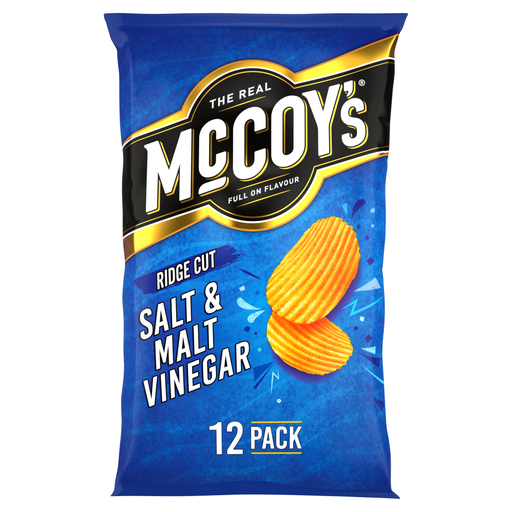 No image available
A 12-pack is an option if you are planning several lunches rather than buying for one day. Check each inner bag’s weight and the exact flavour’s ingredients and allergen warnings before choosing.
 No image available
Six 25g bags give you stated individual portions for lunches on different days. Check the Salt & Vinegar variant’s current ingredients and allergen warnings.
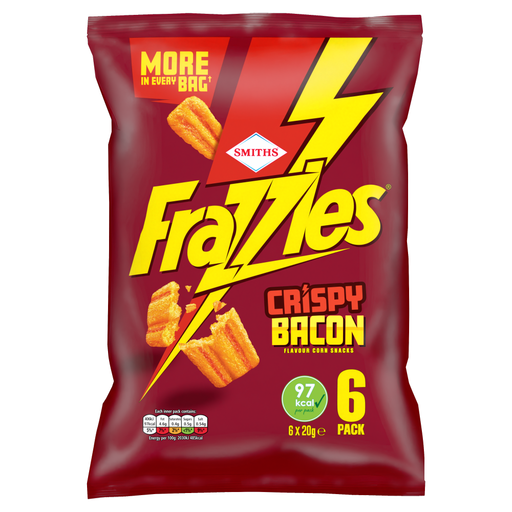 No image available
This savoury snack comes as six 20g bags for separate lunches. It is a different product from potato crisps, so check its ingredients and allergen information on its own terms.
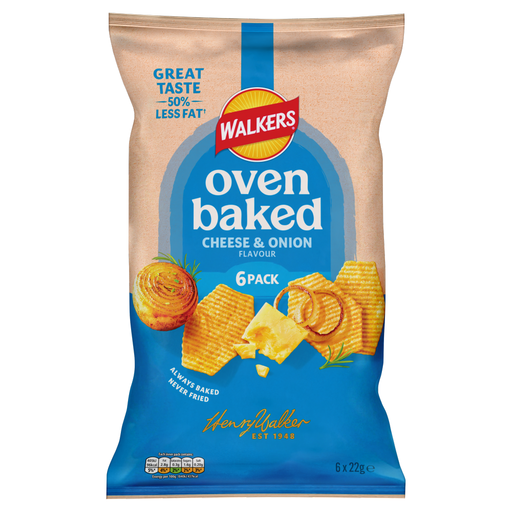 No image available
The Oven Baked range offers six 22g bags if you want a stated portion to pack on several days. Check this Cheese & Onion variant’s ingredients and allergen warnings rather than relying on the range name.
 No image available
This 60g option is worth considering if you want to buy for one lunch rather than keep a multipack. Check whether that bag size suits your lunch plans, along with the flavour’s ingredients and allergen warnings.
Treat crisps as part of lunch rather than the whole meal. The NHS Eatwell Guide says that balance can be considered across a day or week and advises eating foods high in fat or salt less often and in small amounts.
Start with each bag’s net weight and the basis of its nutrition declaration. Per-bag figures describe the whole stated portion; per-100g figures let you compare products on the same weight basis.
No. The Food Standards Agency advises that vegan labelling is not a substitute for allergen labelling. Check the exact product’s allergen information when ordering and the packaging you receive; UK Food Standards Agency guidance says distance sellers must provide allergen information before purchase and at delivery.
Check the number and weight of its inner bags, its storage directions and its best-before marking. That tells you what you can pack each day and whether the case suits your plans; a best-before date concerns quality and is not interchangeable with a use-by date, as the Food Standards Agency explains.