Parents packing a holiday lunch
A small, individually labelled bag makes the crisp portion clear beside the main lunch item. NHS lunchbox guidance advises including crisps less often and suggests plain popcorn or plain rice cakes as alternatives.


For a child’s packed lunch, an individual 18g–25g bag gives you a smaller, defined crisp portion than a 40g–45g grab bag. If fat or salt is the deciding factor, compare those figures for the whole pack rather than assuming that baked and lower-salt crisps address the same concern; check the exact flavour’s ingredients and allergen information too.
A small, individually labelled bag makes the crisp portion clear beside the main lunch item. NHS lunchbox guidance advises including crisps less often and suggests plain popcorn or plain rice cakes as alternatives.
Baked and lower-salt packs answer different questions. Compare the amount in the bag that will actually be eaten, as well as its weight, rather than choosing from a front-of-pack description alone.
Ingredients, precautionary allergen statements and vegetarian or vegan labels can differ between flavours. Check the current packet of the exact product, particularly when packing food for a school or holiday club.
Start with the amount in one bag, then compare its nutrition and ingredients against the rest of the planned lunch.
| Priority | What to check | Your needs |
|---|---|---|
| Portion | Check the weight of each bag, not just the multipack weight. Compare energy, fat and salt for the whole bag; an 18g–25g individual pack is a different portion from a 45g grab bag. | I want a defined savoury side alongside a main lunch item, rather than choosing a larger grab bag by default. |
| Salt | Compare salt per bag. Walkers UK lists 0.19g for its 22g Oven Baked Sea Salt pack and 0.17g for its 25g Lightly Salted pack; Tesco lists 0.44g for a 45g McCoy's Cheddar & Onion grab bag. | When other lunch items contain salt, I want to know what this particular bag adds. NHS Healthier Families lists daily salt limits of 3g for ages 4–6, 5g for ages 7–10 and 6g for ages 11 and over. |
| Fat | Compare fat per pack as well as any stated product comparison. Walkers UK lists 2.8g fat for Oven Baked Sea Salt at 22g and 7.8g for Lightly Salted at 25g. Walkers describes the baked product as having 50% less fat than regular potato crisps. | If I am choosing a baked option for its stated fat comparison, I still want to check its salt figure. A lower-salt claim answers a separate question. |
| Ingredients | Read the current ingredients list, allergen declaration and any may-contain statement for the exact flavour. Check a vegetarian, vegan or gluten-free label on that product rather than assuming it applies across a brand. | I need a pack that fits the child’s dietary requirements and the lunch venue’s arrangements, not simply a familiar brand or flavour. |
A 45g bag contains substantially more crisps by weight than the 18g–25g individual examples. Tesco lists 237 kcal, 14g fat and 0.44g salt for the whole 45g McCoy's Cheddar & Onion bag.
Check net weight and whole-pack nutrition before deciding whether that larger portion fits the lunch.
Walkers UK lists 2.8g fat and 0.19g salt for Oven Baked Sea Salt at 22g, compared with 7.8g fat and 0.17g salt for Lightly Salted at 25g. The two labels describe different priorities.
Decide which figure matters for this choice, then compare the exact packs rather than relying on “baked” or “lightly salted” alone.
Ingredients and may-contain statements vary between crisp products, including within ranges that offer vegetarian or vegan options.
For an allergy-managed lunch, read the current packet and follow the child’s established allergy plan and the venue’s arrangements.
Department for Education school-food guidance concerns food and drink provided in state-funded schools in England; it does not, by itself, settle what an individual holiday club accepts in a lunch brought from home.
Check the particular school, club or organiser’s packed-lunch and allergy policy before packing crisps.
These examples show why pack size and flavour-level details matter; a brand name alone does not establish the nutrition or ingredients of every product in its range.
Its Oven Baked Sea Salt and Lightly Salted products provide two distinct 22g–25g individual-pack comparisons.
Sea Salted Crunchies are an example of a smaller, 18g individual savoury snack.
Its range includes Naked (no salt) potato crisps and lentil crisps, but the relevant pack size still needs checking for a lunch.
Lightly Salted is a potato-crisp option whose published nutrition is given per 100g.
Cheddar & Onion provides a 45g grab-bag example for anyone deliberately choosing a larger single pack.
The brand’s shop lists several flavours in cases of 24 individual 35g bags.
These multipacks contain individual 20g–25g bags for the school-holiday lunch decision. They include baked crisps, a lower-salt crisp and other savoury snacks; compare the exact pack and flavour rather than treating them as interchangeable.
 No image available
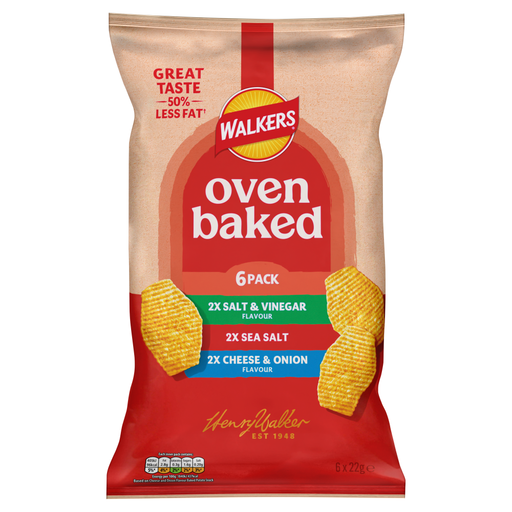
Six individual 22g bags give a defined portion beside a packed lunch. The variety format includes different flavours, so check the chosen bag’s ingredients, allergens and nutrition rather than applying one flavour’s figures to them all.
 No image available
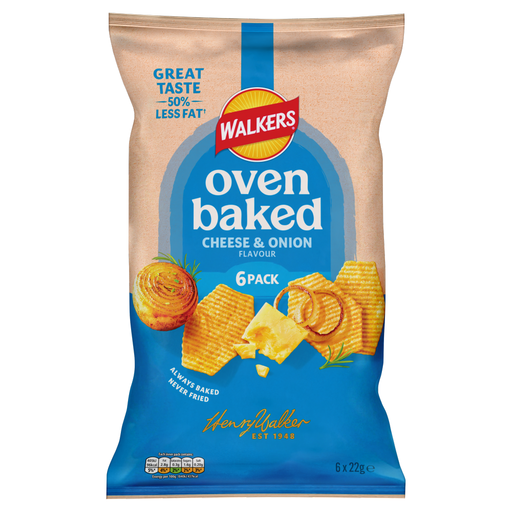
Each of the six bags contains 22g, making the portion clear when packing one alongside lunch. Check the Cheese & Onion packet’s own salt figure and allergen information; the published figures for Oven Baked Sea Salt do not describe this flavour.
 No image available
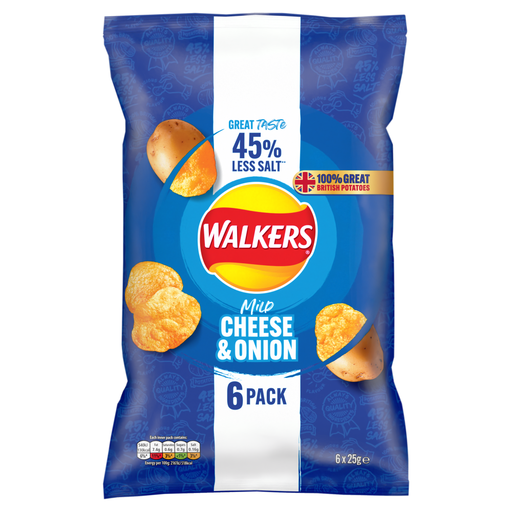
The six 25g bags offer a defined portion when salt is the figure you want to compare. The stated “45% less salt” is a product comparison, not a claim that the crisps contain no salt or are lower in fat; read the exact flavour’s nutrition and allergen label.
 No image available
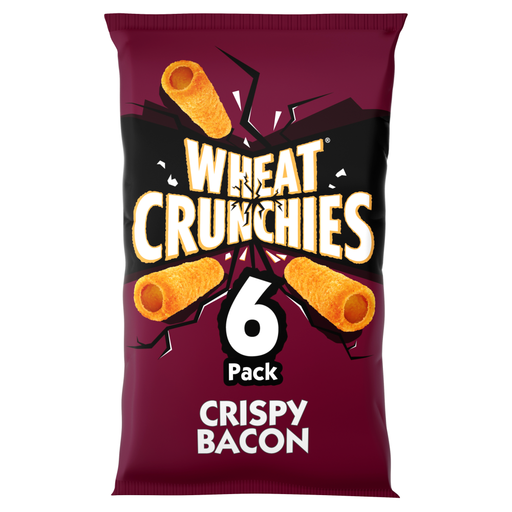
Six 20g bags offer a small, defined savoury portion. This is a wheat-based snack rather than a potato crisp; check its ingredients and allergen information if the distinction matters for the lunch.
 No image available
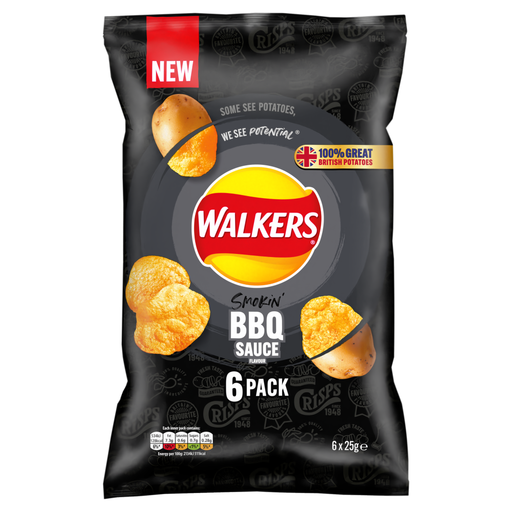
The multipack divides the crisps into six 25g bags for a defined lunch portion. For this BBQ flavour, check the whole-bag nutrition, ingredients and allergen statement instead of relying on figures for other Walkers products.
NHS lunchbox guidance advises cutting down how often crisps are included and suggests plain popcorn or plain rice cakes as alternatives. If you do pack crisps, choose a defined portion alongside the main lunch item rather than using the bag as the lunch itself.
Compare the salt in the whole bag that will be eaten, not just the per-100g figure. NHS Healthier Families lists daily salt limits of 3g for ages 4–6, 5g for ages 7–10 and 6g for ages 11 and over, so other foods eaten that day matter too.
No: baking and a lower-salt formulation describe different features. Walkers UK lists 0.19g salt in a 22g Oven Baked Sea Salt pack and 0.17g in a 25g Lightly Salted pack; use the nutrition panel for the exact flavour you are buying.
Read the current ingredients, allergen declaration and any may-contain statement on the exact pack. GOV.UK identifies crisp packets as prepacked food whose regulated allergen ingredients must be clearly labelled; also follow the child’s allergy plan and check the school or club’s arrangements.