
24/7 Customer Support

Free returns

Same-day & Next-day Delivery

Quality Guaranteed

Unlock Your Welcome Offers: FREE Delivery | Up to 80% OFF | Free 30-day JoyPlus trial
Download the APP
If you are searching for an Applied Nutrition Critical Mass Professional weight gainer, the main challenge is not finding a high-calorie powder. It is choosing a formula, serving size and pack quantity that fit your diet, training routine and budget.
Marketing can make mass gainers appear interchangeable, but several details affect whether a product is practical for regular use. A large tub may offer poor value if the serving is too substantial for your calorie needs, while a smaller pack may become inconvenient if you train frequently. Flavour, allergens and carbohydrate content also deserve attention before you buy.
A 6kg mass gainer contains more powder than a 2.4kg mass gainer, but the useful comparison is the number of labelled servings and the serving size. Applied Nutrition Critical Mass Professional lists a 150g serving for several Professional variants. At that amount, a 2.4kg pack provides approximately 16 servings, while a 6kg pack provides approximately 40 servings.
Check the price per serving rather than judging value by tub size alone. Also consider whether you can store a larger container in a cool, dry place.
A high calorie weight gain powder is intended to increase energy intake, but calories alone do not show how the product fits your nutrition plan. The Critical Mass Professional nutrition profile provides 566 kcal per 150g serving, with 42g protein and 74.7g carbohydrate. This is substantially different from a standard protein powder, so taking it alongside full meals may add more energy than expected.
The Original formula has a different serving and nutrition profile, with 917 kcal, 54.9g protein and 153.8g carbohydrate per 240g serving. Do not assume that “mass gainer” products from the same range have identical portion sizes.
Many shoppers look only at protein content and flavour. However, Applied Nutrition Critical Mass Professional contains ingredients including milk, whey, oats, wheat and soya, depending on the variant. The Original range also lists egg albumen.
The Professional formula includes creatine monohydrate, leucine, glutamine peptides, HMB, HICA, ALA, digestive enzymes and a probiotic ingredient. These may be useful considerations for an adult building a post-workout recovery shake, but they also make the ingredient list more complex. Always read the supplied label if you have allergies, intolerances, medical conditions or take medication.
A lean mass gainer should be assessed by its balance of protein, carbohydrates and total energy. The Professional formula supplies 28g protein and 49.8g carbohydrate per 100g, or 42g protein and 74.7g carbohydrate per 150g serving. This makes it a protein and carbohydrate shake rather than a pure muscle gain protein powder.
The carbohydrate source includes organic ground oats and maltodextrin. This combination may suit people who need additional calories around training, but individuals with lower energy requirements may prefer a smaller portion.
Use kitchen scales where possible. The product information notes that scoop measurements are estimates, and 2.5 scoops are intended to provide approximately 150g for the Professional formula. Mixing instructions specify 500ml of water or skimmed milk.
For occasional use, a 2.4kg pack allows you to try a flavour and monitor tolerance without committing to a long supply. For frequent training or households sharing the product, a 6kg pack reduces the need for repeat orders, subject to storage space and the stated best-before date.
Professional variants provide 3g creatine monohydrate per 150g serving, together with 5g leucine, 5g glutamine peptides, 2g HMB and 0.5g HICA. This is relevant if you are specifically looking for a creatine mass gainer rather than a basic calorie powder.
Some listed Professional variants are described as Halal certified and Informed Sport batch tested, but certification and batch information can vary by product listing. Check the packaging supplied with your chosen flavour before purchase. Supplements should complement a varied, balanced diet and active lifestyle, not replace them.
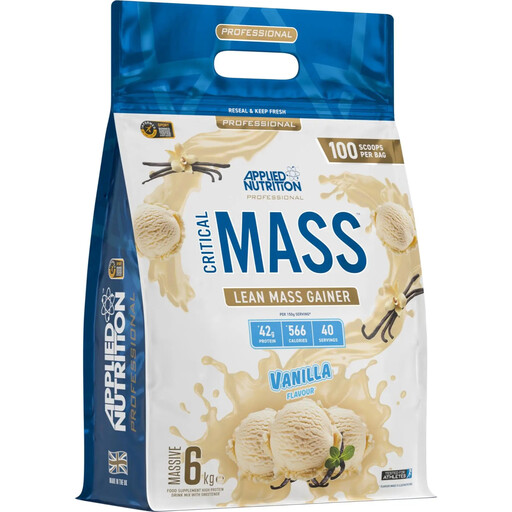
Why This Fits Their Persona: The familiar vanilla flavour works with water or skimmed milk and the larger pack suits adults who already know they can use a mass gainer regularly.
The 150g serving and published nutrition panel make it easier to calculate daily intake instead of relying on vague calorie claims.
Provides 42g protein, 74.7g carbohydrate and 3g creatine per listed 150g serving.
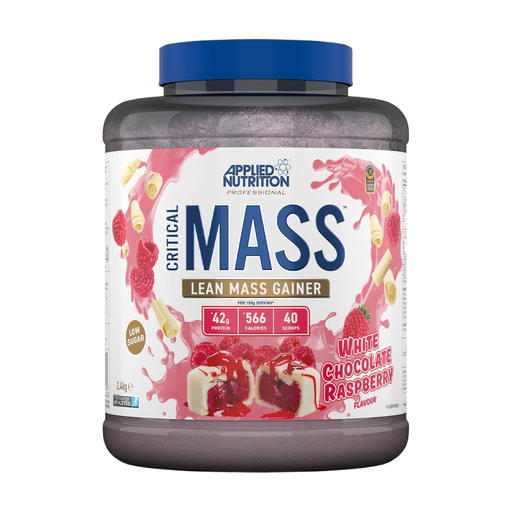
Why This Fits Their Persona: A smaller pack offers a practical way to assess taste, mixing and tolerance before buying a long-term supply.
The 2.4kg format limits the risk of being left with a large tub if the flavour does not suit your routine.
Lists a dual protein-and-carbohydrate formula, plus digestive enzyme and probiotic ingredients.
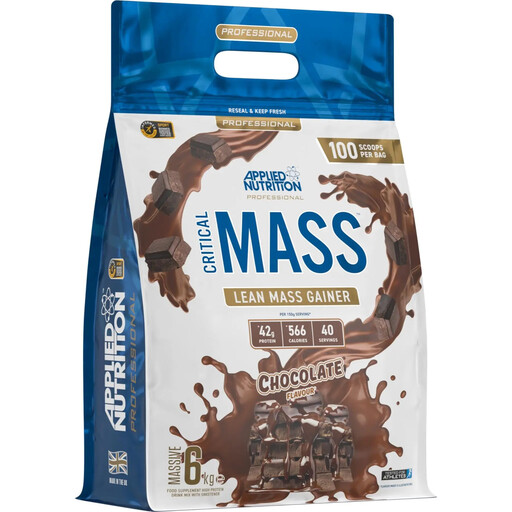
Why This Fits Their Persona: Regular lifters and hard gainers who use a post-workout recovery shake or between-meal drink can plan a longer supply with the 6kg format.
The nutrition panel clearly separates per-100g and per-150g values, helping heavy users budget calories and servings accurately.
Chocolate flavour, 42g protein per 150g serving and added creatine, leucine and glutamine peptides.
At the listed 150g serving size, 2.4kg provides approximately 16 servings. Taking one serving daily would make it last around 16 days, although actual use depends on your personal plan and the product label.
It can be mixed with water or skimmed milk and used after training, between meals or as part of a wider nutrition plan. Its listed protein and carbohydrate content makes it different from a low-calorie protein powder. Choose the timing and portion that fit your overall calorie needs.
Compare the serving size, calories, protein, carbohydrate and allergen information. Professional listings commonly show a 150g serving with 566 kcal, 42g protein and 74.7g carbohydrate. Original listings use a 240g serving with different nutritional values. Read the exact label for the flavour and pack size you intend to purchase.