Lunch shoppers watching saturated fat
If you want a pastry occasionally, compare fat and saturated fat rather than assuming that plain or all-butter makes it suitable for an everyday lunch.


A croissant is generally better treated as an occasional lunch component than as an everyday lunch base, as sampled plain croissants are high in fat and saturated fat per 100g under NHS label thresholds. If you choose one, compare values per 100g and per piece, check the current allergen label, and select a portion and format that suit your lunch routine.
If you want a pastry occasionally, compare fat and saturated fat rather than assuming that plain or all-butter makes it suitable for an everyday lunch.
Check the actual piece size, calories and pack format. Sainsbury’s lists a sampled croissant at 40g per piece, while Waitrose lists a sampled all-butter croissant at 68g per serving.
Use the current pack label or retailer allergen information before buying, particularly for wheat or gluten, milk and egg declarations and any cross-contact warnings.
When it fits: Choose this only when you specifically want a pastry and can treat it as one part of lunch.
Trade-off: Sainsbury’s sampled plain croissant lists 22.0g fat and 11.2g saturates per 100g, above the NHS high thresholds.
When it fits: Consider it when comparing pastries within the same range and you still prefer the croissant format.
Trade-off: M&S says its reduced-fat version has 30% less fat than its own all-butter croissants, but its label still lists 18.1g fat and 12.3g saturates per 100g.
When it fits: Choose this route when you need to assess the exact ingredients and allergen declaration before purchase.
Trade-off: Recipes and precautionary warnings can vary, so the label on the pack you are buying remains the key check.
| Priority | What to check | Your needs |
|---|---|---|
| Fat and saturates | Compare fat and saturated fat per 100g; use front-of-pack traffic lights as a quick starting point; check the per-serving figures too. The NHS defines more than 17.5g fat and more than 5g saturates per 100g as high. | I want to compare croissants on the same basis before making one a regular lunch choice. A lower-fat claim is worth checking alongside the saturated-fat value. |
| Portion and format | Check the weight of one pastry, calories per piece, pack format and any storage or heating instructions. Compare per 100g when pieces differ in size. | I need to know whether I am buying a smaller packaged pastry or a larger bakery serving, and whether it suits a ready-to-eat or planned-at-home lunch. |
| Allergen information | Read the ingredient list, allergen declaration and precautionary statements on the exact item. Ask for current allergen information when buying loose bakery products. | I need clear information for wheat or gluten, milk, egg and any product-specific cross-contact warnings before choosing a croissant. |
Plain does not mean low in fat or saturated fat. The NHS advises having foods high in these nutrients less often or in smaller amounts; sampled croissants exceed its per-100g high thresholds.
Use a croissant as an occasional part of lunch if you want one, rather than relying on it as the usual lunch base.
Pieces can differ substantially in size. Sainsbury’s sampled croissant is 40g and lists 166 kcal per pastry, while Waitrose’s sampled all-butter croissant is a 68g serving with 298 kcal.
Compare nutrition per 100g first, then use the stated serving size to decide how it fits your portion.
M&S states that its Reduced Fat All Butter Croissants contain 30% less fat than its own all-butter croissants, but the listed product still has 12.3g saturates per 100g.
Read both total fat and saturates, and treat a reduced-fat label as a comparison within a pastry range rather than an automatic everyday-lunch choice.
Croissants commonly declare wheat or gluten, milk and egg, and some products include additional cross-contact warnings. Ingredients and allergen wording can change.
Read the label on the exact pack at purchase. For loose bakery items, ask for current allergen information rather than relying on the name alone.
M&S lists standard all-butter and Reduced Fat All Butter Croissants in its food range.
Tesco offers Tesco Finest All Butter Croissants alongside standard own-label packs and filled croissant formats.
Sainsbury’s offers a plain individually wrapped six-pack alongside all-butter and Taste the Difference croissant lines.
Waitrose has own-label all-butter, No.1 and counter or packaged croissant options.
Lidl offers an in-store bakery All Butter Croissant with store-specific availability.
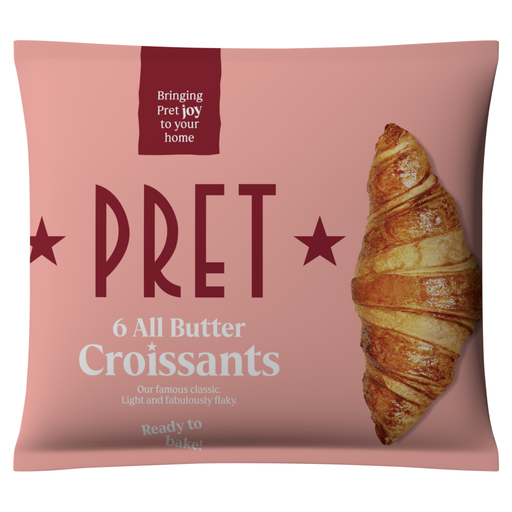
Joybuy product options for a planned, occasional plain-croissant lunch where freezer storage and oven baking are available.
 No image available
This plain frozen croissant option suits a planned home lunch rather than a ready-to-eat purchase.
It requires frozen storage and baking from frozen for 20 minutes. The stated baked nutrition is 24g fat and 15g saturates per 100g, so it remains an occasional pastry option under the NHS per-100g thresholds.
Contains wheat or gluten, milk and egg, and may contain nuts, sesame and soya. Check the current pack label before purchase if allergies or intolerances are relevant.
No. “Medium sliced” is normally a description for sliced loaves, while croissants are sold as individual pastries, multipacks, counter items or frozen bake-at-home products. Compare piece weight, pack format and the current nutrition label instead.
Start with fat and saturated fat per 100g, then check calories and the actual serving size. The NHS defines more than 17.5g fat or more than 5g saturated fat per 100g as high; a traffic-light label can help with an initial shelf comparison.
Not automatically. M&S says its Reduced Fat All Butter Croissants have 30% less fat than its own all-butter croissants, but the product still lists 18.1g fat and 12.3g saturates per 100g, above the NHS high thresholds.
Check the specific product each time. Sampled products declare wheat or gluten, milk and egg, while some include nut warnings or wider cross-contact statements. In England, Northern Ireland and Wales, food businesses must provide allergen information for both prepacked and non-prepacked food.
Follow the instructions on the exact pack. A sampled Sainsbury’s croissant is ready to eat, may be warmed and can be frozen before its best-before date, but it should not be reheated once cooled. Frozen bake-at-home croissants have different storage and cooking instructions.