Who this suits

One- or two-person breakfast planners

For a smaller Full Scottish breakfast, an individual croissant or a two-pack can reduce the chance of opened leftovers. Waitrose offers a two-croissant pack, Tesco lists a two-pack, and M&S lists a 75 g individual croissant.

Hosts serving several breakfast guests

Four- and eight-pack formats can suit a group, provided the pack’s storage and freezing directions fit what you expect to use after breakfast.

Allergy-aware or nutrition-conscious shoppers

Compare the current label for cereals containing gluten, milk, egg, nuts and precautionary statements. For a breakfast with other rich foods, compare saturated fat per 100 g and per serving too.

Buying priorities

Two-pack or individual croissants

Choose this when: You are serving one or two diners, or croissants are only an accompaniment to breakfast.

Consider: A smaller format limits surplus, but butter croissants can still contribute substantial saturated fat per portion.

Four-pack with planned storage

Choose this when: Three or four people are eating, or you have a clear plan to use the remaining pastries within the label instructions.

Consider: Defrosted pastries may need using within a stated period and should not automatically be refrozen.

Frozen bake-at-home croissants

Choose this when: Fresh-from-the-oven pastry matters and you have freezer space and time to bake it.

Consider: This route needs freezer storage and preparation time, so it may not suit an immediate breakfast.

Priority What to check Your needs
Pack size Check the croissant count and format. Individual and two-pack formats suit one or two diners; consider four or more only for extra guests or a storage plan. I want enough pastries for the table without opening more than the household is likely to use.
Storage and warming Read freezing, defrosting and reheating directions on the exact pack. For Sainsbury’s x4, freeze before the best-before date, use within one month, then use within 24 hours after defrosting. I need leftovers to fit a realistic plan rather than assuming every croissant can be frozen or reheated in the same way.
Allergens Read the current ingredients and allergen statement, including precautionary wording. Verified examples contain wheat, milk and egg, while some also carry nut or other trace statements. Everyone at the breakfast table needs to be considered before I buy or serve the pastries.
Saturated fat and portion Compare per 100 g and per croissant, as pastry sizes differ. The NHS describes more than 5 g saturated fat per 100 g as high. I want to keep the croissant portion in context when the breakfast already includes other high-fat foods.

Common pitfalls

  • Treating “half loaf” as a reason to buy a large croissant multipack

    An individual croissant and two-pack formats are available, so an eight-pack is not the only option for a smaller household.

    Count the expected eaters first. Choose an individual or two-pack format for one or two diners unless you have a specific plan for the surplus.

  • Comparing only price per item and overlooking nutrition per 100 g and portion size

    A small croissant can still make a substantial saturated-fat contribution. Waitrose No.1 lists 10.1 g saturated fat per croissant, and the NHS advises using both per-100-g and portion information when comparing foods.

    For a rich breakfast, compare saturates per 100 g and per croissant, then decide whether one pastry is the portion you want to serve.

  • Assuming all butter croissants have the same allergen or trace statement

    Verified products contain major allergens, while precautionary statements vary by product and selling format.

    Check the current physical pack or counter information each time, especially for anyone with an allergy or intolerance.

  • Buying frozen bake-at-home croissants without checking storage and cooking requirements

    Frozen croissants need freezer storage and cooking time, which may not fit a breakfast that needs to be served quickly.

    Confirm freezer capacity, preparation time and the product’s cooking instructions before choosing frozen rather than ready-to-eat croissants.

    Freezer space and preparation time are practical considerations for this format.

Relevant brand references

M&S

An in-store bakery option for shoppers who want to buy exactly one croissant rather than a multipack; the listed all-butter product is 75 g.

  • M&S describes the croissant as made with real butter.
  • In-store preparation takes place where nuts, peanuts, sesame and other allergens are used, so traces cannot be ruled out. Local Foodhall stock may vary.

Tesco Finest

A four-pack all-butter option for households wanting the Finest line rather than the smallest pack; Tesco also lists two-, four- and eight-pack formats.

  • Tesco describes its Finest croissants as layered and folded with French churned butter for flaky layers.
  • The Finest pack contains four croissants, so it is less directly tailored to a one- or two-person breakfast.

Sainsbury's

An own-label four-pack with online nutrition, warming and freezing instructions.

  • The all-butter x4 pack is ready to eat and may be warmed in an oven or air fryer.
  • It contains wheat, butter from cows’ milk and whole egg; check the physical pack because ingredients may change.

Waitrose

A small-household option through No.1 2 Butter Croissants; Waitrose also lists four- and eight-croissant formats.

  • The No.1 pack contains two croissants and gives a two- to three-minute oven-warming instruction.
  • It lists 262 kcal and 10.1 g saturated fat per croissant, and may contain nuts.

Lidl

An in-store individual all-butter croissant option for shoppers who want a single pastry, subject to local-store availability.

  • Lidl identifies this as an in-store all-butter croissant.
  • The product lists milk, wheat and egg allergens, plus possible traces of multiple allergens.

Small-household format comparison

This composite ordering uses pack counts, product format, storage instructions and preparation requirements for a one- or two-person breakfast. It is not a sales ranking or third-party test ranking.

Rank SKU name Main specifications Recommendation reasons Supplier or platform
1 Waitrose No.1 2 Butter Croissants Two croissants; oven warming in two to three minutes; 10.1 g saturated fat per croissant. A two-croissant pack directly fits a one- or two-person breakfast quantity. It may contain nuts. Waitrose
2 Tesco All Butter Croissant 2 Pack Two-croissant pack. A current Tesco category listing provides a small quantity for one or two diners. Check the product label for ingredients, allergens and storage directions. Tesco
3 M&S All Butter Croissant 75 g Individual 75 g all-butter croissant. An individual in-store format suits one diner or adding a single pastry to a larger breakfast. Check local Foodhall availability and allergen information. M&S
4 Sainsbury's All Butter Croissants x4 Four croissants; may be frozen before the best-before date; contains wheat, milk and egg. A practical option for three or four diners, or where planned freezing makes a four-pack workable. Sainsbury's
5 Pret A Manger Butter Croissants 330 g Frozen 330 g pack; bake from frozen in about 20 minutes; freezer storage at -18°C or below. A bake-at-home option when oven-fresh croissants matter more than immediate convenience. Check the pack count before planning portions for one or two diners. Joybuy

Joybuy products

Joybuy product options for the frozen bake-at-home croissant route, suited to a planned breakfast with freezer and oven access.
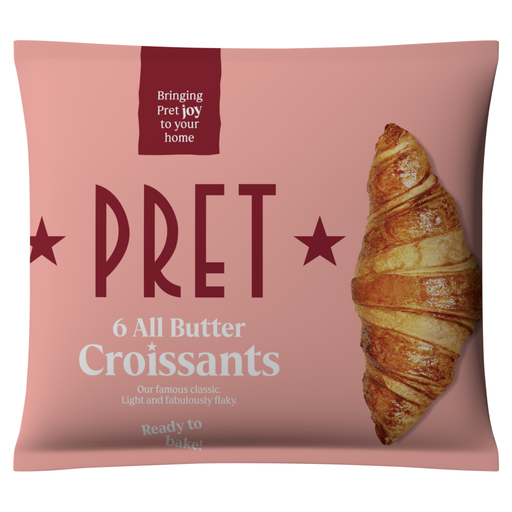
Pret A Manger Butter Croissants 330 g

Pret A Manger Butter Croissants 330 g

For a planned breakfast where you want croissants baked from frozen rather than served straight from the pack.

Keep frozen at -18°C or cooler and bake from frozen in about 20 minutes. Contains wheat, milk and egg; may contain nuts, sesame and soya. Check the pack count before relying on it for one or two diners.

Joybuy

Frequently asked questions

How many croissants should I buy for a smaller Full Scottish breakfast?

For one or two people, buy one individual croissant each or a two-pack if croissants are an accompaniment. A four-pack is more suitable for three or four diners, or when you will follow the pack’s storage or freezing directions for leftovers.

Can I freeze unused croissants?

Follow the directions on the exact pack. Sainsbury’s All Butter Croissants x4 says to freeze before the best-before date, use within one month, defrost fully, use within 24 hours and not refreeze after defrosting.

Can I serve croissants to someone with a wheat, milk, egg or nut allergy?

Do not decide from the product name alone. Verified croissants contain wheat or gluten, milk or butter and egg; some products also carry nut or other precautionary statements, so read the current pack or counter allergen information immediately before serving.

How should I compare saturated fat in croissants?

Compare values per 100 g first, then check the per-croissant portion because pastries differ in size. The NHS classifies more than 5 g saturated fat per 100 g as high; the verified butter-croissant examples exceed that threshold, although their per-piece values differ.

What allergen labelling applies to croissants sold prepacked for direct sale?

In England, Wales and Northern Ireland, prepacked-for-direct-sale food must show the food name and a full ingredients list with allergenic ingredients emphasised. Read the latest label too, particularly for bakery-counter products and changing recipes.