Who this is for

Holiday-cottage groups feeding four or more people

Choose a pack count that can cover breakfast without relying on several smaller packs. Tesco and Sainsbury’s both list eight-pack croissant options, but check the recipe and allergen information before treating products as interchangeable.

Self-caterers with a cottage oven and freezer

Bake-at-home croissants can suit a warm breakfast when the property has freezer capacity and a usable oven. They need planning and cooking time rather than simply opening a pack.

Hosts buying for guests with allergies or intolerances

Check the exact product label or retailer allergen information rather than assuming plain croissants use the same ingredients. Verified examples include wheat or gluten, milk and egg; allergen information may be presented differently for packaged and loose bakery food.

Buying priorities

Start with the number of guests and breakfast timing, then check the format, current unit price and exact allergen information for the pack you intend to serve.

Priority What to check Your needs
Predictable group cost Compare the displayed price per croissant as well as the pack total. Check pack count and whether any loyalty price has conditions or an end date. I want enough croissants for the group without finding that several smaller packs cost more than expected.
Breakfast timing and format Choose ready-to-eat packaged or bakery croissants for a quick breakfast. For frozen products, confirm freezer storage, oven access and the stated cooking instructions. A fast breakfast suits an early departure; a leisurely morning may leave time for croissants baked from frozen.
Allergen information Read the exact ingredient and allergen declaration for the current product. For loose bakery items, ask for current allergen information and retain it for the shared kitchen. I need to know whether the croissants are suitable for guests avoiding ingredients such as wheat or gluten, milk, egg or nuts.

Common buying pitfalls

  • Comparing only the pack price

    A lower pack total can mean fewer croissants and a higher cost for the breakfast you are planning. Retailer listings show that unit prices can differ across pack sizes.

    Compare the displayed per-item price and pack count, then buy for the number of guests and planned breakfast occasions.

  • Treating loyalty-card prices as guaranteed

    A reduced price may require a loyalty account or apply only for a stated period, which can disrupt a cottage-shopping budget.

    Note both the standard and loyalty price when planning, and check the offer terms shortly before travelling.

  • Buying frozen croissants without checking the cottage facilities

    Frozen croissants need freezer storage and oven time. They can be inconvenient if the property has limited freezer space, an unreliable oven or an early checkout.

    Confirm the cottage’s freezer and oven before buying frozen pastries; otherwise choose ready-to-eat or bakery croissants.

  • Assuming plain croissants are allergy-safe

    Croissants commonly contain allergens such as cereals containing gluten, milk and egg. Loose bakery products may provide allergen details differently from packaged products.

    Keep the packaging or photograph the label, ask for current allergen information for loose bakery products, and do not rely on a previous product version for a guest with an allergy.

Relevant brand references

Tesco / Tesco Finest

Tesco offers standard all-butter croissants in several pack sizes alongside Tesco Finest four-packs, making it useful for comparing group-size packs with a premium line.

  • Standard and Finest ranges offer different pack-size options for cottage breakfasts.
  • Tesco describes its Finest croissants as using butter churned in France; this is a retailer product statement rather than an independent quality assessment.

Sainsbury’s / Taste the Difference

Sainsbury’s has standard croissant packs, all-butter packs and Taste the Difference butter croissants, providing a choice between a lower-cost line and a premium range.

  • The range includes both larger standard packs and smaller all-butter options.
  • Nectar offers are conditional, so check the current terms before relying on a reduced price.

Waitrose

Waitrose sells small ambient packs, individual bakery croissants and frozen ready-to-bake butter croissants for shoppers choosing by serving format.

  • Frozen butter croissants are stated to bake from frozen in 20 minutes.
  • Frozen products require confirmed freezer space, oven access and time before breakfast.

M&S

M&S offers all-butter, reduced-fat and made-without croissant options, including frozen ready-to-bake products.

  • The range may be useful where dietary range or a prepared breakfast format matters.
  • M&S states that food prices and availability can vary by selected store and online channel.

Lidl

Lidl’s in-store bakery All Butter Croissant can suit small, immediate purchases where a multipack is unnecessary.

  • Lidl confirms the product is available in store and suitable for vegetarians.
  • The product information lists milk, wheat and egg, plus possible traces including nuts and sesame, so an allergy check is essential.

Joybuy product options

Joybuy product options for the frozen bake-at-home croissant route, for cottage breakfasts with confirmed freezer storage and oven access.
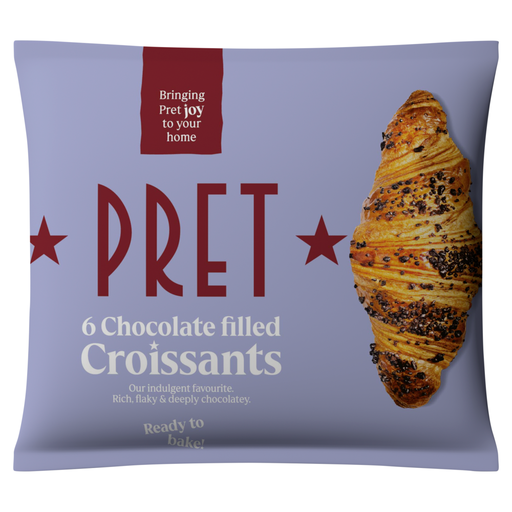
Pret A Manger 6 Chocolate Filled Croissants 420G

Pret A Manger 6 Chocolate Filled Croissants 420G

For a cottage with a working freezer and oven, this frozen six-croissant option is stated to bake from frozen in 22 minutes.

Contains wheat, gluten, milk, egg and soya; it is not suitable for nut and sesame allergy sufferers.

Joybuy

Pret A Manger Butter Croissants 330g

Pret A Manger Butter Croissants 330g

These frozen all-butter croissants are stated to bake from frozen in 20 minutes when freezer and oven facilities are available.

Keep frozen at -18°C or cooler. Contains wheat, gluten, milk and egg, and may contain nuts, sesame and soya.

Joybuy
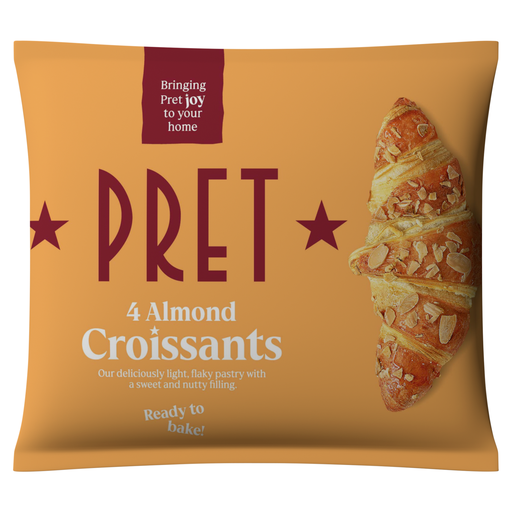
Pret A Manger Almond Croissants 280g

Pret A Manger Almond Croissants 280g

This frozen almond-filled option suits a cottage breakfast only where freezer storage and oven access are confirmed.

Keep frozen at -18°C or cooler. Contains wheat, gluten, milk, egg and almonds, and may contain other nuts, sesame and soya.

Joybuy

Frequently asked questions

How many croissants should I buy for a holiday-cottage breakfast?

Use the pack count as the starting point, then add extra only if guests are likely to want seconds or you need breakfast for another morning. A four-pack can suit a group of around four, while larger groups may find an eight-pack more practical; do not assume products with the same pack count have the same recipe, weight or allergens.

Are frozen ready-to-bake croissants worth it in a self-catering cottage?

They can be worthwhile when the cottage has freezer space, a working oven and enough time before breakfast. Waitrose states that its frozen butter croissants bake from frozen in 20 minutes; follow the current pack instructions rather than applying that timing to another brand.

What allergens should I check in croissants?

Check the exact product information every time. Verified examples list wheat, milk and egg, while Lidl also lists possible traces of several other allergens. GOV.UK and Food Standards Scotland state that food businesses must provide allergen information for both prepacked and non-prepacked food, although the way it is provided differs by food type.

Can I rely on an online loyalty-card price for my cottage shop?

No. Tesco Clubcard and Sainsbury’s Nectar prices are conditional offers with stated availability periods. Confirm the offer in your account or local store shortly before shopping, and use the standard price for planning if access to the loyalty scheme is uncertain.

Do I need to provide allergen information if I leave croissants for paying guests?

If you operate as a food business and supply food to guests, official UK guidance says allergen information must be provided for both prepacked and non-prepacked food. The precise obligation depends on how the food is supplied and the UK nation involved, so seek local authority or food-safety guidance for a specific accommodation arrangement.