Smaller households buying one or two snacks
A two-croissant pack can be a practical alternative to a larger pastry pack when only one or two portions are expected. Sainsbury's Groceries and Waitrose & Partners list two-croissant options.


Choose a two-pack or a single bakery croissant when one or two after-school snacks are needed and you want to limit leftovers. Larger or individually wrapped packs suit several planned snack occasions, while a croissant loaf is better for slicing and sharing; check the current allergen label and the school’s arrangements before packing any croissant.
A two-croissant pack can be a practical alternative to a larger pastry pack when only one or two portions are expected. Sainsbury's Groceries and Waitrose & Partners list two-croissant options.
Check the exact current label and the school's allergy arrangements before packing a croissant. Tesco, Sainsbury's and Waitrose listings identify wheat/gluten, milk and egg in the cited products.
Four-, six- and eight-pack formats can suit a household that will use the whole pack. Sainsbury's lists a six-pack described as individually wrapped, which can make portions easier to carry.
Start with the number of snack occasions, then check the current label, storage instructions and per-croissant nutrition panel for the exact product.
| Priority | What to check | Your needs |
|---|---|---|
| Pack size and leftovers | Compare pack count, individual wrapping, best-before date and product-specific freezing instructions. Choose x6 or x8 only if several portions are likely to be used. | A two-pack can suit one or two snack portions, while a four-pack suits a small shared snack. I would only choose a larger pack when there are enough planned occasions to use it. |
| Allergen suitability | Read the current ingredients and allergen declaration on the physical pack. Check wheat/gluten, milk, egg, nut and trace statements against the child's needs and the school's arrangements. | I need a snack that fits the individual child's dietary requirements and the school's allergy procedures. A plain-looking butter croissant should not be assumed suitable. |
| Portion nutrition | Compare the per-croissant serving, not just the per 100g panel. Tesco Groceries lists 253 kcal and 8.4g saturates per cited Tesco Finest croissant; Waitrose & Partners lists 180 kcal and 7.1g saturates per cited four-pack croissant. | I want to compare the portion actually being packed. These figures are specific to the named products, so I would use the label for the exact croissant rather than treating them as category-wide values. |
Retailer listings include two-packs, four-packs, six-packs, eight-packs, single bakery croissants and a 380g croissant loaf. A croissant described as a half loaf is not established by these listings.
For one or two snack portions, begin with a two-pack or a single bakery croissant. Choose a croissant loaf only when sliced sharing or fillings are the aim.
The cited all-butter croissants contain wheat/gluten, milk and egg, and some products include nut or trace warnings. Food brought from home can also be part of a school's allergy-safety arrangements.
Read the current physical-pack allergen declaration every time and check the relevant school policy before packing the snack.
A larger pack is not automatically the practical choice if a smaller household will not use it. Pack counts range from a single bakery croissant to x8, and only some products are individually wrapped or have specific freezing guidance.
Plan the number of snack occasions first, then compare pack count, wrapping, best-before date and the exact product's storage or freezing instructions.
Recipes and product information can change, particularly where wheat/gluten, milk, egg, nuts or trace allergens matter.
Use retailer pages to shortlist options, then verify the physical product label at purchase and before packing.
Relevant for small-household snack shopping because Sainsbury's Groceries lists own-label all-butter croissants in x2, x4, x6 and x8 formats, including a six-pack described as individually wrapped.
Relevant for shoppers seeking a clearly listed two-pack or a conventional four-pack all-butter option.
Relevant for a four-pack all-butter option that Tesco Groceries describes with French-churned butter and flaky layers.
Relevant for an in-store bakery all-butter croissant when the aim is to buy only the portion needed that day.
Relevant for an in-store bakery all-butter croissant when local availability and a single-pastry purchase matter more than online ordering.
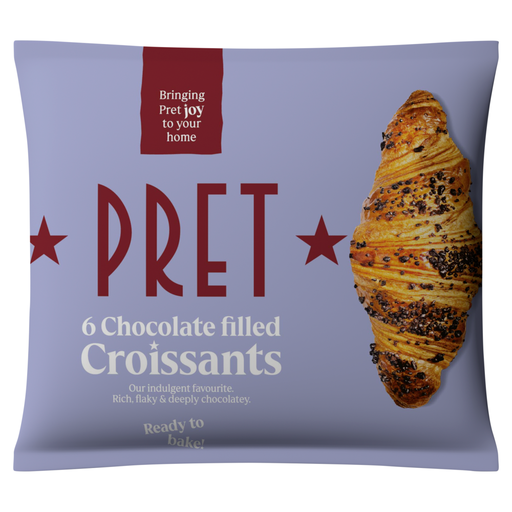
Joybuy product options for households planning several after-school snacks and able to store frozen croissants and bake them before serving.
 No image available
This six-croissant frozen pack can suit several planned after-school snacks rather than an immediate ready-to-eat option.
It is stored at -18°C or below and requires 22 minutes of oven cooking from frozen. The stated nutrition panel gives 276 kcal and 9g saturates per baked croissant.
Contains wheat/gluten, milk, egg and soya; it is stated as unsuitable for nut and sesame allergy sufferers. Check the current pack label and the school's allergy arrangements before packing.
No. Sainsbury's Groceries, Tesco Groceries and M&S listings show two-packs, standard multi-packs, single bakery croissants and a 380g croissant loaf, rather than a defined half-loaf croissant. For a smaller household, a two-pack or single bakery croissant is the more direct option.
Only after checking the child's needs, the current pack label and the individual school's allergy arrangements. The cited products contain wheat/gluten and commonly milk and egg, while some include nut or trace warnings; Department for Education guidance for England says food brought from home should be considered in a school's allergy-safety approach.
It depends on the exact product. Tesco Groceries states that its cited Tesco Finest four-pack is suitable for freezing and gives chilled reheating instructions, while Sainsbury's states that its cited x6 pack should be frozen by the best-before date, used on the day it is defrosted and not refrozen. Follow the current pack instructions.
Compare the per-croissant serving as well as the per 100g panel, because croissant sizes vary. Tesco Groceries lists 253 kcal and 8.4g saturates per cited Tesco Finest croissant, while Waitrose & Partners lists 180 kcal and 7.1g saturates per cited four-pack croissant; use the current label for the exact product.