Who this is for

Parents starting baby-led weaning around 6 months

For carers deciding whether a family breakfast pastry can be offered alongside breast milk or first infant formula, while checking developmental readiness, safe serving and supervision. NHS guidance and Royal Berkshire NHS Foundation Trust guidance support these considerations.

Parents comparing premium all-butter croissants

For shoppers choosing between premium own-label croissants, where butter or French-style positioning should not replace nutrition and allergen-label checks.

Families managing food-allergy uncertainty

For carers who need to check wheat/gluten, milk and egg before serving, or who need medical advice before introducing foods where a baby has eczema, a diagnosed allergy or a relevant family allergy history. NHS guidance advises introducing allergenic foods one at a time and in very small amounts.

What to check before buying

Plain all-butter croissant

When it may fit: Choose it only for a baby who is ready for solids, can sit upright, can manage adapted soft pieces and is supervised throughout eating.

Trade-off: An all-butter or premium recipe does not establish infant nutritional suitability, so salt and saturated fat still need checking on the exact pack.

Another finger food

When it may fit: Choose another option if the baby is not ready, has a relevant allergy, the allergen information is unclear, or the meal needs to provide iron- and protein-containing foods.

Trade-off: You lose the convenience of sharing a breakfast pastry, but can build the meal around a wider range of weaning foods.

Avoid filled pastries for a first trial

When it may fit: If wheat, milk or egg have not yet been introduced, choose a product with a short, clear ingredient list and introduce allergens one at a time.

Trade-off: Chocolate, nut or other filled croissants can introduce several additional ingredients at once.

Priority What to check Your needs
Readiness and serving Check that the baby can sit upright with stable head control. Offer a narrow strip or torn piece, and consider the food’s size, shape and texture. I want to offer a piece only when my baby can manage self-feeding safely and an adult can supervise throughout.
Allergen clarity Read the current ingredient and allergen declaration for wheat/gluten, milk and egg. Check loose-bakery allergen information directly where needed. I need to know exactly what is in the pastry, especially when an allergen is new, suspected or already diagnosed.
Salt and saturated fat Compare salt and saturated fat per 100g and per serving on the exact product. Do not use all-butter or premium wording as a nutrition shortcut. I want a family-food option that remains occasional rather than becoming a routine baby food.
Role in the meal Choose a plain, unfilled option where appropriate and keep varied foods in the meal pattern. Include age-appropriate protein and iron-containing foods elsewhere. I want the pastry to be a small shared food, not the nutritional centre of a weaning meal.

Common pitfalls

  • Equating premium or all-butter wording with baby suitability

    Premium provenance and butter content describe recipe style, not whether a croissant supports a baby’s weaning nutrition. M&S lists 17.7g saturates and 1.05g salt per 100g for its All Butter Croissants; NHS guidance says babies should not eat much salt and children should not have too many foods high in saturated fat.

    Use premium claims as an adult taste or recipe preference, then check the current nutrition panel before serving.

  • Serving a whole pastry without adapting the portion or supervising

    Food can present a choking risk when babies cannot manage its size, shape or texture. NHS guidance stresses upright seating, close supervision and attention to how food is prepared.

    Offer a manageable strip or torn piece only when the baby is developmentally ready, seated safely upright and watched throughout eating.

  • Assuming every croissant has the same allergens or recipe

    Standard all-butter croissants commonly contain wheat, milk and egg, while filled versions can add further allergens. Lidl states that its loose bakery products cannot be guaranteed free from other allergens.

    Read the current label or confirm the bakery’s current allergen information whenever a product or recipe changes. Do not serve a product when ingredients are uncertain for a child with a relevant allergy.

  • Using pastry instead of foods that support weaning nutrient needs

    From around 6 months, babies need increasing variety, and NHS guidance notes that protein foods provide nutrients including iron and zinc. A croissant does not replace that role.

    If serving a croissant, keep age-appropriate protein- and iron-containing foods elsewhere in the meal pattern.

Relevant brand references

M&S

M&S describes its All Butter Croissants as an authentic-recipe breakfast pastry made with butter and provides ingredient and nutrition information on its UK product page.

  • The listed allergens include wheat/gluten, butter/milk and pasteurised egg.
  • The product lists 1.05g salt and 17.7g saturates per 100g; check the current pack before serving.

Waitrose

Waitrose offers a standard All Butter Croissant and a No.1 line. Waitrose describes the No.1 product as prepared in France with French-churned butter and French flour.

  • The standard single croissant lists wheat, milk and egg allergens, plus 0.48g salt per croissant.
  • French provenance does not determine suitability for a baby; compare the current pack label for the exact product.

Tesco Finest

Tesco lists Tesco Finest All Butter Croissants 4 Pack and describes them as made with French-churned butter.

  • It is a premium own-label all-butter option in Tesco’s UK croissant range.
  • Check the current pack for the product’s nutrition and allergen details before serving.

Lidl

Lidl’s in-store bakery lists an All Butter Croissant as a UK bakery item rather than a baby-specific product.

  • Lidl identifies milk, wheat and egg allergens for the product.
  • Lidl says loose bakery products cannot be guaranteed free from other allergens, so direct allergen checking is particularly important where an allergy is known or suspected.

Joybuy product options

Joybuy product options for a plain, unfilled all-butter croissant used only as an occasional shared-family food during baby-led weaning.
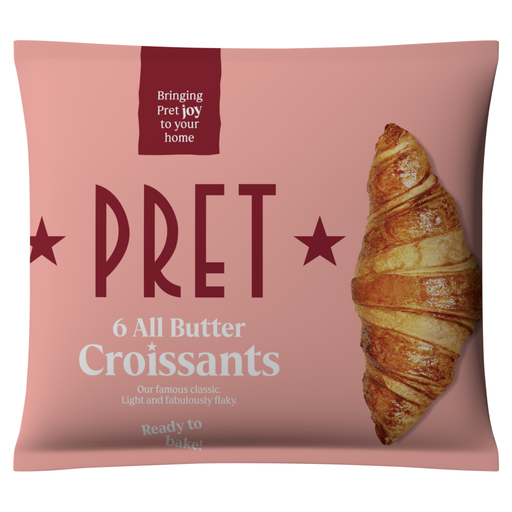
Pret A Manger Butter Croissants 330g

Pret A Manger Butter Croissants 330g

A plain all-butter option for occasional shared-family use where the baby is ready for solids, allergens are suitable and serving is closely supervised.

Frozen croissants requiring baking. The product information lists wheat/gluten, milk and egg, and may contain nuts, sesame and soya.

Listed values after baking are 0.71g salt and 15g saturates per 100g. Check that the baked pastry can be torn into manageable pieces, allow it to cool appropriately and keep varied foods in the meal pattern.

Joybuy

Frequently asked questions

Can a baby have a croissant for baby-led weaning?

A plain croissant can be a small shared-family food when a baby is ready for solids, can sit upright, can handle adapted soft pieces and is closely supervised. It is not a baby-led-weaning staple simply because it is soft or premium, so continue to offer varied foods including protein foods that provide iron and zinc.

How should a croissant be served more safely?

Offer a manageable narrow strip or soft torn piece rather than leaving a baby with a whole pastry. Keep the baby alert and seated upright in a highchair, supervise throughout eating, and consider the food’s size, shape and texture; NHS guidance notes that gagging can be loud, while choking is dangerous and quiet.

Which allergens should I check on a standard all-butter croissant?

Check the current pack for wheat or gluten, milk and egg at minimum. M&S and Waitrose list these allergens or ingredients for their all-butter croissants; NHS guidance advises introducing allergenic foods one at a time and in very small amounts.

Can I use a chocolate, almond or hazelnut croissant as the first trial?

Avoid using a filled pastry to introduce several potential allergens at once. Waitrose’s chocolate and hazelnut croissant lists wheat, milk, egg, soya and hazelnuts, so introduce allergenic foods one at a time so a reaction can be recognised.