Buying priorities
Start with the preparation route, then check pack format, allergen information and the nutrition panel for the exact product you plan to buy.
| Priority |
What to check |
Your needs |
| Preparation route |
Check whether the croissants are ready to eat, frozen or raw. Confirm freezer space, oven access and the stated cooking time where applicable. |
I want breakfast without preparation, so a ready-to-eat pack fits better. If I am planning ahead, I can choose a frozen pack and allow time to bake it. |
| Pack format |
Compare like-for-like products by pack count, product type and displayed unit information. Check freezing and storage directions on the individual pack. |
I want enough croissants for the household without buying a format that leaves unwanted extras. A single bakery item may suit a one-person purchase, while a multipack suits shared breakfasts. |
| Allergens |
Read the current ingredient list and allergen statement for wheat or gluten, milk, egg and any precautionary warnings. Ask for current allergen information at a bakery counter. |
I need the exact product to meet my dietary requirements. A Made Without Wheat product can still contain milk and egg, so I should check every listed allergen. |
| Nutrition per croissant |
Compare the serving size and saturated-fat value per croissant on the pack. Use the label for the exact variety rather than assuming all butter croissants have the same values. |
I want to compare the portion I expect to eat, especially when choosing between standard, premium or filled croissants. |
Joybuy product options
Joybuy options here represent frozen bake-at-home croissants for planned breakfasts where freezer storage and oven preparation are available.
 No image available
Pret A Manger Butter Croissants 330g
Consider this frozen all-butter option for a planned breakfast when you can bake before serving.
Stated 24% butter; bake from frozen in 20 minutes and store frozen at -18°C or below.
Contains wheat or gluten, milk and egg; may contain nuts, sesame and soya. Check the pack quantity before buying.
Joybuy
 No image available
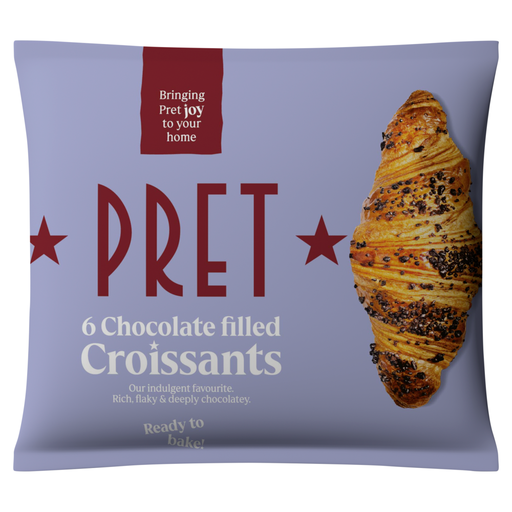
Pret A Manger 6 Chocolate Filled Croissants 420G
This frozen six-pack suits planned sharing breakfasts when chocolate-filled croissants are wanted.
Six chocolate-filled croissants; cook from frozen in the oven for 22 minutes.
Requires frozen storage and is not ready to eat immediately. Contains wheat or gluten, milk, egg and soya; it is not suitable for nut or sesame allergy sufferers.
Joybuy
FAQs
Are standard all-butter croissants suitable for a gluten-free, dairy-free or egg-free diet?
No, not by default. Tesco Finest, Sainsbury’s and Waitrose standard all-butter croissants listed in the retailer information contain wheat or gluten, milk and egg. Marks & Spencer Made Without Wheat All Butter Croissants are gluten-free but still contain butter, milk and egg, so check the current label for the exact pack.
Should I buy a ready-to-eat or frozen croissant pack for my first shop?
Choose a ready-to-eat pack if you want croissants without preparation. Choose frozen only when you have freezer space and can follow the oven directions: Marks & Spencer’s reviewed frozen pack must be baked and stored at -18°C, while Sainsbury’s frozen pack has a 15–20 minute oven instruction from frozen.
Do I need to check allergen information for a bakery-counter croissant?
Yes. The Food Standards Agency states that UK food businesses must provide allergen information for both prepacked and non-prepacked food and drink. Check the current in-store information or ask staff, particularly where precautionary allergen warnings may apply.
Can I freeze ready-to-eat croissants?
Only follow the directions for the individual pack. Tesco Finest, Sainsbury’s and Waitrose provide freezing instructions for their reviewed four-packs, but the relevant date and storage wording should be checked on the pack you buy.
How should I use best-before and use-by dates when buying croissants?
Follow the date and storage direction printed on the specific pack. The Food Standards Agency explains that a use-by date relates to food safety, while a best-before date relates to food quality.


