Who this suits

Lunch shoppers who still want an occasional pastry

A croissant can fit into a more balanced day when you compare the portion and label, then add a protein food and fruit or vegetables rather than treating the pastry as the whole meal. This reflects NHS Eatwell Guide advice to balance food groups over a day or week.

Shoppers reducing saturated fat

Compare nutrition per serving and per 100g, especially saturated fat. A reduced-fat all-butter croissant may contain less fat than a brand’s standard equivalent without becoming a low-saturated-fat lunch choice.

People managing food allergies

Check current product-specific allergen information before buying. Croissants commonly contain wheat, milk and egg, while loose bakery products can also involve trace-allergen considerations.

What to check before buying

Reduced-fat plain croissant

When it fits: Choose this when you want a croissant but want less fat than the same retailer’s standard all-butter version.

Check first: M&S states its Reduced Fat All Butter Croissants contain 30% less fat than its own all-butter croissants, but the listing still shows 12.3g saturates per 100g.

Plain packaged all-butter croissant

When it fits: A clearly portioned croissant can be a modest pastry component when you are adding protein and fruit or vegetables.

Check first: Recipes and sizes differ, so compare the nutrition panel on the serving basis as well as per 100g.

Fresh-counter all-butter croissant

When it fits: This route suits a single-serve purchase chosen for freshness or taste rather than a nutrition-led lunch.

Check first: Larger fresh croissants can contain markedly more energy and saturated fat, and current allergen information is especially important for loose bakery items.

Priority What to check Your needs
Balanced lunch Use the croissant as one component of lunch. Add a protein food and fruit or vegetables. I want a lunch with more than a buttery pastry, while still leaving room for an occasional croissant.
Serving size and saturates Read saturated fat per croissant and per 100g. Compare like-for-like serving sizes before drawing conclusions from a reduced-fat claim. I want to see what I will actually eat, rather than assuming a smaller-looking item or lighter-sounding description changes its nutrition.
Allergen information Check the current ingredient and allergen declaration for wheat, milk, egg and relevant trace warnings. Review retailer information for loose or fresh-counter bakery products. I need product-specific allergen details instead of relying on a generic bakery description or an older listing.

Common buying pitfalls

  • Treating “reduced fat” as low saturated fat or a complete lunch

    M&S states that its product has 30% less fat than its own all-butter croissants, yet its listing still shows 12.3g saturates per 100g. A relative reduction does not replace a serving-size and saturated-fat comparison.

    Read the nutrition panel per croissant and per 100g, then pair the pastry with a protein food and fruit or vegetables.

  • Using “thick cut”, buttery appearance or premium wording as a nutrition shortcut

    Texture and premium wording do not show the serving size, fibre content, calories or saturated fat. A single fresh all-butter croissant can still be a substantial serving.

    Use the pack weight, nutrition per croissant, nutrition per 100g, ingredients and allergen declaration for the comparison.

  • Assuming all plain croissants are nutritionally comparable

    Checked all-butter examples vary by serving size and nutrition. Asda lists 161 kcal and 3.7g saturates per croissant, Sainsbury’s lists 167 kcal and 4.1g, while a Waitrose fresh croissant lists 298 kcal and 11.8g.

    Compare stated serving values alongside per-100g figures, and choose a pack size that you can store and use according to its instructions.

  • Overlooking allergens in bakery or fresh-counter products

    The croissant examples commonly contain wheat, milk and egg. GOV.UK guidance requires allergen information for prepacked and non-prepacked food, while loose bakery products can have cross-contact considerations.

    Verify current product-specific allergen information before purchase and do not treat a generic bakery description as an allergen-free guarantee.

Relevant brand references

M&S

Relevant for shoppers seeking a reduced-fat croissant option alongside all-butter and Made Without wheat/gluten-free lines.

  • M&S states that its Reduced Fat All Butter Croissants contain 30% less fat than its own all-butter croissants.
  • The listing shows 12.3g saturates per 100g and advises checking the current pack for recipes and allergen information.

Tesco Finest

Relevant for a premium own-label all-butter croissant route in Tesco’s UK croissant range.

  • Tesco’s category listing includes Tesco Finest All Butter Croissants 4 Pack alongside standard Tesco croissants and other brands.
  • The Finest name alone does not establish a nutrition advantage, so use the current product label for comparison.

Sainsbury’s

Relevant for a standard packaged all-butter croissant with clear per-croissant nutrition, ingredients and storage directions.

  • Its checked four-pack lists 167 kcal, 4.1g saturates, 1.3g fibre and 0.32g salt per croissant.
  • It contains wheat, butter from cows’ milk and egg; follow the stated freezing and post-defrost storage instructions.

Waitrose

Relevant for shoppers considering fresh single croissants, No.1 products or frozen bake-at-home variants.

  • The fresh all-butter croissant offers a single-serve option.
  • The checked product lists 298 kcal and 11.8g saturates per croissant. Waitrose advises people affected by allergy or intolerance to use prepacked ranges where detailed packaging information is needed.

Asda

Relevant for larger plain all-butter packs with clearly stated per-croissant nutrition.

  • The checked 10-pack lists 161 kcal and 3.7g saturates per croissant.
  • It contains milk, wheat and egg; Asda advises customers to check the physical label because recipes and allergy information can change.

Lidl

Relevant for in-store bakery shoppers who want a plain all-butter croissant and can check local bakery allergen information.

  • Lidl’s listing identifies milk, wheat and egg for its all-butter croissant.
  • Lidl says it cannot guarantee other allergens are absent from loose bakery products, so current product-specific information is essential where allergens matter.

Joybuy product options

Joybuy product options for an occasional croissant lunch component, where freezer storage and oven baking are practical.
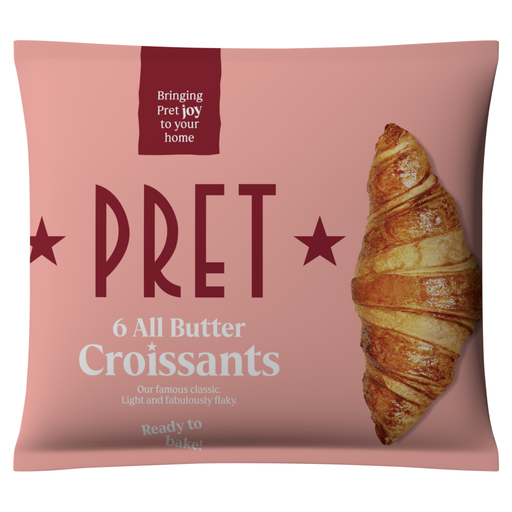
Pret A Manger Butter Croissants 330g

Pret A Manger Butter Croissants 330g

A plain frozen croissant option to use as one lunch component with a protein food and fruit or vegetables.

Ready to bake from frozen in about 20 minutes. Once baked, the listing states 405 kcal, 24g fat and 15g saturates per 100g.

Contains wheat/gluten, milk and egg and may contain nuts, sesame and soya. Check the current pack serving size before comparing it with other croissants.

Joybuy

Frequently asked questions

Is a croissant a balanced lunch?

Not as a complete lunch. NHS guidance describes a balanced diet as a pattern across a day or week that includes food groups such as fruit and vegetables and protein foods. If you choose a croissant, make it one component and add a protein food plus fruit or vegetables.

Does “thick cut” mean a croissant is more nutritious or more filling?

No. Do not use “thick cut” as a nutrition or portion cue for croissants; check the actual pack weight, nutrition per croissant and nutrition per 100g instead.

Should I compare calories, fat or saturated fat?

Compare all three, starting with the stated serving size and saturated fat. Product examples range from 3.7g saturates per Asda croissant to 11.8g per Waitrose fresh croissant, while M&S’s reduced-fat product lists 12.3g saturates per 100g. Compare like-for-like where possible.

Can I rely on an online product page for allergy information in the UK?

Use it as a guide, but check the current pack or retailer’s current allergen information before eating. GOV.UK states that food businesses must provide allergen information for both prepacked and non-prepacked food, and recipes or bakery handling can change.

Can I freeze croissants for work lunches?

Only follow the exact product instructions. The checked Sainsbury’s and Asda products direct customers to freeze before the date mark, use within one month, defrost thoroughly and not refreeze after defrosting.