Conference breakfast organisers
For a breakfast table with little preparation time, check how many croissants each pack contains, whether they can be served without warming and whether the portion size fits the plan.


Choose a croissant pack explicitly labelled ready to eat when conference service leaves little time for preparation. Frozen mini croissants suit smaller portions if the venue has freezer space, oven capacity and time to bake them. Compare the number of pastries, ingredients and preparation instructions for each product; a premium range name alone does not establish how it tastes.
For a breakfast table with little preparation time, check how many croissants each pack contains, whether they can be served without warming and whether the portion size fits the plan.
Smaller pastries or batches baked close to service may fit a break, provided there is enough freezer space, oven capacity and staff time.
Check the ingredients of each product and plan how it will be handled at service. A gluten-free label does not mean a croissant is free from milk or egg.
Set the serving plan first: the number and size of portions, the facilities available and how guests will receive ingredient information all affect which format works.
| Priority | What to check | Your needs |
|---|---|---|
| Preparation | Check whether the particular pack is ready to eat or must be baked. Sainsbury's describes its Taste the Difference four-pack as ready to eat; Waitrose says its frozen mini croissants are raw and must be baked. | I need pastries that can be served on schedule with the equipment and staff available at the venue. |
| Portions | Compare both piece count and size: Tesco Finest and Sainsbury's Taste the Difference list four croissants per pack, while Waitrose lists 12 frozen minis. Account for how many batches the oven can hold. | For a short coffee break, smaller pastries may fit my serving plan; for breakfast, I may want a larger individual pastry. |
| Ingredients | Read the current label for ingredients and precautionary allergen statements. The cited gluten-free-labelled M&S and Sainsbury's croissants both contain milk and egg; check how different pastries will be handled at service. | I need to give guests accurate information about the pastry they receive and keep their dietary requirements in mind when arranging service. |
| Premium ranges | Compare the actual recipe and format rather than relying on a range name. Tesco states 25% butter for its Finest four-pack, Sainsbury's 29% for its Taste the Difference four-pack and Waitrose 33% for its No.1 two-pack; those figures do not establish a taste ranking. | I want a reason to choose a particular croissant that relates to the portions and preparation my event requires. |
Butter content describes part of a recipe, not how today's products compare in a taste test. Standard croissants in the cited listings contain allergenic ingredients, and some carry additional precautionary statements.
Read the label for each variant being served and plan separate handling where a guest's dietary requirements call for it.
Waitrose says its frozen minis are raw and must be baked. Asda's frozen six-pack also has bake-from-frozen instructions, so neither belongs on the buffet straight from storage.
Match the product's storage and baking directions to the venue before setting a serving time.
Frozen service also takes freezer space, oven capacity and staff preparation time.
The cited two-packs, four-packs and 12-piece mini pack provide different numbers and sizes of pastries. One pack is not a consistent unit for planning a breakfast or break.
Estimate the portions needed, then check the current pack count and pastry size for each option.
Taste the Difference has a ready-to-eat four-pack; Free From is a separate gluten-free-labelled two-pack.
The cited all-butter four-pack includes oven-warming instructions.
The cited packaged all-butter croissants and Made Without Wheat croissants are distinct products.
The cited No.1 two-pack and 12-piece frozen mini pack serve different portion plans.
Exceptional is a ready-to-eat four-pack, while Bake at Home is a separate frozen six-pack.
The cited all-butter croissant is an in-store bakery item rather than a specified conference multipack.
These Pret A Manger croissants are options for a conference with frozen storage and facilities for baking on site. They do not replace the ready-to-eat packs discussed above when preparation time is limited.
 Image unavailable
A plain croissant option for a venue able to store frozen pastries and bake them before service. The pack is labelled 330g; confirm the piece count and follow the current cooking and allergen information when planning portions.
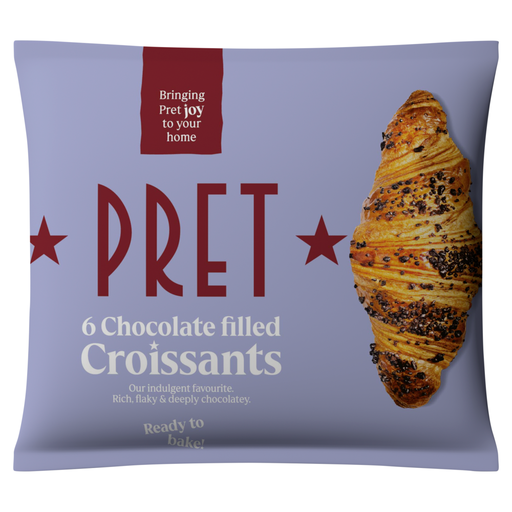 Image unavailable
This six-piece, chocolate-filled option offers a different flavour for a break where frozen storage and baking facilities are available. Check the current pack for cooking directions and allergen information before service.
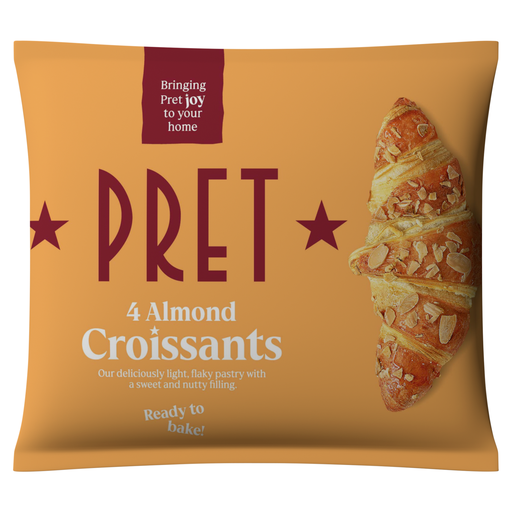 Image unavailable
An almond croissant option for a venue that can store frozen pastries and bake before serving. The pack is labelled 280g; confirm how many croissants it contains and check the current allergen information before including it in the portion plan.
Not every product does. Sainsbury's says its Taste the Difference four-pack is ready to eat and warming is optional, whereas Waitrose says its frozen mini croissants are raw and must be baked. Follow the directions for the pack you serve.
Check the product instructions alongside the venue's tray capacity and serving time. Waitrose specifies 10–12 minutes for its frozen minis and says baking a larger batch may require an adjustment; Asda specifies 14–16 minutes for its frozen six-pack.
No. The cited gluten-free-labelled M&S and Sainsbury's croissants both list milk and egg ingredients. Check the current packaging for the particular product and consider how it will be handled alongside other pastries.
Start with the required number of portions and the count in each pack. Then confirm the event-date availability, collection or delivery arrangements, date marks and any storage or baking facilities needed for the chosen products.
Food businesses need to provide allergen information for both prepacked and non-prepacked food. Food Standards Agency guidance covers England, Wales and Northern Ireland, while Food Standards Scotland provides the corresponding Scottish guidance. Check the requirements for the way the croissants will actually be supplied, particularly if they are removed from their retail packaging.