Choose ready-to-eat croissants when breakfast is imminent and a brief warming step suits your plans. Choose frozen ready-to-bake packs when you have freezer space, an oven and around 18–20 minutes for baking; in either case, check pack count, ingredients and allergen information for the exact product before serving.
Who this suits
Hosts serving a planned continental breakfast
Choose enough plain croissants for the table, then decide whether ambient packs or oven-baked frozen pastries fit the morning schedule. Waitrose and M&S product information distinguishes ready-to-eat and frozen ready-to-bake formats.
Small-household breakfast shoppers
Individual pastries and four-packs are useful comparison points when one or two people are eating and a large pack may not suit the plan.
Shoppers managing food allergies or intolerances
Check the current pack label rather than assuming plain croissants share the same allergen profile. Retailer examples list wheat, milk and egg, and some include precautionary allergen statements.
What to check before buying
Ready-to-eat croissants
Choose this when: Breakfast is being served soon and a short warming step is acceptable.
Trade-off: Shelf life and product information vary by retailer, so check the pack you are buying.
Frozen ready-to-bake croissants
Choose this when: You are planning ahead and have both freezer capacity and an oven.
Trade-off: These pastries need storage and baking time, so they are not an immediate breakfast option.
| Priority |
What to check |
Your needs |
| Serving time |
Check whether the croissants are ready to eat, suitable for brief warming, or require baking from frozen. Follow the stated oven instructions for frozen products. |
I want breakfast to fit the available morning time: immediate serving, a short warm-up, or baking before guests arrive. |
| Pack size and storage |
Compare the pastry count with the number of guests. Check storage and freezing instructions on the chosen pack before relying on leftovers. |
I want enough croissants for the table without opening more pastries than I can serve or store as directed. |
| Allergen information |
Read the ingredients list and any precautionary allergen statement on the physical pack. Check the exact product immediately before serving. |
I need to identify wheat or gluten, milk and egg, and to consider any stated traces for the guests at breakfast. |
Common buying mistakes
-
Treating “medium sliced” as a croissant specification
That wording can lead you towards loaf products rather than pastries and does not help distinguish croissant formats for a continental breakfast.
Search and compare using clear terms such as all-butter, four-pack, eight-pack, frozen or ready to bake. Choose by serving format, quantity and dietary suitability.
-
Comparing only the shelf price
A larger pack is only useful when its count suits the breakfast plan and any remaining pastries can be stored according to the label. Promotional conditions can also change.
Compare the number of croissants in each pack and decide how many you expect to serve before choosing a multipack.
Unused pastries can create avoidable waste when the pack is not served or stored as directed.
-
Assuming plain or all-butter means allergy-safe
Verified retailer examples contain common allergens including wheat, milk and egg, while some pages also mention possible nuts or other traces.
Read the physical label immediately before purchase and serving. For guests with allergies or intolerances, confirm both ingredients and precautionary statements for the exact pack.
-
Buying frozen croissants when breakfast needs to be immediate
Frozen ready-to-bake products need freezer storage and oven preparation; M&S states that its frozen product is raw and must be baked.
Use ready-to-eat croissants for a quick breakfast, and reserve frozen packs for mornings when you can follow the full oven instructions.
Relevant brand references
M&S
M&S offers ambient all-butter croissants alongside frozen ready-to-bake packs for shoppers choosing between immediate serving and baking at home.
- Its ambient four-pack is described by M&S as best enjoyed warm.
- Its frozen eight-pack is raw and must be baked.
Tesco Finest
Tesco Finest is a premium-labelled four-pack option for shoppers comparing a smaller pack with Tesco's standard and larger croissant packs.
- The range provides a smaller all-butter pack to compare with other Tesco croissant formats.
- A listing alone does not establish that one pack will suit every breakfast or preference.
Sainsbury's
Sainsbury's Taste the Difference butter croissants are a four-pack option for a small continental breakfast.
- Sainsbury's lists 29% French butter in the ingredients and gives optional oven warming guidance.
- The product lists wheat, milk and egg, so the current label needs checking for allergy requirements.
Waitrose
Waitrose offers an individual bakery-style all-butter croissant and a frozen eight-pack, covering single servings and planned oven-baked breakfasts.
- Its frozen eight-pack is stated to bake from frozen in 18–20 minutes.
- The frozen pack requires freezer storage and baking, while the individual croissant lists wheat, milk and egg and may contain nuts.
Asda
Asda's own bakery all-butter croissants include four- and eight-pack options for shoppers comparing serving count.
- The verified products are described as ready to eat and may be served warm or cold.
- Both examples list wheat, egg and milk, and the physical pack remains important because ingredients and allergen information can change.
Lidl
Lidl's in-store all-butter croissant is relevant when a bakery-counter single pastry is preferred to a supermarket multipack.
- The product is listed by Lidl as available in store.
- Its page lists milk, wheat and egg alongside multiple possible traces, so review the individual product information for allergy needs.
Joybuy product options
Joybuy product options for a planned continental breakfast with oven access.
 No image available
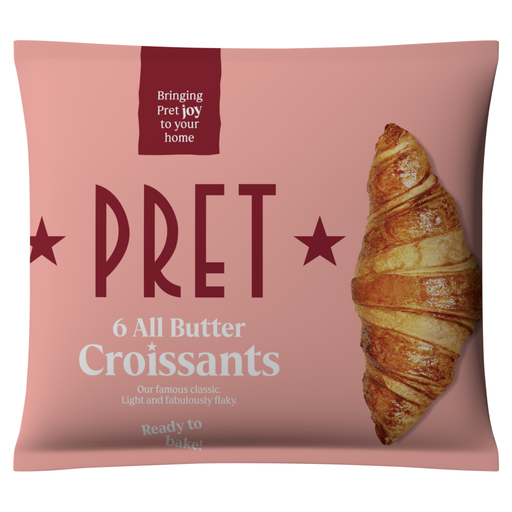
Pret A Manger Butter Croissants 330g
Designed for a planned breakfast where freezer storage and an oven are available.
Stated details include 24% French-sourced butter, frozen storage and a 20-minute baking instruction.
Contains wheat or gluten, milk and egg; it may contain nuts, sesame and soya. Check the current pack label for the intended guest.
It is not ready to eat immediately, and the available product information does not state the pastry count.
Joybuy
Frequently asked questions
Are croissants normally sold “medium sliced”?
Croissant listings are generally organised by individual pastry, pack count, ready-to-eat format or frozen ready-to-bake format rather than sliced size. For a continental breakfast, compare those details alongside allergens and heating instructions.
Should I buy fresh croissants or frozen ready-to-bake croissants?
Choose ready-to-eat croissants for a quick breakfast with optional warming. Choose frozen ready-to-bake croissants when you can store them frozen and follow the stated baking time; Waitrose gives 18–20 minutes from frozen, while M&S describes its frozen product as raw and requiring baking.
What allergens should I check before serving croissants to guests?
Check the physical pack for every product you serve. Verified croissant examples contain wheat or gluten, milk and egg, and some also state possible nuts, sesame or other traces. The Food Standards Agency says PPDS foods in England, Wales and Northern Ireland must show a full ingredients list with allergens emphasised, but the exact product label and precautionary statements still matter.


