Traditional cream-tea hosts deciding whether croissants fit
For shoppers deciding whether a croissant can replace a scone. Rodda’s cream-tea guidance centres the serving on a scone, so croissants are better treated as an optional variation or extra.


Choose scones when you want a conventional cream tea with jam, clotted cream and tea. Plain all-butter croissants work better as a warm, non-traditional extra or brunch-style alternative; check the pack size, heating instructions and current allergen information before buying.
For shoppers deciding whether a croissant can replace a scone. Rodda’s cream-tea guidance centres the serving on a scone, so croissants are better treated as an optional variation or extra.
For groups of around two to four people who want plain all-butter croissants served warm alongside jam, clotted cream and tea.
For shoppers looking for a gluten-free croissant while still checking the current ingredient list for milk, egg and other relevant allergens.
Start with the occasion: choose scones for the traditional format, then decide whether a croissant is an extra for a small group, a single serving, planned freezer storage or a gluten-free variation.
| Priority | What to check | Your needs |
|---|---|---|
| Traditional format | Decide whether scones are the main item. Treat croissants as an additional pastry rather than a direct substitute. | I want the familiar combination of scones, jam, clotted cream and tea, rather than a pastry-led variation. |
| Warm serving and pack format | Check the number of croissants, storage method and exact oven or air-fryer instructions. Match the pack to the guests you expect. | I want warm, flaky pastry for a small gathering without buying a format that is awkward to serve or store. |
| Allergens and ingredients | Read the current label for wheat or gluten, milk, egg and any precautionary allergen statement. For loose bakery items, ask for the available allergen information. | I need product-specific information before choosing a croissant for someone avoiding gluten or managing an allergy. |
| Portion and richness | Compare servings on a per-croissant basis where available. Tesco, Sainsbury’s and Waitrose list different saturated-fat amounts per croissant, so pack formats are not directly interchangeable. | I want to choose the serving size deliberately when croissants are being offered with clotted cream and jam. |
A croissant changes the scone-centred format described in conventional cream-tea guidance. Serving only croissants can leave guests without the expected base for clotted cream and jam.
Buy scones first for a conventional cream tea. Add plain warmed croissants only when you deliberately want an extra pastry or a non-traditional variation.
The conventional croissants covered here contain wheat, milk and egg, and some carry nut or wider trace-allergen warnings. A gluten-free croissant can still contain milk and egg.
Read the current pack or retailer label for the exact product, and ask for allergen information when buying loose bakery items.
A single bakery croissant, a four-pack and a gluten-free two-pack have different serving sizes, ingredients and preparation methods.
Compare the number of servings, ingredients, allergens, heating instructions and per-croissant nutrition before choosing a pack.
The cited products list between 8.4 g and 11.8 g of saturated fat per croissant, depending on the product and stated portion.
Retailer offers, local bakery stock and use-by dates can change, particularly for in-store and loyalty-price products.
Confirm the local price, stock, use-by date and physical label immediately before purchase.
Own-label all-butter croissants in an in-store bakery range, including a 160 g freezable multipack and ready-to-bake frozen options.
A four-pack premium own-label all-butter option for shoppers who want a clearly specified pack and warming guidance.
A four-pack all-butter option for a small group, plus a separate Free From gluten-free all-butter two-pack.
Own-label all-butter croissants in individual and multipack formats, including a single croissant for immediate serving.
An in-store all-butter croissant option for shoppers who can check local availability and current shelf information.
Joybuy product options for a warm croissant addition to a casual cream-tea-style or brunch spread, rather than a replacement for traditional scones.
 No image available
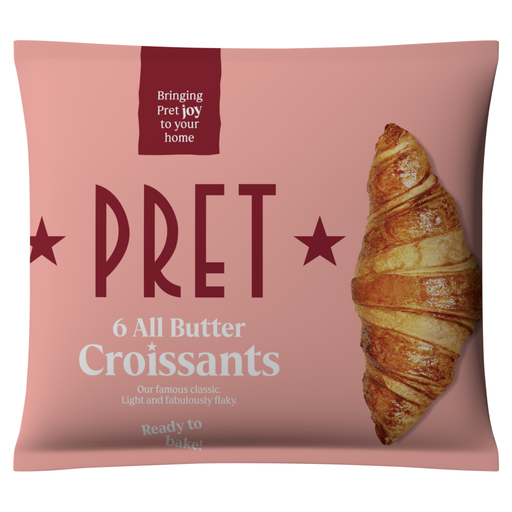
A plain all-butter option for planned hosting when you want warm pastry alongside tea rather than a scone replacement.
Stated details include 24% butter, slow fermentation, 27 folds and bake-from-frozen preparation in approximately 20 minutes. It requires frozen storage and an oven; check the pack for the number of croissants before planning portions.
Contains wheat/gluten, milk and egg, and may contain nuts, sesame and soya.
 No image available
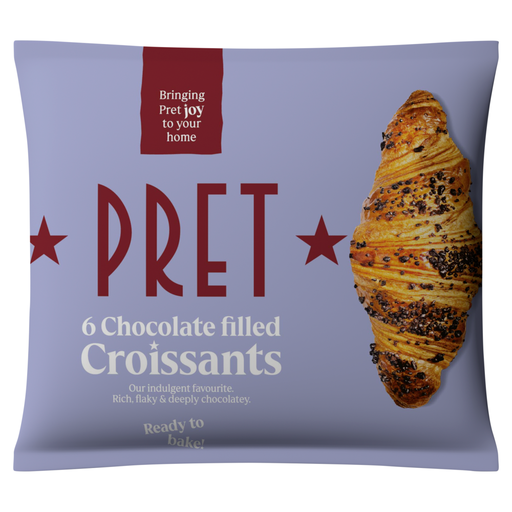
A six-pack for a casual warm pastry spread where a chocolate-filled option suits the occasion better than a plain cream-tea accompaniment.
Each croissant has chocolate filling and dark-chocolate decoration, with a stated 22-minute oven method from frozen. It needs freezer storage and should not be reheated once cooled.
Contains wheat/gluten, milk, egg and soya; it is stated to be unsuitable for nut and sesame allergy sufferers.
Not if the aim is a conventional cream tea. Rodda’s cream-tea guidance describes splitting a scone and serving it with jam and clotted cream; offer a plain croissant as an optional pastry or use it for a less traditional brunch-style spread.
Warm them when the product instructions allow it. Tesco Finest specifies 4–5 minutes in a 180°C oven from ambient, while Sainsbury’s Taste the Difference gives 4–5 minutes at 180°C or fan 160°C from ambient; follow the pack for the exact product and appliance.
Yes. Sainsbury’s Taste the Difference Free From All Butter Croissants are described by the retailer as gluten-free, but they still list butter, egg and milk. Check the current pack if milk or egg is also a concern.
Food businesses must provide allergen information for prepacked and non-prepacked foods. The Food Standards Agency covers England, Northern Ireland and Wales, while Food Standards Scotland gives the corresponding consumer-information requirement for Scotland; ask staff or use the supplied allergen information for loose bakery items.
Only follow freezing guidance for the exact product. Tesco Finest states that its four-pack can be frozen by its use-by date, while M&S says its 160 g pack can be frozen by the date mark and used within three months.