Multipack shoppers
If the croissants are for another meal, consider how many portions you will use and whether you want a ready-to-eat recipe or an all-butter one.


Choose croissants for an occasion when you actually want them, rather than assuming they belong with the curry. A ready-to-eat pack suits a snack or another meal without baking; a frozen, ready-to-bake pack suits a later occasion if you have freezer space and time to use the oven. Check how many you will use, the ingredients and the storage instructions before choosing.
If the croissants are for another meal, consider how many portions you will use and whether you want a ready-to-eat recipe or an all-butter one.
A frozen pack fits an occasion when you have freezer space and time to bake, rather than a plan to eat the pastries straight from the pack.
Butter content, vegan labelling and allergen information vary between the cited products. Check the particular pastry you intend to buy.
Decide when the croissants will be eaten, then compare packs by usable portions, preparation and ingredients.
| Priority | What to check | Your needs |
|---|---|---|
| Usable portions | Compare the number of croissants and pack weight; check how you would store any left over. | I want enough for the people who will eat them, without choosing a larger pack just for its size. |
| Preparation | Check whether the pack is ready to eat or frozen and ready to bake; follow its cooking and storage instructions. | If I want a pastry without using the oven, a ready-to-eat pack fits. Frozen croissants are for a time when I can store and bake them. |
| Ingredients | Read the exact ingredient list and dietary statement. All-butter and vegan-labelled products are distinct options; check allergens separately. | Butter content or a vegan designation matters to my choice, but I will not infer either from the word ‘croissant’. |
| Storage | Check the date mark and the purchased pack’s storage directions, including any freezing instructions. | I may eat the remaining pastries later, so I need a pack I can store and use as directed. |
A croissant may be an optional pastry purchase, not something anyone wants with the meal.
Decide whether the pack is for that evening, a snack or another occasion before selecting a format.
Sainsbury's ready-to-eat six-pack lists palm oil and concentrated butter, while Waitrose lists butter in its four-pack and describes a separate St Pierre six-pack as vegan.
Read the exact product’s ingredients and dietary statement; for an allergy, check its current allergen information.
Packs can differ in weight, recipe and storage needs, so the same number of croissants need not mean the same portions for your plans.
Check pack weight and how many you expect to use.
Unused pastries can make a larger pack less practical.
The cited Pret frozen croissants need frozen storage and oven cooking.
Check the preparation instructions if you need the pastries without a baking step.
Allow for freezer space and oven time.
These examples describe particular listed products and formats, not every croissant made by each brand.
Its own-label listings include an individually wrapped, ready-to-eat six-pack and a separate Taste the Difference all-butter four-pack.
Tesco lists standard all-butter four- and eight-packs alongside a distinct Finest four-pack.
Waitrose lists an ambient butter croissant four-pack and a separate frozen, ready-to-bake eight-pack.
Lidl lists an individual all-butter croissant in its in-store bakery range.
Ocado lists an M&S all-butter croissant four-pack with product-specific freezing instructions.
The cited retail six-pack is frozen and ready to bake, rather than an individual café croissant.
These Pret croissants are options for baking on a later occasion. They do not serve the same immediate-use need as a ready-to-eat multipack; check each pack’s preparation and ingredients.
 No image available
A frozen, ready-to-bake choice for a later occasion, not a pastry to eat straight from the pack. The Joybuy listing describes 24% French-sourced butter; check the pack for cooking and allergen instructions.
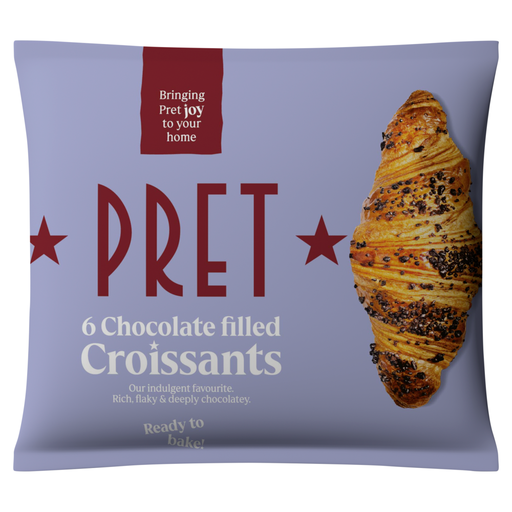 No image available
A frozen, ready-to-bake option if you want a chocolate-filled pastry for another occasion. Check the pack’s baking instructions and allergen information before use.
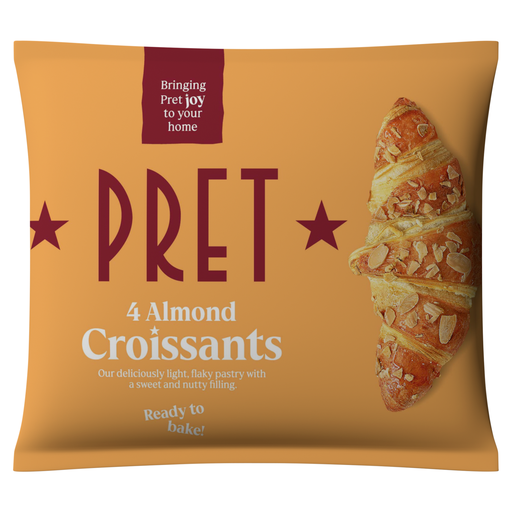 No image available
An almond-filled, frozen option for a time when you can bake the pastries. Check the pack count if you are planning portions, and read its preparation and allergen information.
Not the cited Pret six-pack: Sainsbury's instructs shoppers to keep it frozen and oven-cook it for 20–22 minutes. Follow the directions on the exact pack you buy.
No. Food Standards Scotland explains that a best-before date concerns quality, while a use-by date concerns safety. Check which date is printed on your croissants and follow their storage instructions.
Ask for allergen information for the specific loose product rather than relying on its name. Lidl’s listed all-butter croissant identifies milk, wheat and egg and warns of possible traces; check the information for the pastry available in store.