Who these croissants suit

Families having lunch at home in the school holidays

Four-packs are a practical starting point when several people are eating, while a short oven warm-up can be worthwhile when there is time to serve lunch at home. Marks & Spencer, Tesco Groceries and Sainsbury's describe suitable all-butter options.

Parents planning a fuller lunch

A croissant can be the pastry or bread element of lunch rather than the whole meal. NHS lunchbox guidance suggests building the main item around starchy foods and adding fruit or vegetables alongside it.

Households checking gluten and allergens carefully

Compare the exact current pack rather than treating all-butter and premium croissants as interchangeable. Standard examples list wheat or gluten, milk and egg, while Sainsbury's has a gluten-free alternative that still contains milk and egg.

What to check before buying

Start with the number of people eating and whether lunch is at home, then compare warming instructions, ingredients and the role the pastry will play in the meal.

Priority What to check Your needs
Texture and warming Check whether the product is ready to eat, suitable for brief oven warming or sold frozen for baking. Use heating instructions only when an oven or air fryer is available. I want a flaky, buttery pastry for an at-home lunch, and I can decide whether serving it warm is worth the extra preparation.
Portion planning Compare pack count before choosing: standard options include two-packs and four-packs. Check whether the format is ready to serve or needs baking time. Several people may be eating, so I need enough croissants without relying on a smaller pack or a format that is impractical for the occasion.
Allergens and gluten Read the current ingredient list and allergen declaration for wheat or gluten, milk and egg. Check any may-contain statement separately, and look for an explicit gluten-free label where required. Someone at lunch may need a gluten-free product or may need to avoid a particular allergen, so the pack label matters more than the all-butter description.
Lunch composition Check nutrition per croissant, particularly saturated fat, and plan a savoury filling or side dishes. Add fruit or vegetables rather than serving pastries alone. I want the croissant to be one part of lunch, with other foods alongside it for variety. NHS lunchbox guidance supports including fruit and vegetables with the main item.

Buying pitfalls to avoid

  • Buying a premium croissant as the entire lunch

    Standard premium examples list 8.4 g to 10.1 g of saturates per croissant, and a pastry-only lunch leaves little room for the variety encouraged in NHS lunchbox guidance.

    Use the croissant as the starchy base, then add a suitable filling and fruit or vegetables. Keep rich filled pastries for an occasional treat rather than making them the default main lunch item.

  • Assuming all-butter means allergen-safe or gluten-free

    Checked standard all-butter croissants contain wheat or gluten, milk and egg, and some packs also carry nut-related precautionary statements.

    Check the exact current pack each time you buy. For a gluten-free requirement, choose a product explicitly labelled gluten free and suitable for coeliacs, then separately check milk and egg.

  • Comparing shelf prices without comparing pack count and offer conditions

    A two-pack can appear less expensive at checkout while costing more per croissant, and loyalty offers may apply only for a stated period or to eligible shoppers.

    Compare the regular price, offer conditions, pack count and per-item price on the day you shop before planning lunch for the family.

    A time-limited loyalty price can make a product appear cheaper than its regular price, while smaller packs may cost more per croissant.

  • Choosing a heat-at-home format for an outing or packed lunch

    Several premium products emphasise serving warm or provide oven instructions, which may not suit a meal eaten outdoors or away from home.

    For an outing, choose a croissant you are happy to serve at room temperature and pack fillings separately where practical. Save ready-to-bake and oven-warmed options for lunch at home.

Relevant supermarket brand references

M&S

A premium-oriented own-label choice with standard all-butter croissants and frozen ready-to-bake formats for lunches served at home.

  • M&S lists 29% butter for its 160 g All Butter Croissants and says they can be warmed in minutes.
  • The standard product lists wheat or gluten, milk and egg and is not suitable for people with nut, peanut, sesame or soya allergy, according to M&S.

Tesco Finest

A premium four-pack route for a family lunch when a familiar supermarket multipack and optional oven warming are useful.

  • Tesco describes layered dough made with butter churned in France and lists 25% butter.
  • The product lists 8.4 g saturates per croissant, so plan it as part of a wider lunch rather than relying on it alone.

Sainsbury's Taste the Difference

A premium-style four-pack for family use, with a separate gluten-free two-pack for households that specifically need that format.

  • The standard Butter Croissants x4 use French butter and can be warmed in an oven or air fryer.
  • The gluten-free alternative still contains butter, milk and egg, and is supplied as two croissants.

Waitrose No.1

A small premium-style pack for one or two people who value French preparation details and a high listed butter proportion.

  • Waitrose lists its No.1 two-pack as prepared in France with French butter and flour, containing 33% butter.
  • It is a two-pack with a may-contain-nuts warning, so it is not a default choice for larger groups or nut-allergic households.

Lidl

An in-store bakery all-butter option for shoppers who can check their local store's current range.

  • Lidl lists its All Butter Croissant as available in store and suitable for vegetarians.
  • Its listing includes milk, wheat and egg alongside possible traces, so check the current in-store label for allergy decisions.

Joybuy product options

Joybuy options for warm-from-the-oven croissants when lunch is being served at home and freezer storage and oven time are available.
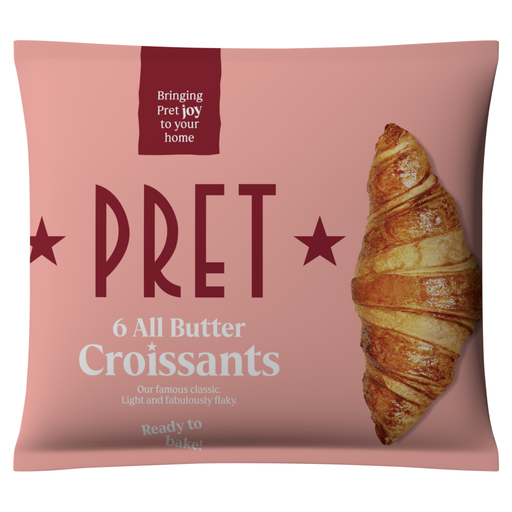
Pret A Manger Butter Croissants 330g

Pret A Manger Butter Croissants 330g

A frozen all-butter option for an at-home school-holiday lunch when there is time to bake before serving.

Stated 24% French-sourced butter; bake from frozen in about 20 minutes.

Requires frozen storage and contains wheat, gluten, milk and egg; it may contain nuts, sesame and soya. Check servings before planning a family lunch.

Joybuy
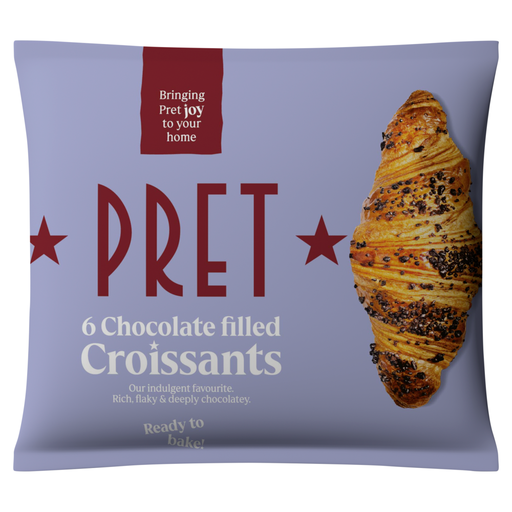
Pret A Manger 6 Chocolate Filled Croissants 420G

Pret A Manger 6 Chocolate Filled Croissants 420G

A six-pack of frozen chocolate-filled croissants for a group lunch at home when a warm sweet pastry is wanted.

Six croissants; bake from frozen in 22 minutes.

Contains wheat, gluten, milk, egg and soya, and is not suitable for nut or sesame allergy sufferers. Treat it as an occasional sweet pastry alongside the rest of lunch.

Joybuy

Frequently asked questions

Are premium croissants suitable as a school-holiday lunch on their own?

Usually, use a croissant as one part of lunch rather than the whole meal. NHS lunchbox guidance recommends basing the main item on starchy foods and adding fruit and vegetables, so add a filling and suitable sides rather than serving pastries alone.

Which croissant format suits a family lunch at home?

Start with a four-pack if four people are likely to eat. Tesco Finest and Sainsbury's Taste the Difference have four-pack options, while two-packs are more appropriate for one or two people or for a specific gluten-free choice.

Can I warm croissants before serving?

Yes, when the pack instructions allow it. Tesco Finest, Sainsbury's standard croissants and Waitrose No.1 provide heating guidance, but the method and timing vary by product, so follow the instructions on the pack you buy.

Are all-butter croissants suitable for someone avoiding gluten, milk or egg?

No. Standard M&S, Tesco, Sainsbury's and Waitrose examples list wheat or gluten, milk and egg. Sainsbury's Free From All Butter Croissants are labelled gluten free and suitable for coeliacs, but still contain butter, milk and egg, so always check the current pack.

Should I check allergen labels on bakery-counter croissants too?

Yes. The Food Standards Agency explains that prepacked-for-direct-sale food must provide allergen information on its packaging. Use the current item label and ask the retailer where necessary rather than relying on an older recipe or product description.