First-shop households sharing breakfast
A four-pack can suit a simple breakfast for more than one person. Tesco and Sainsbury's both list all-butter croissants in four-packs.


“Thick cut” is not a standard croissant specification, so focus instead on format, pack count, recipe, storage and preparation. For a first food shop, a four-pack suits a straightforward shared breakfast, an individual pastry suits prompt solo eating, and frozen croissants suit shoppers with freezer space and an oven. Check the current allergen information on the exact product before buying.
A four-pack can suit a simple breakfast for more than one person. Tesco and Sainsbury's both list all-butter croissants in four-packs.
An individual bakery croissant can be the more practical choice when you plan to eat it soon and do not want an opened multipack.
Frozen bake-at-home croissants suit households with freezer space and an oven that are happy to prepare pastries from frozen.
Choose it when: You want a ready-to-eat shared breakfast without needing freezer space or oven time.
Consider: Check the exact pack's allergens and storage guidance, and freeze surplus pastries only where the product instructions allow it.
Choose it when: You are shopping for yourself or expect to eat the pastry shortly after purchase.
Consider: For allergy management, a prepacked product gives you an ingredient list to inspect directly; counter items may have cross-contact considerations.
Choose it when: Warm pastries matter more than immediate convenience and you can follow the stated oven instructions.
Consider: These products need frozen storage and are not ready to eat straight from the pack.
| Priority | What to check | Your needs |
|---|---|---|
| Format and quantity | Check whether the product is an individual pastry, an ambient multipack or a frozen pack. Match the pack to the number of people likely to eat it and your available storage. | For one immediate breakfast, I may prefer a single pastry. For a small shared breakfast, a four-pack can be more suitable. |
| Recipe and filling | Check whether the croissant is plain all-butter or filled. Look at the exact variant rather than relying on a product image or category label. | I want a plain croissant if I plan to add my own sweet or savoury accompaniments; a chocolate or almond filling is a more specific choice. |
| Allergen information | Read the current ingredient and allergen statement for the exact product. Check wheat or gluten, milk and egg, plus any precautionary allergen wording where relevant. | Someone in my household may need to avoid particular ingredients, so a plain all-butter croissant is not enough information on its own. |
| Storage and preparation | Check whether the croissants are ready to eat, may be frozen at home, or must remain frozen. For frozen products, confirm the storage temperature and cooking method. | I want to know whether breakfast can be eaten straight away or whether I need freezer space and time to use the oven. |
Supermarket croissant listings distinguish products by pack size, recipe, filling, and whether they are ambient or frozen rather than by a standard “thick-cut” designation.
Decide first whether you need one pastry, a small ready-to-eat multipack or frozen bake-at-home croissants. Then check the ingredients, allergens, storage and preparation instructions.
Examples of all-butter croissants list wheat, milk and egg. Some bakery products also carry precautionary allergen information relating to other ingredients.
Read the current allergen statement and ingredient list for the exact product. If cross-contact is a concern, use the retailer's information or ask staff where appropriate.
Frozen croissants need freezer capacity and oven preparation. The Joybuy Pret all-butter product is stored at -18°C or cooler and baked from frozen.
Choose frozen croissants only when you can maintain the required storage and follow the stated cooking instructions; otherwise choose a ready-to-eat option.
M&S Food lists packaged and in-store bakery croissants, including an All Butter Croissants 160 g pack and an individual All Butter Croissant 75 g.
Tesco Finest offers a four-pack of all-butter croissants made with French-churned butter and layered dough.
Taste the Difference offers a four-pack of all-butter croissants enriched with French butter.
Waitrose lists individual, four-pack and eight-pack all-butter croissant formats for different household sizes.
Lidl's in-store bakery includes an individual All Butter Croissant for shoppers seeking a pastry to eat soon after purchase.
These Joybuy options are frozen bake-at-home croissants for shoppers planning warm breakfasts or brunches with freezer space and an oven.
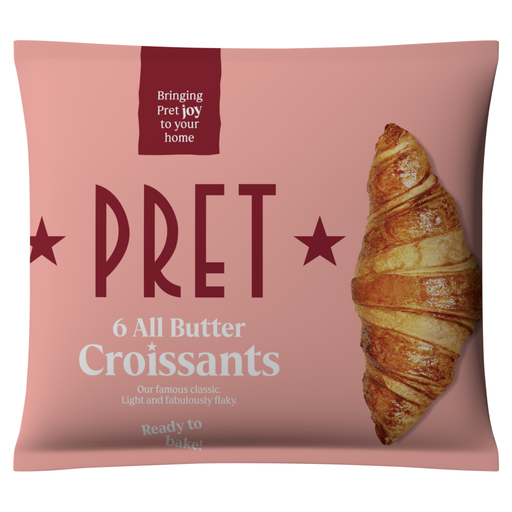 No image available
A plain frozen option for a warm breakfast when you have freezer space and an oven.
Made with 24% French-sourced butter. Store at -18°C or cooler and bake from frozen for 20 minutes; do not defrost.
Contains wheat, gluten, milk and egg, and may contain nuts, sesame and soya. Confirm the pack count if you are planning for a shared breakfast.
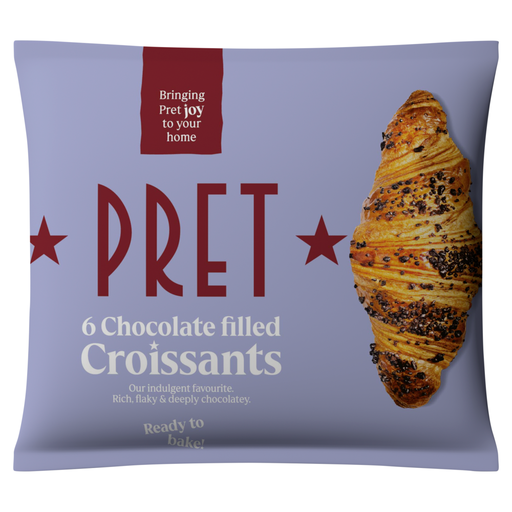 No image available
A six-croissant frozen pack for a planned sweet shared breakfast or brunch.
Chocolate-filled croissants designed to bake from frozen in approximately 22 minutes. Store at -18°C or cooler and do not defrost.
Contains wheat, gluten, milk, egg and soya. The listing states that it is not suitable for nut and sesame allergy sufferers, and the filling makes it less flexible for savoury serving.
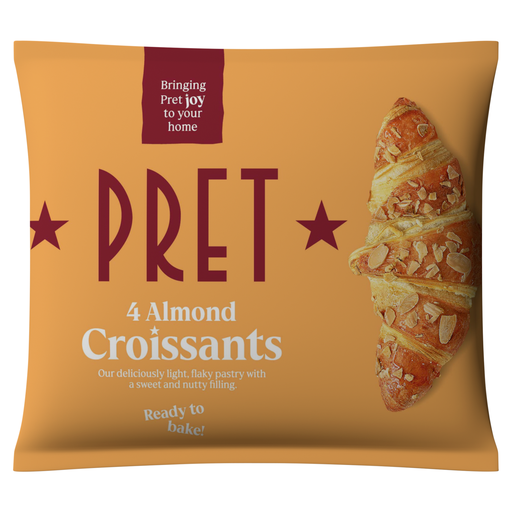 No image available
A frozen almond pastry for shoppers specifically planning a warm sweet breakfast.
Features almond filling and a flaked-almond topping. Store at -18°C or cooler and bake from frozen; do not defrost.
Contains wheat, gluten, milk, egg and almonds, and may contain other nuts, sesame and soya. Confirm the pack count if you need enough pastries for a shared breakfast.
No. Croissants are more usefully chosen by format, pack count, recipe, filling, storage and preparation instructions. “Thick cut” is not a standard descriptor in the supermarket croissant listings covered here.
Choose an individual pastry if you will eat it promptly on your own, a four-pack for a small shared breakfast, or frozen bake-at-home croissants if you have freezer space and can use an oven. The right choice depends on how many people you are feeding and how soon you plan to eat them.
Not necessarily. Examples from Waitrose, Lidl and Joybuy list wheat or gluten, milk and egg, while some products also include precautionary allergen wording. Check the current package or product label every time, especially where an allergy or intolerance is relevant.
In England, Wales and Northern Ireland, the Food Standards Agency states that food businesses producing prepacked-for-direct-sale food must provide the food name and a full ingredients list with allergens emphasised. For loose counter products, allergen cross-contact information may be supplied by staff or on signs.
Follow the instructions for the individual product. Sainsbury's says its Taste the Difference four-pack can be frozen as soon as possible after purchase and within the best-before date, then used on the same day once defrosted. Do not assume the same instructions apply to another croissant.