“Thick cut” is not a standard croissant specification, so use pack count, labelled serving information and per-croissant weight where available when planning an Easter table. Multipacks suit a shared lunch when they cover the planned servings, while bake-at-home croissants suit hosts with freezer space, cooking time and enough oven capacity; check the exact pack for wheat, milk, egg and any precautionary allergen information before serving.
Who this suits
Hosts serving a shared Easter Sunday lunch
Choose enough croissants for the number of servings you plan to offer and make a practical serving plan. Retailer ranges include eight- and 10-piece all-butter packs, while some premium options are sold singly or in two-packs.
Hosts who want oven-warmed pastries
This route suits a table where you can accommodate the product’s preparation time, storage conditions and equipment requirements before serving.
Hosts catering for allergy or gluten-free needs
Check the particular pack rather than relying on the category name. Ordinary croissants commonly contain wheat, milk and egg, while some gluten-free alternatives still contain milk and egg.
What to check before buying
Plan portions first, then check preparation and dietary details on the exact product you intend to serve.
| Priority |
What to check |
Your needs |
| Portion planning |
Compare the stated croissant count with planned servings. Where shown, compare per-croissant weight or serving information. Do not treat “thick cut” as a measured size grade. |
I want enough pastries for the table without choosing a small pack intended for a few servings. |
| Recipe and format |
Check whether butter is named in the ingredients or description. Confirm whether the product is ready to serve, suitable for warming or designed to cook from frozen. |
I am looking for a traditional all-butter croissant and want the format to fit the lunch timetable. |
| Allergens and dietary requirements |
Read the full ingredient and allergen declaration on the exact pack. Check precautionary statements for nuts, sesame or soya where relevant. Confirm whether a gluten-free product also fits other dietary needs. |
Guests may need a product that avoids particular allergens, so I need to check the label rather than assume all croissants are alike. |
| Warming and storage |
Follow the stated warming or cooking instructions. For frozen products, check freezer storage, cooking time and appliance capacity before buying. |
I want pastries ready at the right time, whether that means a short oven warm-through or baking from frozen. |
Common buying mistakes
-
Treating “thick cut” as a standard quality or size claim
Croissant listings use pack count, ingredients, serving information and preparation instructions rather than a consistent thickness grade. A phrase such as “thick cut” can distract from whether the pack actually suits the number of guests.
Start with the exact pack count, then compare stated per-croissant weight or serving information where it is published.
-
Assuming an all-butter croissant suits every guest
Standard croissants commonly contain wheat, milk and egg. Filled and loose bakery products can also introduce nut, sesame, soya or precautionary allergen considerations.
Confirm each guest’s relevant dietary requirement and read the current label or request current in-store allergen information before serving.
-
Buying bake-at-home croissants without checking preparation capacity
Frozen products need freezer storage and cooking time, while appliance capacity affects whether all portions can be ready together.
Read the exact cooking instructions before purchase. The cited Asda frozen six-pack needs 14–16 minutes in an oven from frozen and must not be served raw.
-
Relying on an online product page instead of the pack at purchase
Food recipes, nutrition and allergen information can change, and store availability may vary.
Use product listings to shortlist formats, then check the physical pack’s ingredients, allergen declaration, date mark and preparation instructions before serving.
Relevant brand references
M&S
Relevant for a bakery-style all-butter croissant or a more elaborate frozen bake-at-home option for a small Easter table.
- M&S describes its 75 g in-store all-butter croissant as made with real butter for flaky, golden pastry.
- Its frozen almond-and-hazelnut croissants are a separate filled product with nut, peanut, sesame and soya allergy restrictions.
Tesco Finest
Relevant for a four-croissant premium-style all-butter pack when a modest group size is the priority.
- Tesco describes its Finest four-pack as using butter churned in France and layered dough.
- Tesco also sells a separate eight-pack all-butter product, so check the exact pack size rather than assuming the Finest line is the only group option.
Sainsbury's
Relevant for Taste the Difference butter croissants and a separately labelled gluten-free all-butter option.
- The Taste the Difference butter-croissant four-pack is listed as serving four and is best enjoyed warm.
- The Free From all-butter option is gluten free but contains butter, egg and milk ingredients.
Waitrose
Relevant for small premium servings, individual croissants and larger eight-piece all-butter packs.
- Waitrose lists an individual all-butter croissant with 29% butter, while its No.1 two-pack lists 33% butter and short oven-warming instructions.
- The No.1 product may contain nuts and lists 10.1 g saturates per croissant.
Asda
Relevant for higher-count ready-to-eat packs and a separate bake-at-home option when coverage or fresh baking matters.
- Asda’s all-butter 10-pack states 10 servings and includes warming instructions.
- Its frozen six-pack must be cooked from frozen and should not be eaten raw; the cited products contain wheat, milk and egg.
Lidl
Relevant for shoppers buying loose in-store bakery croissants rather than selecting a prepacked multipack online.
- Lidl lists an All Butter Croissant as available in store.
- Store availability can vary, and shoppers with allergies should inspect or request current allergen information.
Joybuy product options
Joybuy product options for a bake-at-home croissant route at an Easter Sunday lunch.
 No image available
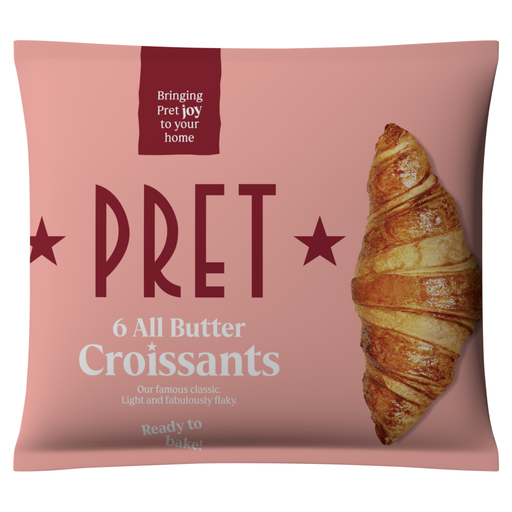
Pret A Manger Butter Croissants 330g
A bake-at-home option for serving warm croissants when freezer storage and around 20 minutes of baking time fit the lunch plan.
Stated details include 24% butter, slow fermentation and 27 folds. Contains wheat, gluten, milk and egg; may contain nuts, sesame and soya. Check the current pack for the croissant count and portion information before planning servings.
Joybuy
Frequently asked questions
Is “thick cut” a useful croissant specification?
Not as a standard retail specification for croissants. Compare the actual pack count and any labelled per-croissant weight or serving information when you want a more substantial Easter-lunch portion.
How should I choose a pack for Easter Sunday lunch?
Start with the number of servings you intend to put on the table. Current formats include two-, four-, six-, eight- and 10-croissant packs, but portion needs also depend on whether croissants are a side, starter or sandwich component.
Can I warm ready-to-eat croissants before serving?
Yes, if the exact pack gives warming instructions. The cited Asda 10-pack gives a four-minute oven-warming guide, Waitrose No.1 gives a two-to-three-minute instruction, and Tesco’s eight-pack gives four to five minutes; follow the product label you buy.
Are bake-at-home croissants suitable for last-minute serving?
They can be if you allow the stated cooking time and have suitable equipment. The cited Asda frozen croissants require 14–16 minutes in an oven from frozen and must not be eaten raw or reheated after cooking.
What allergen information must I check in the UK?
Food businesses must provide allergen information for prepacked and non-prepacked food. The Food Standards Agency and Food Standards Scotland state that food prepacked for direct sale must show the food name and full ingredients list with declared allergens emphasised; check the current product label or retailer allergen information before serving.


