Do not rely on “thick cut” when choosing croissants for a toddler: UK product listings generally provide weight, ingredients and preparation information rather than a comparable thickness measurement. Choose a plain croissant that you can portion easily, check wheat/gluten, milk and egg on the current label, and serve it as one part of a varied breakfast rather than the whole meal.
Who this may suit
Parents serving a plain pastry occasionally at home
A croissant can be portioned and served alongside other breakfast foods rather than treated as a complete toddler breakfast. The NHS suggests varied meals and breakfast ideas including porridge, lower-sugar cereal, fruit, toast fingers and egg.
Parents managing wheat, milk or egg allergens
Compare the current pack label rather than relying on the product name. The listed plain croissants contain wheat/gluten, milk and egg, and some bakery products carry precautionary statements for other allergens.
Parents needing flexible small servings
A lower-weight individual pastry or a product that can be divided after preparation can make serving easier. Individual weights are listed for some products, but “thick cut” is not a standard croissant measurement.
What to check before buying
Start with the serving format, then check allergens and preparation instructions for the exact product.
| Priority |
What to check |
Your needs |
| Portion size |
Compare the labelled per-pastry weight where available; check whether the product is ready to eat or must be baked; choose a format that can be divided easily. |
I want to adjust the amount served to my child’s appetite and pair it with other breakfast foods. |
| Allergens |
Read the ingredients and allergen declaration for wheat/gluten, milk and egg; check any precautionary trace statement; use the current label for the exact pack. |
I need to avoid ingredients or possible traces that matter for my child or their nursery or school setting. |
| Breakfast balance |
Compare saturated fat and salt on the label where supplied; consider what will be served alongside the pastry; distinguish plain pastries from filled varieties. |
I want the croissant to be one part of a varied breakfast, with suitable foods such as fruit, yoghurt or egg where appropriate. |
Common buying mistakes
-
Assuming “thick cut” means softer or more suitable for a toddler
Product listings may describe weight, ingredients or flaky texture, but they do not provide a standard thickness or cut measurement for croissants. The term does not establish an appropriate portion or texture for an individual child.
Compare the per-pastry weight and preparation state, then tear or cut a serving that suits the child instead of treating a whole regular croissant as the default portion.
-
Assuming a plain croissant is suitable for every allergy-related setting
Plain butter croissants listed by UK retailers contain wheat/gluten, milk and egg. Loose and in-store bakery products may also state possible traces of nuts, sesame, soya or other allergens.
Read the current label for the exact pack and check the individual nursery or school policy before packing food.
-
Making a buttery pastry the everyday breakfast
The listed all-butter products provide saturated-fat values per serving or per 100g. The NHS advises offering children a varied diet and not giving them too many foods high in saturated fat.
If serving a croissant, add suitable complementary foods such as fruit, yoghurt or egg where appropriate, and compare saturated fat and salt on the product label.
-
Serving frozen pastry before it is fully baked
Frozen pastry is not ready to eat. Waitrose states that flour is a raw ingredient and must be cooked or baked before eating.
Follow the exact oven instructions, allow the pastry to cool to a safe serving temperature, and do not treat ready-to-bake products as ready-to-eat.
Relevant UK croissant brand references
Sainsbury's
A prepacked plain all-butter croissant pack with four servings listed. Sainsbury's states 39g and 167kcal per croissant.
- Per-croissant nutrition and ingredients can help an adult compare individual serving size.
- Contains wheat, butter/milk and egg; Sainsbury's advises checking the label because ingredients may change.
Tesco Finest
A prepacked four-pack of all-butter croissants with a listed 61g individual serving.
- Tesco provides per-croissant nutrition and ingredient information.
- One croissant lists 8.4g saturates and contains wheat/gluten, milk and egg.
M&S
An in-store bakery all-butter croissant sold as a 75g item.
- The listing provides ingredients and nutrition information.
- M&S says its in-store bakery preparation area uses nuts, peanuts, sesame and other allergenic ingredients and cannot guarantee their absence as traces.
Waitrose
A frozen mini French butter-pastry assortment that includes mini butter croissants for portion-by-portion baking.
- The mini butter croissant component is listed as 95kcal per pastry, and frozen storage can suit households baking a few portions at a time.
- It is an assorted pastry box rather than a croissant-only pack, requires baking, and may contain soya, nuts and sesame.
Lidl
A loose in-store all-butter croissant with store-specific availability and bakery allergen information.
- Lidl identifies milk, wheat and egg for this product.
- The listing warns of possible traces of several other allergens and does not provide a comparable online weight or nutrition panel.
Joybuy product options
Joybuy product options for a home breakfast where an adult can bake a plain frozen croissant fully before serving.
 No image available
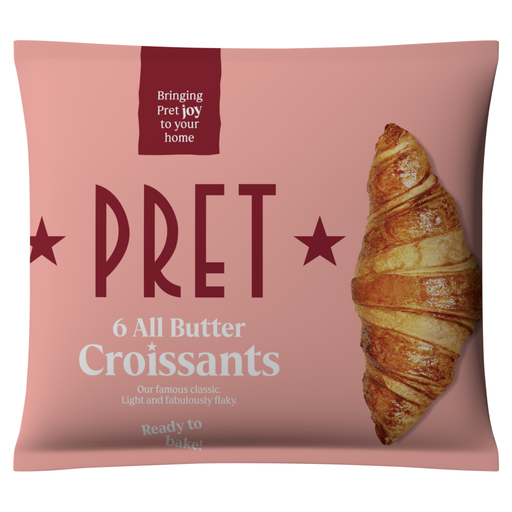
Pret A Manger Butter Croissants 330g
A plain frozen option for home breakfasts when an adult can bake the pastry fully and allow it to cool before serving.
All-butter croissants, frozen, with a stated 20-minute bake-from-frozen preparation. Contains wheat/gluten, milk and egg; it may also contain nuts, sesame and soya.
The listing does not state the number of croissants or an individual pastry weight, so portion size should be checked when serving.
Joybuy
Frequently asked questions
Are croissants suitable for a toddler breakfast?
They can be served occasionally as part of a varied breakfast if the child can manage the texture and the product allergens are suitable. The NHS suggests options including porridge, lower-sugar cereal with fruit, and toast fingers with egg or fruit, and advises not giving children too many foods high in saturated fat.
What does “thick cut” mean for croissants?
It is not a standard croissant measurement on the listed UK products. Compare the exact product’s individual weight, whether it is mini or regular sized, and whether it can be divided instead of using “thick cut” as a product filter.
Which allergens should I check on a plain butter croissant?
Check for cereals containing gluten or wheat, milk and egg first. Loose or in-store bakery products may also carry precautionary statements for other allergens, so use the current packaging or retailer allergen information for the exact product.
Do frozen mini croissants need cooking before a toddler eats them?
Yes. Follow the exact pack instructions: Waitrose states that flour in its frozen mini-pastry product is a raw ingredient that must be cooked or baked before eating, and cooking appliances can vary.


