Immediate late-night snack buyers
You want a croissant that can be eaten straight away, with optional brief warming rather than full baking. Compare each pastry’s portion nutrition and current allergen label.


For an immediate midnight snack, choose a plain ready-to-eat croissant and compare the portion on the pack before eating. Sainsbury’s cited four-pack, for example, lists 167 kcal and 4.1 g saturates per croissant; bake-from-frozen options suit a warm pastry when you can wait for cooking. A gluten-free croissant addresses wheat or gluten avoidance, but still needs an individual check for milk, egg and other relevant allergens.
You want a croissant that can be eaten straight away, with optional brief warming rather than full baking. Compare each pastry’s portion nutrition and current allergen label.
You are willing to wait and cook from frozen for a warm baked croissant. Check appliance instructions, cooking time and thawing or refreezing guidance.
You need a gluten-free croissant route, but should still check the individual pack for milk, egg and any other relevant allergens.
Start with whether you need a pastry immediately, then compare the exact pack’s portion information, ingredients and preparation instructions.
| Priority | What to check | Your needs |
|---|---|---|
| Immediate convenience or warmth | Check whether it is ready to eat; read the stated oven or air-fryer method; allow for preheating and cooking time. | I want something to eat now, so a ready-to-eat croissant is more practical. If a warm pastry matters more, I can choose frozen only when I have the appliance and time available. |
| Portion nutrition | Compare energy and saturated fat per croissant; check sugar and salt on the nutrition panel; compare the exact filled or plain product. | I want to judge the pastry I will actually eat, rather than assuming all-butter or a smaller pack means the same portion. |
| Allergens and dietary needs | Read ingredients and emphasised allergens; check may-contain statements where relevant; confirm whether gluten-free also meets your other dietary requirements. | I need the current label to match my dietary needs. Gluten-free does not by itself mean dairy-free, egg-free or nut-free. |
Portion size and recipe vary. Sainsbury’s cited plain croissant lists 4.1 g saturates per pastry, while the cited Waitrose No.1 butter croissant lists 10.1 g per pastry, so per-100-g figures alone can hide the difference in one snack.
Compare energy, saturated fat, sugar and salt per croissant on the current pack, then decide whether one pastry fits the portion you have in mind.
Frozen ready-to-bake croissants are not ready to eat. Waitrose’s cited almond croissants require 28 minutes in an oven from frozen and must be thoroughly cooked before serving.
Keep a ready-to-eat plain option for immediate snacks; choose frozen pastries when you want a warm croissant and can use the required cooking equipment and time.
Cooking also means allowing time for appliance preheating and baking.
Croissants commonly contain wheat or gluten, milk and egg. Lidl’s listed in-store item also carries possible-trace information, while M&S’s gluten-free option still contains milk and egg.
For an allergy or intolerance, read the current product label or ask staff for allergen information before buying. Do not rely on category names or dietary badges alone.
M&S offers standard all-butter, reduced-fat, filled and Made Without Wheat gluten-free croissant options.
Tesco Finest is a premium-labelled all-butter four-pack option within Tesco’s croissant range.
Sainsbury’s offers ready-to-eat all-butter croissants, including a four-pack with portion nutrition and warming instructions.
Waitrose offers ready-to-eat butter croissants alongside frozen ready-to-bake filled croissants.
Asda has a bake-from-frozen all-butter croissant route to check when planning a warm snack.
Lidl’s in-store bakery route can suit shoppers looking for a single all-butter croissant rather than a multipack.
These Joybuy options are bake-from-frozen croissants for a planned warm midnight pastry rather than an immediate snack.
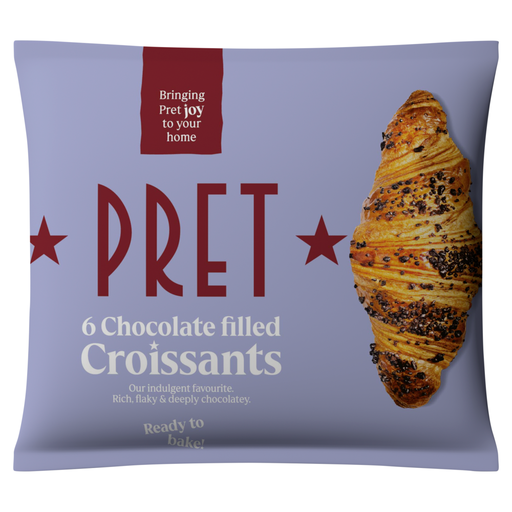 No image available
For a planned warm late-night pastry when an oven and waiting time are available.
Bake from frozen in 22 minutes. The stated nutrition is 276 kcal and 9 g saturates per baked croissant.
Contains wheat or gluten, milk, egg and soya. Do not reheat once cooled; follow the pack guidance.
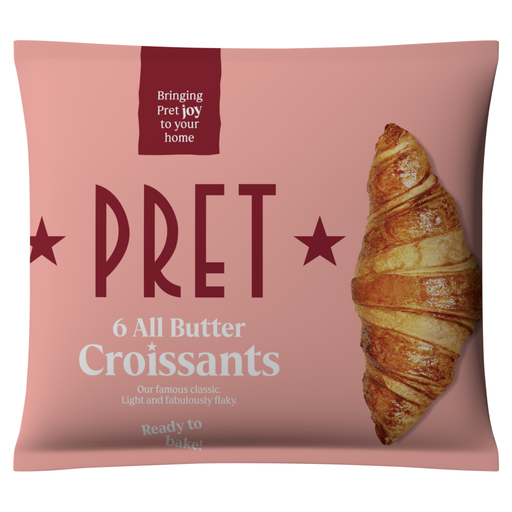 No image available
A plain warm-croissant option for shoppers who can plan ahead and bake from frozen.
The product states 24% French-sourced butter and a 20-minute frozen-bake method.
Contains wheat or gluten, milk and egg, and may contain nuts, sesame and soya. Do not reheat once cooled or refreeze after thawing.
They can be an occasional snack, but a plain all-butter croissant should not be assumed to be low in saturated fat. Sainsbury’s cited croissant lists 4.1 g saturates per pastry and the cited Waitrose No.1 croissant lists 10.1 g per pastry. The NHS identifies pastries as foods high in saturated fat, so check the portion and current nutrition label against your own dietary needs.
Yes, if the exact pack permits it. The cited Sainsbury’s all-butter croissant is ready to eat and gives instructions for 4 minutes in a 180°C oven or 3 minutes at 150°C in an air fryer; Waitrose No.1 gives a 2–3 minute oven warm-up. Follow the instructions on the product you buy, as recipes and appliance guidance vary.
No. Gluten-free addresses gluten or wheat only. M&S’s cited Made Without Wheat croissant contains butter or milk and egg, so check ingredients, emphasised allergens and any may-contain statement on the current pack.
Food businesses must provide allergen information for food they sell. GOV.UK guidance for England, Northern Ireland and Wales, and Food Standards Scotland guidance, state that the 14 allergens must be declared when present as ingredients. For a serious allergy, use the current pack or ask staff before buying rather than relying on an online listing.
Follow the exact pack instructions. Sainsbury’s cited four-pack advises cool, dry storage and an airtight container after opening; it may be frozen within the best-before date, then fully defrosted and used within 24 hours without refreezing. M&S’s cited gluten-free pack advises eating within two days after opening.