Who this suits

Parents packing an occasional nursery lunch treat

For parents who want to include a plain croissant sometimes but need to make it part of a fuller lunchbox with protein and fruit or vegetables, rather than use it as the whole meal. NHS and NHS-linked packed-lunch guidance supports building a lunch from more than one food group.

Parents managing gluten or other allergens

For families who need to distinguish gluten-free from allergen-free, check ingredient labels and confirm the nursery’s own allergy arrangements before packing.

Busy families comparing bakery and freezer options

For households choosing between ambient bakery packs, in-store bakery items and freezer-ready croissants, where storage and morning preparation time matter alongside the product label.

What to check before buying

Start with the nursery’s policy and the child’s dietary needs, then decide whether a croissant is an occasional addition to a balanced lunch or whether another lunchbox base better fits the routine.

Priority What to check Your needs
Allergens and nursery rules Read the current ingredient and allergen label; check for wheat or gluten, milk and egg; review precautionary allergen wording where relevant. I need to know that the specific product works for my child and is allowed by the nursery before it goes into the lunchbox.
A balanced lunch structure Use a croissant as one starchy item, then add an appropriate protein food and fruit or vegetables. Consider a wholegrain bread, pitta or wrap when a wholegrain base is the aim. I want a lunch that contains more than pastry and can vary across the week. NHS lunchbox guidance recommends choosing wholegrain where possible.
Saturated fat information Compare nutrition labels on like-sized products and check saturated fat per croissant or per 100 g. Treat reduced-fat wording as a comparison with the named brand product, not as a complete nutrition judgement. I want to avoid treating an all-butter pastry as a nutritionally neutral substitute for bread.
Storage and preparation Check whether the pack is suitable for freezing, whether baking is required and how long it takes. Make sure a baked item can cool before packing. I need an option that can be stored, prepared and packed without turning a nursery morning into a rush.

Common packing mistakes

  • Treating a croissant as the whole nursery lunch

    A pastry alone does not provide the range of food groups described in NHS-linked early-years packed-lunch guidance. The all-butter examples from Tesco, Sainsbury’s and Waitrose also show high saturated-fat labels per item.

    If you pack a plain croissant, add a child-appropriate protein item and fruit or vegetables, and vary the lunchbox base across the week.

  • Assuming all-butter means suitable for every child

    Conventional croissants from the listed retailers contain wheat or gluten, milk and egg, while some packs also carry precautionary warnings for nuts or other allergens.

    Read the current packet rather than relying on the product name, then follow the nursery’s written allergy policy before packing.

  • Assuming gluten-free means allergen-free or nutritionally lighter

    Sainsbury’s gluten-free all-butter croissant contains butter, egg and milk, and its label lists 8.3 g saturated fat per croissant.

    Choose a gluten-free product for gluten avoidance, then check every other relevant allergen and the full nutrition label.

  • Building the plan around a temporary price or bakery counter item

    A locally available pack can differ from the one used in a previous lunch routine, especially where an in-store bakery range changes.

    Confirm the exact pack in store and keep a freezer option or another wholegrain lunchbox base available for planned lunches.

Relevant supermarket croissant brands

M&S

A UK Foodhall route with standard all-butter, reduced-fat and Made Without croissant lines for shoppers seeking a particular dietary or freezer-oriented format.

  • Its standard 160 g all-butter pack is listed as suitable for freezing and contains wheat or gluten, butter or milk and egg.
  • M&S says its reduced-fat version has 30% less fat than its own all-butter croissants; this is a relative brand comparison, not a low-fat claim.

Tesco Finest

A premium own-label all-butter four-pack for shoppers who value a light, flaky style and online nutrition details.

  • Tesco describes the croissants as made with French-churned butter and gives an individual serving size of 61 g.
  • The label lists wheat, milk and egg, with 8.4 g saturated fat per croissant.

Sainsbury’s

A retailer offering conventional Taste the Difference butter croissants alongside a gluten-free all-butter alternative.

  • Its Free From option is described as gluten-free and suitable for coeliacs.
  • The conventional pack contains wheat flour, butter, milk and egg; the gluten-free option still contains butter, egg and milk.

Waitrose

A retailer with ambient, counter-style and frozen all-butter croissant options, including an eight-pack for home baking.

  • The frozen eight-pack is ready to bake and is listed as taking 20 minutes from frozen.
  • Its single all-butter croissant lists wheat, milk and egg and may contain nuts. Waitrose advises people affected by allergy or intolerance to choose prepacked ranges with packaging allergen details.

Asda

An input-listed supermarket with a bake-from-frozen all-butter croissant product page.

  • Check the live pack or product page for current ingredients, allergens, nutrition and preparation instructions before buying.

Lidl

An in-store bakery route for shoppers able to buy locally and confirm current counter allergen information.

  • Lidl’s current product page lists milk, wheat and egg.
  • It also warns of possible traces including nuts, sesame and soya, and asks shoppers to see in store for price information.

Joybuy product options

Joybuy product options for planned, occasional nursery lunches where frozen storage and bake-at-home preparation suit the household routine.
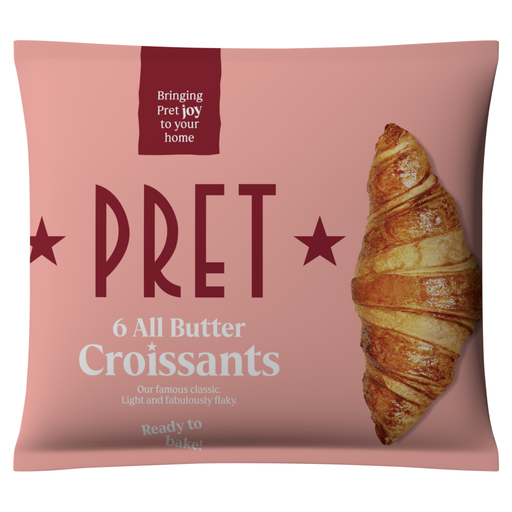
Pret A Manger Butter Croissants 330g

Pret A Manger Butter Croissants 330g

For planned occasional lunches when there is time to bake and cool the croissants before packing.

Frozen storage; bake from frozen for 20 minutes. The product lists 24% butter and 15 g saturated fat per 100 g once baked.

Contains wheat or gluten, milk and egg, and may contain nuts, sesame and soya; check these against the child’s needs and nursery policy.

Joybuy

Frequently asked questions

Are croissants suitable as an everyday nursery lunch main?

Not as the main everyday lunch base. NHS-linked guidance recommends including foods from different groups in a lunchbox and avoiding foods high in fat, salt and sugar; use a croissant occasionally with protein and fruit or vegetables.

Do ordinary croissants contain gluten?

The ordinary all-butter examples from M&S, Tesco, Sainsbury’s, Waitrose and Lidl contain wheat or list wheat as an allergen. Check the current pack because recipes and allergen information can change.

Is a gluten-free croissant automatically suitable for every child with food allergies?

No. Sainsbury’s gluten-free croissant is described as suitable for coeliacs, but its ingredients include butter, egg and milk. A gluten-free claim addresses gluten, not every allergen or a nursery’s cross-contact policy.

Do England’s School Food Standards decide what a parent can pack for nursery?

No single UK-wide rule is established by those standards for a parent-packed nursery lunch. The Department for Education guidance covers food and drink provided in state-funded schools in England, so check the specific nursery’s packed-lunch and allergy policy.

Should an allergy-sensitive child have a loose bakery croissant or a prepacked one?

Where allergen information is essential, a prepacked product with a current ingredient and allergen label is usually the clearer option, subject to the child’s clinical advice and nursery policy. Waitrose advises customers affected by allergy or intolerance to choose prepacked ranges because packaging gives allergen details.