One-person office-lunch buyers
Choose an individual pastry or a two-pack when you need one ready-to-eat lunch without leaving most of a multipack open at home. Marks & Spencer lists a 75 g individual croissant, while Waitrose lists a two-pack.


Choose an individual croissant or a two-pack when one or two office lunches are needed without keeping an opened multipack at home. A croissant loaf suits sliced, filled lunches, while frozen ready-to-bake croissants require freezer space and enough time to bake and cool them before work.
Choose an individual pastry or a two-pack when you need one ready-to-eat lunch without leaving most of a multipack open at home. Marks & Spencer lists a 75 g individual croissant, while Waitrose lists a two-pack.
A two- or four-pack can work when both people will eat the croissants promptly. A product with freezing instructions gives more flexibility for unused portions.
A croissant loaf is relevant when you want a sliced base for a savoury or sweet filling rather than a whole pastry. Check the pack for ingredients, storage instructions and expected slicing before buying.
Start with the number of lunches you are planning, then decide whether you need a ready-to-eat pastry, a sliced loaf or a product that can be baked at home.
| Priority | What to check | Your needs |
|---|---|---|
| Pack size and leftovers | Check whether the product is sold individually or in a two-, four-, six- or eight-piece format. Follow its storage and freezing instructions, including any date limit for freezing. | For an occasional lunch, I want only the amount my household can eat or freeze under the pack instructions. |
| Morning preparation | Confirm whether the croissant is ready to eat, needs warming, or is raw frozen dough that must be fully baked. Allow time for cooling before packing. | I need a lunch that fits my morning routine rather than a pastry that still needs oven preparation before work. |
| Allergens and dietary needs | Read the exact product label for wheat or gluten, milk, egg and precautionary allergen statements. Check any free-from designation on the current pack. | I need to avoid a product that is unsuitable for the person eating the lunch, including differences in cross-contact wording. |
| Recipe and nutrition details | Compare nutrition using the stated serving size as well as per-100 g information. If considering a reduced-fat product, check the comparison stated on that specific pack. | When nutrition matters for my lunch choice, I want to compare the actual portion rather than relying on the words all-butter or reduced-fat. |
A larger pack only helps when the remaining croissants will be eaten or frozen correctly after opening.
Match the pack count to planned lunches, and choose a freezable product only if you can freeze it in time and use it later.
Unused pastries can lose quality if they are not eaten or stored according to the pack instructions.
A croissant loaf is a sliced format, so it does not provide the same portioning or lunch experience as a conventional whole croissant.
Choose a loaf for sliced, filled lunches. For a straightforward pastry lunch, look for individual, two-pack or four-pack whole croissants.
Conventional all-butter croissants can contain wheat, milk and egg, while precautionary statements for nuts and other allergens vary between products and retailers.
Read the current label or in-store allergen information for the exact product rather than relying on another retailer's listing.
Frozen dough may need full baking, frozen storage and careful handling after thawing before it can be packed for work.
Bake it fully at home, cool it appropriately for packing and follow the product's thawing and storage instructions.
A thawed product may not be suitable for refreezing when the pack instructions say otherwise.
Relevant for individual bakery croissants, packaged all-butter packs, reduced-fat variants and frozen ready-to-bake croissants.
Relevant for a four-pack all-butter option for households that can use or freeze several pastries.
Relevant for whole croissants in several pack sizes and for a separate croissant loaf format.
Relevant for standard four-packs, a No.1 two-pack and individual fresh croissants.
Relevant for an Asda Bake From Frozen All Butter Croissants listing.
Relevant for an in-store all-butter croissant option rather than a fixed-size online multipack.
Joybuy product options for planned office lunches where you have freezer storage and time to bake croissants at home before packing them.
 No image available
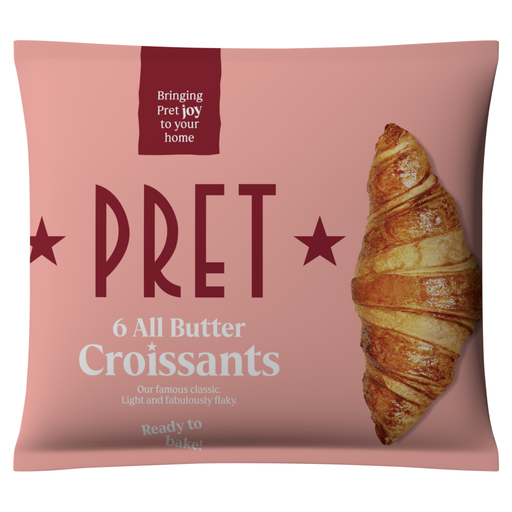
A frozen option for a household able to plan and bake croissants before an office lunch.
The product description states 24% butter, slow fermentation and 27 folds. It requires baking from frozen for about 20 minutes.
Check the current pack for the number of croissants and whether portions can be separated for single-portion baking. Contains wheat/gluten, milk and egg; may contain nuts, sesame and soya.
 No image available
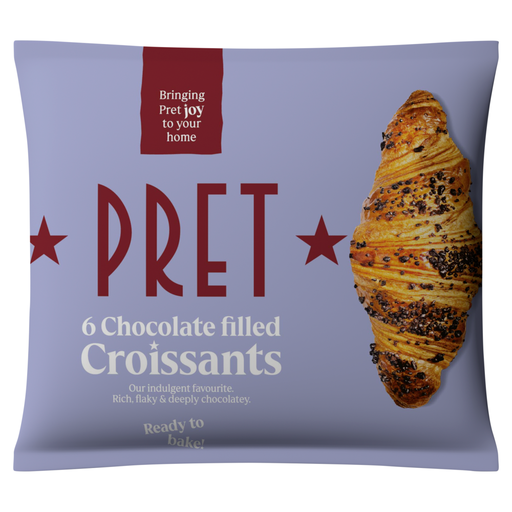
A sweet frozen pastry option for planned packed lunches rather than a plain croissant for savoury fillings.
The six-croissant pack has chocolate filling and dark-chocolate decoration. It requires baking from frozen for 22 minutes, checking that it is piping hot, then cooling before serving.
Contains wheat/gluten, milk, egg and soya. It is not suitable for nut or sesame allergy sufferers.
No. A croissant loaf is a separate sliced format. Sainsbury's lists St Pierre 380 g Croissant Loaf separately from whole croissant packs, so choose it when you specifically need slices for fillings.
An individual croissant is the most direct option for one lunch because it avoids opening a multipack. A two-pack can suit two planned lunches, while a four-pack works when two people will eat it promptly or the pack permits freezing.
Only if the exact pack says it is suitable for freezing and you follow its stated deadline. Tesco Finest and Waitrose list their relevant four-packs as suitable for freezing, while frozen ready-to-bake croissants have separate storage and thawing rules.
Usually no. The Tesco, M&S and Waitrose conventional all-butter examples contain wheat or gluten, milk or butter, and egg. Check the current label of any gluten-free or wheat-free product against all allergy needs.
No. Use the current physical pack or in-store ticket as the final check, because recipes, nutrition and allergen information can change. This is especially important for bakery products with cross-contact warnings.