Who these croissant formats suit

One- or two-person breakfast households

Choose an actual two-pack when you want enough plain croissants for breakfast without opening a larger multipack. Tesco lists a two-pack, and Waitrose No.1 offers a two-croissant pack; Tesco's 380 g croissant loaf is a different loaf-style format.

Weekend breakfast planners with freezer space

This route suits you if you can store pastries frozen, use an oven and allow time for cooking. Waitrose's frozen eight-pack is cooked from frozen in 18–20 minutes, while M&S identifies its frozen option as raw and requiring baking.

Shoppers managing an allergy or intolerance

Use current product-specific ingredient and allergen information rather than assuming that a plain croissant is suitable. Several cited products contain wheat, milk and egg, while bakery-counter items can carry trace-allergen risks.

What to check before buying

Start with the number of people eating, then decide whether immediate serving, freezer storage or oven baking fits the breakfast you are planning.

Priority What to check Your needs
Pack size and leftovers Check the croissant count, net weight and best-before date. Compare two-packs before considering a 380 g croissant loaf. Read the freezing instructions for the exact pack. A two-pack suits a breakfast for one or two without opening a larger format. If I choose four or more pastries, I need a realistic plan to share, freeze or use them.
Ready now or bake at home Confirm whether the product is ready to eat, frozen or raw. Allow the stated oven time; Waitrose's frozen eight-pack requires 18–20 minutes from frozen. I want pastries ready for breakfast now, or I have freezer space and enough time to bake them fully before serving.
Recipe and fat comparison Compare the ingredient list and nutrition information for the exact variant on the same serving basis where available. Treat reduced-fat wording as a product-specific comparison. I may prefer a conventional all-butter recipe, or I may want to compare M&S's reduced-fat option only with the M&S all-butter croissants named in its claim.
Allergen information Read the current pack label for cereals containing gluten, milk and egg. Check may-contain statements and ask for current information when buying loose bakery-counter items. If I am serving someone with an allergy or intolerance, I need the information for that exact product rather than relying on the words “plain” or “all butter”.

Common buying pitfalls

  • Treating “half loaf” as a standard croissant format

    Tesco lists a 380 g croissant loaf, but that loaf-style product does not automatically solve a small-household portioning problem.

    Choose by the actual number of croissants, net weight and storage instructions. For breakfast for one or two, compare two-packs before choosing a croissant loaf.

  • Buying a larger pack without a storage plan

    Four- and eight-piece packs can work for repeat breakfasts, but storage periods and defrosting instructions differ between products.

    Decide before buying whether remaining pastries will be shared, frozen or eaten before the best-before date, then follow the instructions on that pack.

    Unused pastries can be wasted or lose quality when they are not frozen and used according to the pack instructions.

  • Assuming frozen croissants are ready to eat

    Frozen croissants need freezer storage and full oven cooking; M&S explicitly describes its ready-to-bake product as raw.

    Choose frozen products only when you have freezer capacity and enough preparation time. Check the cooking instructions before breakfast rather than after serving.

  • Relying on the product name instead of current allergen information

    Plain croissants commonly contain wheat, milk and egg, and some products also carry warnings for nuts, sesame or soya.

    Read the latest physical pack label or request current in-store allergen information. For severe allergy or intolerance, do not assume that a bakery-counter pastry is equivalent to a prepacked product.

Relevant supermarket brand references

M&S

M&S offers packaged all-butter croissants, an eight-piece frozen ready-to-bake option and a reduced-fat all-butter alternative for UK shoppers.

  • Its 160 g all-butter product is suitable for freezing, while its frozen eight-pack is intended for baking.
  • M&S says its reduced-fat version has 30% less fat than its own all-butter croissants; this is not a comparison with other supermarkets. Its cited products also carry allergy suitability warnings.

Tesco / Tesco Finest

Tesco's croissant category includes standard two-, four- and eight-packs, alongside a Tesco Finest four-pack.

  • The standard two-pack is directly relevant to a one- or two-person continental breakfast.
  • Tesco also lists a 380 g St Pierre Croissant Loaf, which is a distinct loaf-style product rather than evidence of a half-loaf croissant option.

Sainsbury's

Sainsbury's offers standard and Taste the Difference all-butter four-packs for sharing, repeat breakfasts or freezing.

  • Its standard four-pack gives clear guidance to freeze within the best-before date, use within one month, defrost fully and use within 24 hours.
  • Neither cited product is a two-pack, so portion size matters when buying for only one or two people.

Waitrose

Waitrose offers an individual counter-style all-butter croissant, a No.1 two-pack and a frozen eight-pack for bake-at-home breakfasts.

  • The No.1 two-pack is directly suited to a breakfast for two, while the frozen eight-pack can be baked from frozen in 18–20 minutes.
  • Fresh service-counter products may be affected by traces of allergens from other products, so current product information matters for allergy or intolerance.

Lidl

Lidl offers an in-store bakery all-butter croissant for shoppers buying pastries during a store visit.

  • This is a convenient individual bakery route when you do not need a packaged multipack.
  • The cited product lists milk, wheat and egg and warns of possible traces including nuts, sesame and soya. Lidl also states that other allergens cannot be guaranteed absent from its bakery range.

Joybuy croissant options

Joybuy options for planned continental breakfasts where freezer storage and oven baking are available. These are bake-at-home pastries rather than directly portioned ready-to-eat two-packs.

Pret A Manger Butter Croissants 330g

Pret A Manger Butter Croissants 330g

Suitable for a planned breakfast when you have freezer space and time to bake croissants from frozen.

States 24% butter and a 20-minute bake from frozen; keep frozen at -18°C or colder. The pack count is not stated, so check it before buying for one or two people.

Contains wheat/gluten, milk and egg, and may contain nuts, sesame and soya.

Joybuy
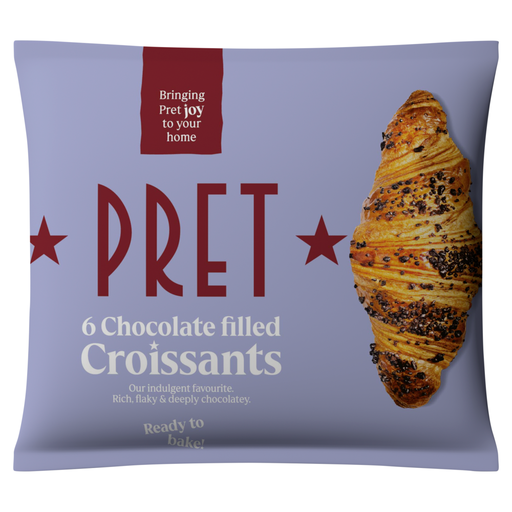
Pret A Manger 6 Chocolate Filled Croissants 420G

Pret A Manger 6 Chocolate Filled Croissants 420G

A frozen option for a planned breakfast or brunch when a chocolate-filled pastry suits the occasion.

Contains six croissants and requires 22 minutes of oven cooking from frozen. It is a flavoured pastry rather than a plain all-butter croissant, and the six-piece pack is larger than a directly portioned breakfast for one or two.

Contains wheat/gluten, milk, egg and soya; it is not suitable for nut and sesame allergy sufferers.

Joybuy

Frequently asked questions

Is a croissant loaf a smaller half-loaf choice for a one- or two-person breakfast?

Not as a confirmed small-format option. Tesco lists St Pierre Croissant Loaf at 380 g, so treat it as a loaf-style alternative rather than a verified half-loaf or two-person portion. An actual two-pack is the clearer small-format route where available.

Can frozen ready-to-bake croissants be served without cooking?

No. M&S describes its cited frozen croissants as raw and requiring baking. Waitrose also says its frozen croissants must be cooked, with 18–20 minutes from frozen; follow the instructions on the exact pack because appliances vary.

Can unused ready-to-eat croissants be frozen?

Follow the instructions for the exact product. Sainsbury's standard four-pack says to freeze within the best-before date, use within one month, defrost fully and use within 24 hours. M&S's cited 160 g ambient product gives a three-month frozen-storage period when frozen by the date mark.

Are plain all-butter croissants suitable for wheat, milk or egg allergy?

Do not assume so. The cited Waitrose and M&S all-butter croissants contain wheat, milk and egg. UK Food Standards Agency guidance includes cereals containing gluten, eggs and milk among regulated allergens, so check the current pack or retailer information each time.

Is a bakery-counter croissant as suitable as a prepacked croissant for someone with a severe allergy?

Do not presume that it is. Waitrose says fresh service-counter items may be affected by traces of allergens from other products, while prepacked foods provide product-specific packaging information. Ask for current allergen information before choosing a loose bakery item.