Who this suits

Older shoppers wanting an easy breakfast pastry

For people buying croissants that can be eaten straight away, portioned simply and frozen for later if needed. Sainsbury’s describes its multipack as ready to eat and suitable for freezing before its best-before date.

Retirement households comparing meal quality

For shoppers choosing an occasional pastry while checking nutrition labels rather than assuming that all-butter or reduced-fat wording determines how often it suits the wider diet. The British Dietetic Association advises adults over 65 to maintain a nutrient-rich diet.

Households needing clear allergen information

For anyone avoiding wheat or gluten, milk, egg, nuts, sesame or soya. A current prepacked label is particularly useful where allergy control matters; the Food Standards Agency requires full ingredient labelling for prepacked for direct sale food.

What to check before buying

Start with the serving method, then check the exact pack for nutrition, allergens and whether “seeded” describes a croissant rather than another bakery item.

Priority What to check Your needs
Serving and storage Check whether the croissants are ready to eat or frozen; read warming, freezing and best-before instructions; confirm that freezer space is available if needed. I want a pastry that can be served with little preparation and stored sensibly when not all of the pack will be eaten at once.
Fat and saturates Compare fat and saturated fat per 100 g and per croissant; check the intended portion; read reduced-fat claims alongside the nutrition panel. I want to see the actual nutrition figures rather than assume a reduced-fat all-butter croissant is suitable for frequent eating.
Allergen information Read ingredients, allergen declarations and any “may contain” statement; use the current physical pack; consider a prepacked product where details need to be clear. Clear confirmation of wheat or gluten, milk, egg, nuts, sesame and soya matters before the croissant is eaten.
Seeded option Confirm that the item is genuinely a croissant; check the seed type, ingredients and allergen declaration; do not use a seeded loaf as evidence of a seeded pastry. I am looking for seeds in the croissant itself, not simply a bakery product with “seeded” in its name.

Common buying mistakes

  • Treating “reduced fat” as a general nutrition claim

    A relative fat reduction does not remove the need to consider saturated fat, portion size and the rest of the meal. M&S lists 12.3 g of saturates per 100 g for its reduced-fat all-butter croissants.

    Compare the exact panel per croissant and per 100 g, then decide whether it fits the intended portion and individual dietary advice.

  • Buying frozen croissants when oven use is impractical

    Pret frozen croissants need storage at -18°C or colder and oven cooking from frozen. The instructions say to ensure they are piping hot and not to reheat them after cooling.

    Choose ready-to-eat croissants when cooking is a barrier, and reserve frozen products for households able to manage freezer storage and heating instructions.

    Unused frozen pastries can create food waste if storage, baking time or safe heating cannot be managed.

  • Assuming plain croissants suit the same allergies

    The researched products commonly contain wheat, milk and egg, while precautionary allergen statements differ between products. Fresh-service handling can also involve trace-contact considerations.

    Read the current pack’s ingredients and allergen statement each time, and choose clearly labelled prepacked products where allergy control is essential.

  • Using “seeded” as a shortcut for a preferred croissant

    The word does not establish wholegrain content, fat content, allergen profile or suitability for a particular diet. Seeded bakery goods are not automatically comparable with seeded croissants.

    Confirm that the product is a croissant, then check the ingredient list, seed type, allergen declaration and nutrition panel.

Relevant brand references

M&S

A relevant option for shoppers comparing standard all-butter croissants with a reduced-fat all-butter alternative.

  • M&S states that its reduced-fat all-butter croissants contain 30% less fat than its own all-butter croissants.
  • That comparison is limited to M&S’s own product; the listed item has 12.3 g saturates per 100 g and is marked unsuitable for nut, peanut, sesame and soya allergy sufferers.

Tesco Finest

A four-pack all-butter supermarket option for shoppers who do not want a larger multipack.

  • Tesco lists a Finest All Butter Croissants four-pack.
  • Check the exact pack label for current nutrition, allergens and storage information before buying.

Sainsbury’s

A ready-to-eat all-butter multipack route with published warming and freezing guidance.

  • Its eight-pack is listed as ready to eat and can be frozen before the best-before date.
  • The product lists 4.1 g saturates per croissant, so convenience does not replace checking how it fits the wider meal.

Waitrose

A retailer offering single fresh all-butter croissants alongside larger own-label packs.

  • Waitrose lists wheat, milk and egg for its single all-butter croissant.
  • Waitrose advises shoppers affected by allergy or intolerance to select prepacked ranges where packaging provides allergen information.

Asda

An input-listed supermarket option with a frozen all-butter croissant product page.

  • Asda lists a Bake From Frozen All Butter Croissants product.
  • Check the exact pack or product page for current nutrition, allergens and preparation instructions.

Lidl

An in-store bakery route for shoppers able to check local availability and the current store label.

  • Lidl describes its all-butter croissant as suitable for vegetarians and available in store.
  • The listing includes milk, wheat and egg, with possible traces including nuts, sesame and soya.

Joybuy product options

Joybuy product options for the frozen bake-at-home croissant route. None of the selected products is identified as a seeded croissant, so check ingredients and allergen information if seeds are the deciding feature.
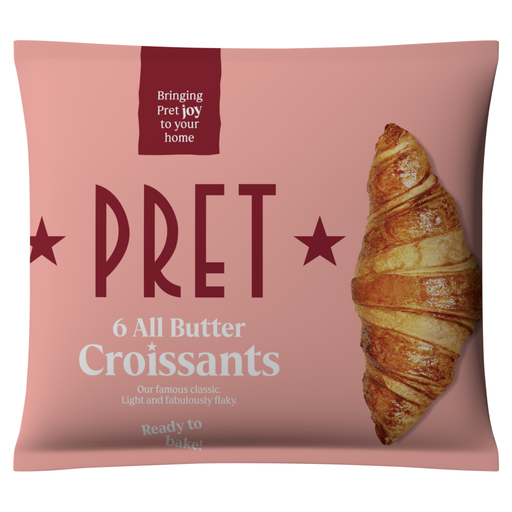
Pret A Manger Butter Croissants 330g

Pret A Manger Butter Croissants 330g

A frozen bake-at-home option for households able to use an oven and store food at -18°C or cooler.

Requires baking from frozen. Contains wheat or gluten, milk and egg, and may contain nuts, sesame and soya. No seeds are stated in the ingredients. The listed nutrition gives 15 g saturates per 100 g once baked.

Joybuy
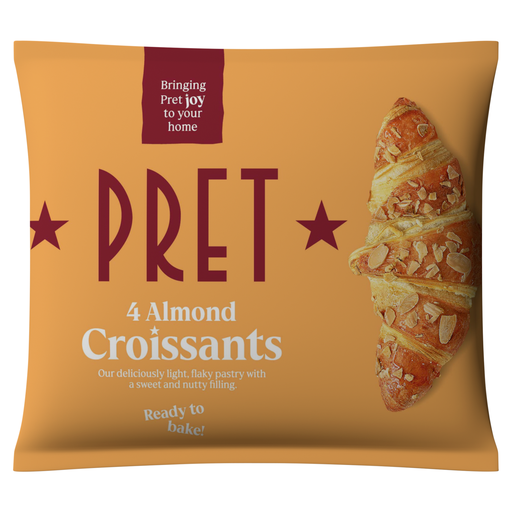
Pret A Manger Almond Croissants 280g

Pret A Manger Almond Croissants 280g

A frozen croissant for households seeking an almond-filled bake-at-home pastry rather than a plain or seeded croissant.

Requires freezer storage at -18°C or cooler and baking from frozen. Contains almonds, wheat or gluten, milk and egg; may contain other nuts, sesame and soya. Check the physical pack for cooking instructions.

Joybuy
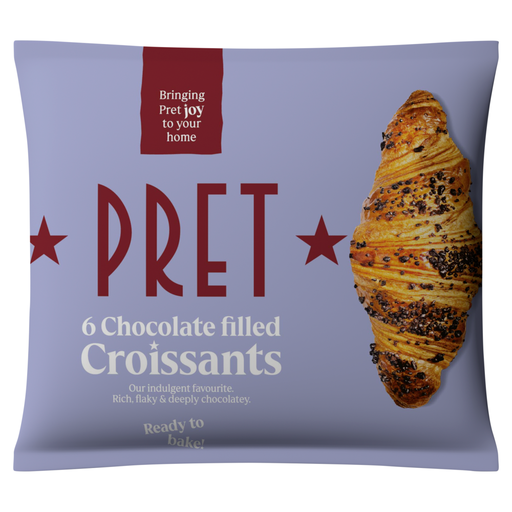
Pret A Manger 6 Chocolate Filled Croissants 420G

Pret A Manger Chocolate Filled Croissants 420G

A frozen bake-at-home option for households that want a chocolate-filled croissant and can manage oven preparation.

Requires freezer storage at -18°C or cooler and a 22-minute oven bake from frozen. Contains wheat or gluten, milk, egg and soya, and is stated as unsuitable for nut and sesame allergy sufferers. No seeds are stated.

Joybuy

Frequently asked questions

Are croissants suitable as an everyday breakfast for a retirement-age household?

Croissants are generally better treated as an occasional pastry than as the nutrient-rich part of breakfast. The British Dietetic Association advises adults over 65 to maintain a nutrient-rich diet, while needs for fat, salt, sugar and fibre are likely to remain similar to those of younger adults.

Can a reduced-fat croissant be assumed to be low in saturated fat?

No. M&S’s claim is specifically 30% less fat than its own all-butter croissants, while its listed reduced-fat product has 12.3 g saturated fat per 100 g. Compare the nutrition panel and the portion you expect to eat.

Which croissant is easier when the buyer does not want to use an oven?

A ready-to-eat product is the practical choice when oven use is not wanted. Sainsbury’s eight-pack is listed as ready to eat, whereas Pret frozen croissants require cooking from frozen.

How should a shopper manage allergy risk with croissants?

Check the current pack rather than relying only on the product title. Plain all-butter croissants can contain wheat, milk and egg, and some products carry precautionary statements for nuts, sesame or soya; Waitrose suggests prepacked ranges where packaging provides allergen information.

Are seeded croissants a standard supermarket option?

They were not established as a consistently comparable supermarket subcategory in the researched listings. Specialist bakeries can make seeded croissants, but confirm the exact product, ingredients and allergens locally rather than substituting a seeded loaf.