What to check before choosing
Start with the service setup, then confirm allergen information and compare nutrition on the same measurement basis.
| Priority |
What to check |
Your needs |
| Service format |
Check whether the product is ready to eat or must be kept frozen and baked. Follow the exact heating, thawing and refreezing instructions. |
I need a croissant that fits the freezer space, oven access and staff time available at the outlet. |
| Allergen information |
Confirm the current label for wheat or gluten, milk and egg, plus any nut, sesame or soya statements. Keep information matched to the exact SKU and selling format. |
I need to give customers accurate allergen information before they buy or are served a croissant. The Food Standards Agency covers prepacked and non-prepacked food in England, Northern Ireland and Wales; Food Standards Scotland sets the equivalent requirement in Scotland. |
| Saturated fat comparison |
Compare saturated fat per 100g before comparing per-croissant figures. Check whether a reduced-fat claim names its comparison product. |
I want to compare like for like rather than assume that all-butter or reduced-fat wording describes the whole nutritional profile. NHS guidance classifies more than 5g saturates per 100g as high. |
Joybuy frozen-bake croissant options
These Joybuy options are frozen croissants for outlets able to use freezer storage and oven baking. They represent the frozen-bake route rather than ready-to-eat or reduced-fat alternatives.
 No image available
Pret A Manger Butter Croissants, 330g
A plain frozen croissant option for an outlet with freezer storage and an oven.
- Store at -18°C or cooler and bake from frozen; the stated baking time is 20 minutes.
- Contains wheat, gluten, milk and egg; may contain nuts, sesame and soya.
- Lists 15g saturates per 100g.
Joybuy
 No image available
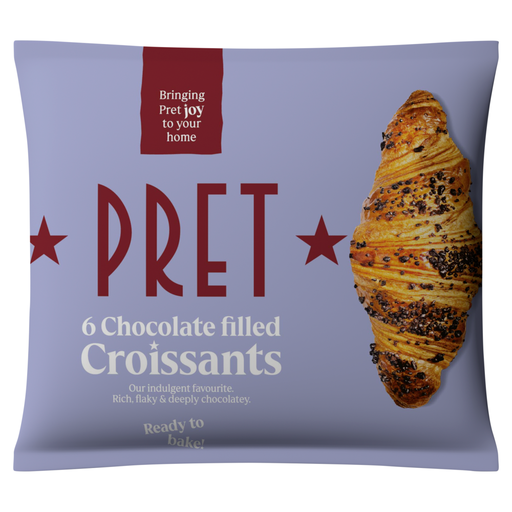
Pret A Manger 6 Chocolate Filled Croissants, 420G
A chocolate-filled frozen option for a site that can bake and communicate its more specialised allergen profile.
- Store at -18°C or cooler and bake in the oven; the stated method takes about 22 minutes.
- Contains wheat, gluten, milk, egg and soya; it is not suitable for nut or sesame allergy sufferers.
- Lists 15g saturates per 100g.
Joybuy
 No image available
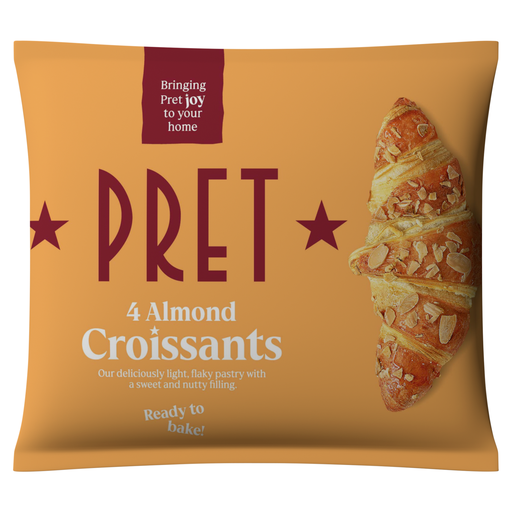
Pret A Manger Almond Croissants, 280g
An almond-filled frozen option for an equipped outlet with robust allergen communication.
- Keep frozen at -18°C or cooler and bake for fresh service; do not refreeze after thawing.
- Contains wheat, gluten, milk, egg and almonds; may contain other nuts, sesame and soya.
- Lists 12g saturates per 100g.
Joybuy
Questions about selling and serving croissants
Does a UK shop have to provide allergen information for croissants?
Yes, when it operates as a food business. The Food Standards Agency says businesses in England, Northern Ireland and Wales must provide allergen information for both prepacked and non-prepacked food; Food Standards Scotland gives the same core requirement for Scotland, including making loose-food information available before purchase.
Are standard all-butter croissants suitable for people avoiding wheat, milk or egg?
The cited M&S, Sainsbury’s, Waitrose and Lidl products are not, as they identify wheat or gluten, milk and egg. Decide allergy suitability from the current label for the exact product and, for loose bakery goods, the outlet’s current allergen controls.
When does a frozen ready-to-bake croissant make more sense than an ambient pack?
Choose frozen ready-to-bake croissants when the shop can maintain frozen storage, bake as instructed and manage thawing correctly. The cited M&S product is raw, requires -18°C storage and must not be refrozen after thawing, while the cited Sainsbury’s pack is ready to eat and can be warmed if desired.
Does reduced fat mean a croissant is low in saturated fat?
No. M&S states that its cited reduced-fat croissant has 30% less fat than its all-butter croissants, but it still lists 12.3g saturated fat per 100g. NHS guidance classifies more than 5g saturates per 100g as high.


