Buying priorities
Start by confirming the description you need to use, then match the format to the shop’s preparation capacity and food-information process.
| Priority |
What to check |
Your needs |
| Allergen clarity |
Check the current ingredient list and allergen declaration for the exact item. Keep accessible allergen information for prepacked and non-prepacked food. Review every new delivery or pack revision. |
I need staff to identify the allergens in the croissant actually being served, rather than relying on its name. Food Standards Agency guidance for UK retail and catering businesses requires allergen information to be provided. |
| Preparation and service |
Confirm freezer capacity, oven access, cooking time and expected batch size. For ready-to-serve packs, check pack count and practical storage before service. |
I need a format that fits the shop’s staffing and service pattern. Frozen pastry can suit smaller planned batches, while ready-to-serve packs reduce preparation at the counter. |
| Sourdough wording |
Look for the exact descriptor ‘sourdough croissant’ on the current pack or supplier specification. Treat sourdough bread and slow fermentation as separate descriptions. |
I need customer-facing wording that matches the item supplied. An all-butter or slow-fermented croissant should not be described as sourdough unless the exact product confirms it. |
Format comparison
This composite list orders the supplied products by operational fit: frozen formats for planned batch baking, ready-to-serve packs for simpler service, and individual bakery items for low-volume or occasional supply. It is not a quality ranking, and none of these products is identified here as a verified sourdough croissant.
| Rank |
SKU name |
Main specifications |
Recommendation reasons |
Supplier or platform |
| 1 |
Waitrose Frozen 8 Butter Croissants 440g |
Frozen butter croissants; eight pieces; 440 g. |
Consider for planned batch baking where freezer storage and an oven are available. |
Waitrose |
| 2 |
Pret A Manger Butter Croissants 330g |
Frozen; cooking required; bake from frozen in 20 minutes. |
Consider where staff can follow frozen storage and cooking instructions for timed service. |
Joybuy |
| 3 |
Tesco Finest All Butter Croissants 4 Pack |
All-butter croissants; four-pack. |
Consider for straightforward ready-to-serve purchasing where on-site baking is not wanted. |
Tesco |
| 4 |
Lidl All Butter Croissant |
Individual all-butter in-store bakery croissant. |
Consider for occasional or low-volume supply when local stock and current allergen information can be checked. |
Lidl |
Joybuy product options
Joybuy product options for a retirement-shop offer using frozen croissants that are prepared on site. None of the listed products is explicitly described as a sourdough croissant.
 No image available
Pret A Manger Butter Croissants 330g
For shops with freezer and oven capacity that want to bake croissants for planned service.
Frozen all-butter croissants with 24% French-sourced butter; bake from frozen in 20 minutes. Requires storage at -18°C or cooler and contains wheat or gluten, milk and egg. It is not described as sourdough.
Joybuy
 No image available
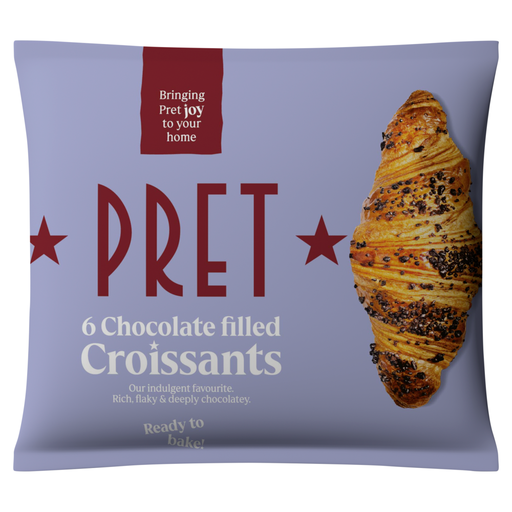
Pret A Manger 6 Chocolate Filled Croissants 420G
For a frozen, sweeter filled-pastry option where hot-service controls are already in place.
Six frozen butter croissants with chocolate filling and topping; cook from frozen for 22 minutes. Do not reheat once cooled. Contains wheat or gluten, milk, egg and soya; check the current pack for nut and sesame suitability information.
Joybuy
 No image available
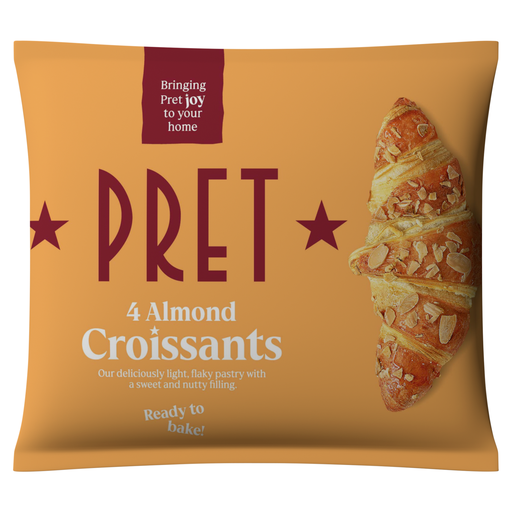
Pret A Manger Almond Croissants 280g
For a prepared-on-site almond-filled option when the shop can manage the additional allergen considerations.
Frozen croissants with almond filling and flaked almonds. Store at -18°C or cooler and bake before service; do not reheat once cooled. Contains wheat or gluten, milk, egg and almonds, with other possible allergens to check on the current pack.
Joybuy
Frequently asked questions
Can I describe a slow-fermented all-butter croissant as a sourdough croissant?
No. Use ‘sourdough croissant’ only when the exact supplier specification or current pack explicitly supports that description. A slow-fermented, all-butter description is not the same as a sourdough claim.
What allergen information must a UK retirement shop provide when serving croissants?
In England, Northern Ireland and Wales, retail and catering food businesses must provide allergen information for prepacked and non-prepacked food and drink, according to Food Standards Agency guidance. Use the current label or verified supplier information for the exact item served, as croissants can contain cereals containing gluten, milk and egg.
Why does storage and handling need extra care in a retirement shop?
Food Standards Agency MyHACCP guidance identifies older adults as more susceptible to foodborne illness, so storage, preparation and service controls need to match the product. Choose frozen croissants only when staff can follow their stated storage and cooking instructions.
Are frozen croissants automatically the better choice for a small shop?
No. Frozen croissants suit shops with reliable freezer storage, cooking equipment and staff processes. Ready-to-serve multipacks can be a more practical choice when immediate service and lower preparation demands matter more.


