Who this is for

Parents packing an occasional premium pastry lunch

For parents choosing a ready-to-eat all-butter croissant as one element of a varied school lunch, rather than as the full meal. Local-authority packed-lunch guidance supports building the rest of the lunch around other food groups.

Parents managing school food-allergy rules

For families who need to check wheat or gluten, milk, egg, nut warnings and their school’s own restrictions before adding a croissant to a lunchbox. The Department for Education says food brought from home should be considered in school allergy-safety arrangements.

Families needing a gluten-free pastry option

For households selecting a croissant for a child with coeliac disease or a medically necessary gluten-free diet, while still checking ingredients that include milk or egg.

Buying priorities for school lunchboxes

Start with the school’s allergy rules and the exact pack label, then check whether the croissant is ready to eat and how it fits into the rest of lunch.

Priority What to check Your needs
Allergen suitability Read the current individual pack for highlighted ingredients and may-contain statements. Check wheat or gluten, milk, egg and any school-specific restrictions before packing. I need the label to match my child’s dietary needs and the school’s allergy arrangements.
Ready-to-eat practicality Choose an ambient ready-to-eat croissant for a straightforward lunchbox. Frozen products need storage, baking and cooling before they can be packed. I want food that will be ready safely at lunchtime without creating a difficult school-morning routine.
Whole-lunch balance Compare saturated fat per croissant, not only per 100 g. Pack the pastry alongside a protein food and fruit or salad rather than relying on it alone. I want an occasional pastry item that sits within a more varied lunch.
Pack size and value Compare the regular per-item price, pack size and whether the household will use the croissants promptly. Treat loyalty offers as time-limited and check the current terms. A smaller pack may suit occasional lunches, while a larger pack can make sense when several portions will be used soon.

Common packed-lunch pitfalls

  • Treating an all-butter or premium label as a balanced lunch

    Tesco, Sainsbury’s and Waitrose retailer labels for the reviewed premium croissants identify high saturated-fat amounts per croissant. A croissant alone also does not provide the varied lunch pattern described in local-authority packed-lunch guidance.

    Use a croissant occasionally and build the rest of the lunch around a protein food, fruit or vegetables and an appropriate drink.

  • Checking only whether a croissant is gluten-free

    A gluten-free croissant can still contain milk and egg, while wheat-based products can carry may-contain statements that matter for a child’s allergy or the school’s policy.

    Read the current pack label for ingredients, allergen emphasis and may-contain wording, then follow the school’s own allergy policy.

  • Buying a frozen bake-at-home croissant without allowing for preparation

    Joybuy’s reviewed Pret product is frozen and needs cooking from frozen, so it is not interchangeable with a ready-to-eat ambient croissant for an early school morning.

    Choose a ready-to-eat product unless you can reliably bake and cool the pastry in advance while following its storage instructions.

    Frozen storage, oven time and safe cooling add preparation steps before the croissant can go into a lunchbox.

Relevant supermarket brand references

Waitrose No.1

Waitrose No.1 offers a two-croissant pack prepared in France with French flour and butter churned in France, according to Waitrose & Partners.

  • The reviewed pack lists 33% butter and clear per-croissant nutrition information.
  • It may contain nuts, so check whether this is compatible with the child’s needs and the school’s policy.

Tesco Finest

Tesco Finest is Tesco’s premium-tier all-butter four-pack, described by Tesco as using French-churned butter and flaky layers.

  • Tesco provides ingredient, nutrition and storage information for the reviewed pack.
  • The product contains wheat, milk and egg, and Tesco’s label lists 8.4 g saturates per croissant.

Sainsbury's Taste the Difference

Sainsbury’s premium all-butter range includes a standard four-pack and a separate gluten-free all-butter two-pack.

  • The standard pack is ready to eat, while the Free From version is described by Sainsbury’s as suitable for coeliacs.
  • The standard product contains wheat, milk and egg; the gluten-free version still contains milk and egg.

M&S

M&S offers all-butter croissants in its UK Foodhall range and describes the recipe as an authentic-style option.

  • The reviewed four-pack lists 29% butter.
  • M&S flags the product as unsuitable for people with nut, peanut, sesame or soya allergies.

Lidl

Lidl lists an in-store All Butter Croissant rather than a verified premium-range multipack in the available product information.

  • Lidl provides an availability status and allergen information for the reviewed item.
  • Its label lists milk, wheat and egg alongside a broader may-contain list, so the pack needs checking before a school lunch.

Joybuy product options

Joybuy product options for this topic: frozen butter croissants for households able to bake and cool them before a school packed lunch.
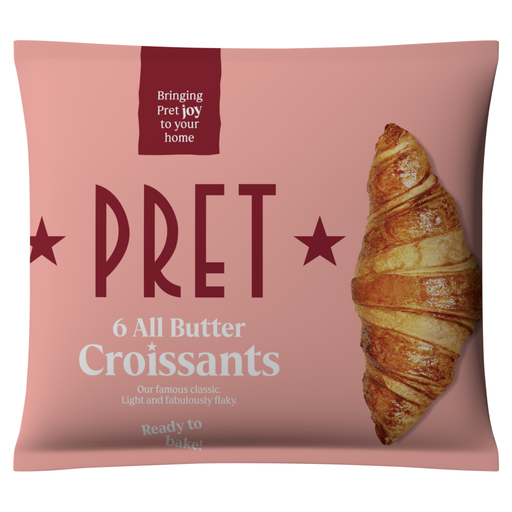
Pret A Manger Butter Croissants 330g

Pret A Manger Butter Croissants 330g

A frozen option for households that can prepare the croissants before the school day.

330 g pack. Bake from frozen in 20 minutes.

Keep frozen at -18°C or cooler; do not defrost, and do not refreeze once thawed. Check the current pack label and the school’s allergy policy before packing.

Joybuy

Frequently asked questions

Can I pack a premium all-butter croissant as the whole school lunch?

No. It is better treated as one component of lunch rather than the whole meal. Local-authority packed-lunch guidance recommends a varied lunch with a starchy main food, protein, fruit or salad and a drink, so add suitable foods in line with your child’s needs and school policy.

Do all-butter croissants contain gluten?

Do not assume that an all-butter croissant is suitable for a gluten-free diet. The reviewed Tesco Finest and Sainsbury’s Taste the Difference products list wheat, milk and egg, so always check the exact pack before packing it.

Is there a gluten-free premium option?

Yes. Sainsbury’s Free From All Butter Croissants x2 are described by Sainsbury’s as gluten-free and suitable for coeliacs. They still contain butter, egg and milk powder, so they will not suit every allergy profile.

Does a school food rule automatically ban a croissant from home?

Not automatically. The School Food Regulations cover food and drink provided to children at maintained schools in England, while Department for Education allergy guidance says packed lunches should be considered in a school’s allergy-safety approach. Check your school’s current packed-lunch and allergy policy before packing.

Can I send a freshly baked frozen croissant from Joybuy in a lunchbox?

Only if you can bake it, cool it appropriately and meet the school’s lunchbox rules. Joybuy’s Pret butter croissants need cooking from frozen, require freezer storage at -18°C or below and are not ready to eat straight from the pack.