Hosts serving a mixed sweet-and-savoury spread
Choose plain croissants that can work with jam, cheese or savoury fillings, and select a pack count that reflects confirmed guests rather than committing everyone to a flavoured pastry.


Choose plain all-butter croissants when you want a flexible pastry for sweet accompaniments or savoury fillings. Match the pack format to confirmed guests and serving timing: individually wrapped packs help with staggered arrivals, while bakery and frozen options suit warm service. Check the current allergen information for the exact item before serving.
Choose plain croissants that can work with jam, cheese or savoury fillings, and select a pack count that reflects confirmed guests rather than committing everyone to a flavoured pastry.
Individually wrapped portions or a clearly counted multipack can be useful when guests arrive at different times or when unopened leftovers need to stay protected.
Inspect current on-pack allergen and precautionary information before serving. Wheat, milk and egg are common in the cited croissants, while bakery-counter cross-contact information can also matter.
Start with menu flexibility, then confirm portions, oven timing and allergen information for the exact croissants you plan to serve.
| Priority | What to check | Your needs |
|---|---|---|
| Flexible fillings | Choose an unfilled croissant if you may offer both sweet and savoury accompaniments. Check whether the recipe is all-butter or contains a fixed filling or topping. | I want guests to choose between jam, cheese, ham or other accompaniments rather than being limited to one flavour. |
| Portion format | Check the stated pack count and whether individual wrapping is included. Match the number of portions to likely eaters and serving times. | Guests may arrive gradually, so unopened portions or a clearly counted multipack would make serving simpler. |
| Warm service | Read the exact oven temperature, cooking time and frozen-handling instructions. Keep enough oven space free and follow any instruction not to reheat once cooled. | I want to serve croissants warm, but I need a format that fits the timing of the evening. |
| Allergen information | Read the current ingredients, highlighted allergens and precautionary statements on the pack or at the counter. Check for wheat, milk, egg, nuts, sesame and soya where relevant. | I need clear information for guests with allergies or intolerances before food is put out. |
Plain croissants can still contain wheat, milk and egg, and some products carry nut or wider cross-contact warnings.
Read the current allergen information for the exact pack or bakery item immediately before serving rather than relying on an older listing or ingredient assumptions.
A large pack can leave unnecessary leftovers, while small premium packs may not cover a group.
Count likely eaters, then compare the current per-piece information and pack format. Treat loyalty-card promotions as conditional offers rather than standard pricing.
Oven temperatures, cooking times, frozen handling and reheating instructions vary by product.
Keep the packaging until service is complete, follow the exact instructions and reserve oven space before guests arrive.
In-store bakery stock and local pricing can vary, which is inconvenient when food is needed for a planned event.
Confirm local availability early or choose a labelled multipack or frozen alternative with enough lead time.
A Foodhall and frozen-pastry option for shoppers considering all-butter croissants, including a Made Without Wheat line and ready-to-bake filled options.
A premium own-label route with all-butter four-packs alongside a wider Tesco croissant range.
Offers a Taste the Difference all-butter four-pack alongside a standard individually wrapped six-pack, giving hosts different portion-handling options.
A premium own-label option for smaller warm-served portions, including No.1 two-packs and all-butter eight-packs.
An in-store bakery route for buying single all-butter croissants when only a few portions are needed on the day.
Joybuy options for a world food night where frozen croissants can be baked shortly before serving. The plain option suits a mixed sweet-and-savoury spread, while the chocolate-filled option is for a clearly sweet course.
 No image available
An unfilled option for hosts who want to offer sweet accompaniments and savoury fillings from the same pastry.
Frozen all-butter croissants with 24% French-sourced butter and a stated 20-minute bake time.
Contains wheat, gluten, milk and egg and may contain nuts, sesame and soya. Keep frozen at -18°C or cooler; do not refreeze after thawing or reheat once cooled. Confirm the pack count before planning servings.
 No image available
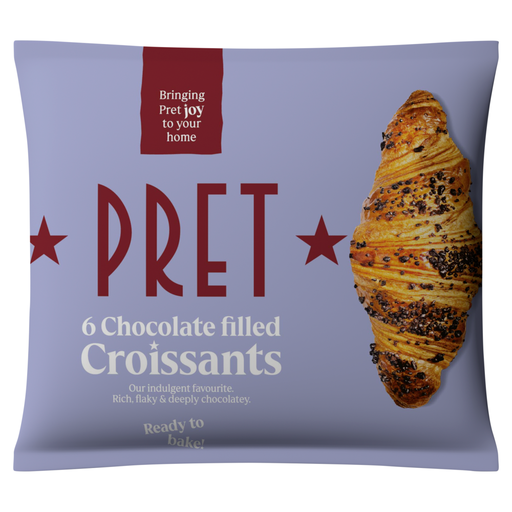
A six-piece bake-at-home option for a sweet course or guests who specifically want chocolate pastry.
Frozen butter croissants with chocolate filling and topping, with a stated 22-minute oven instruction.
The filling makes this unsuitable for savoury pairings. Contains wheat, gluten, milk, egg and soya; it is not suitable for nut and sesame allergy sufferers. Do not reheat once cooled.
It is not a standard croissant format in the cited UK retail listings. Choose by piece size, pack count, filling status and whether you plan to slice the croissants yourself for savoury sandwiches.
Yes, if you follow the exact product instructions. Sainsbury’s Taste the Difference croissants give a different warming instruction from Waitrose No.1 croissants, and Sainsbury’s says not to reheat once cooled, so timings should not be transferred between brands or formats.
Follow the instructions on the specific pack. The cited Sainsbury’s croissants include freezing and defrosting directions, but storage guidance can differ by product, so check the current label before planning ahead.
Do not assume they are. The cited products contain wheat, milk and/or egg, while M&S, Waitrose and Lidl also provide precautionary or cross-contact information relevant to nuts and other allergens. Check the exact item and ask the retailer if further assurance is needed.