
24/7 Customer Support

Free returns

Same-day & Next-day Delivery

Quality Guaranteed

Unlock Your Welcome Offers: FREE Delivery | Up to 80% OFF | Free 30-day JoyPlus trial
Download the APP
Finding an interactive toy that genuinely captures a child's imagination can be a challenge. Cry Babies dolls have become a popular choice for many UK families, known for their engaging features that encourage nurturing play. From dolls that cry real tears to those that take their first steps, the variety can make it difficult to know which one is the right fit for your little one.
As the Joybuy Product Recommendation Officer, my role is to help you navigate the options. This guide offers practical advice on what to look for in an interactive baby doll and highlights a few standout models to help you make an informed choice.
Before diving into specific models, here are a few key points to consider that will help you match a doll to your child's age and play style.
The Cry Babies range offers different interactive experiences. Some dolls focus on the core feature of being a doll that cries real tears when their baby doll with pacifier is removed, which is excellent for teaching empathy and comforting skills. Others introduce more dynamic play; for instance, a walking doll encourages a child to be active, while a feeding doll is perfect for children who love role-playing domestic scenes. Consider what type of nurturing play toys your child enjoys most.
Think about how and where your child will play with their new companion. Standard-sized Cry Babies are ideal for playtime at home. For younger children or for a doll that can be easily taken on outings, the smaller, softer 'Tiny Cuddles' series might be more suitable. These are often lighter and easier for small hands to manage, making them great dolls for toddlers. Some are also designed as collectible dolls, which can add another layer of fun.
Always check the manufacturer's age recommendation. Most Cry Babies dolls are designed for children aged 18 months and up. However, models that come with smaller accessories, such as pretend food items, may carry a warning for children under three years due to potential choking hazards. It is always recommended that play with these toys occurs under adult supervision.
Based on their features and play value, here are a few models from the Cry Babies collection that are worth considering.
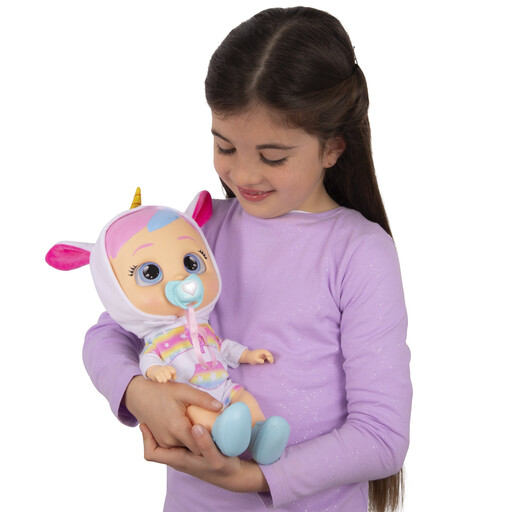
Why It Stands Out: Dreamy introduces a fantastic active play element. By holding her hands, a child can guide her as she takes her first wobbly steps. This learn to walk doll feature is brilliant for encouraging movement, balance and coordination in a fun and supportive way.
Pros:
Who is it for? This doll is ideal for active toddlers who are ready for a more dynamic and physically engaging playmate.
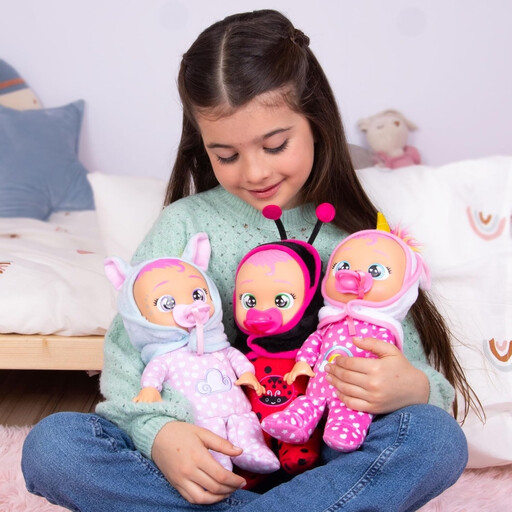
Why It Stands Out: Jenna combines the classic Cry Babies crying feature with a soft, plush body that is perfect for snuggling. Her smaller size and ability to sit up on her own make her a wonderful first interactive baby doll and a great travel companion.
Pros:
Who is it for? Perfect for younger children or as a portable friend for any child who loves soft, cuddly toys and gentle, nurturing play.
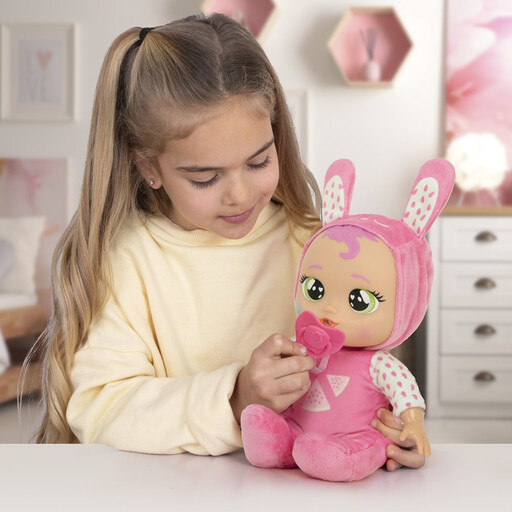
Why It Stands Out: Julie makes mealtime role-play incredibly engaging. She reacts differently to her food accessories, even spitting out food she doesn't like. This interactive feedback loop makes her a particularly fun feeding doll that teaches cause and effect.
Pros:
Who is it for? An excellent choice for children who enjoy role-playing and are fascinated by the routines of feeding and caring for a baby.
These three dolls represent just a fraction of the imaginative toys available. If you are searching for different characters, features or other gift ideas that encourage creative play, you can explore our wider collection of Baby Girl Gifts for more inspiration.
1. How do Cry Babies dolls cry real tears? The mechanism is quite simple. Most models have a small reservoir in the back of their head that you can fill with clean water. When you remove the doll's pacifier or, on some models, press a specific button, the water is released through small holes near the eyes, simulating real tears.
2. What age are Cry Babies dolls suitable for? The majority of Cry Babies dolls are recommended for children aged 18 months and older. However, it is crucial to read the packaging for each specific doll. Models with small accessories, like the 'Meal Time' series, often have a higher age rating (e.g., 3+) due to small parts that could be a choking hazard.
3. Do all Cry Babies dolls walk? No, walking is a special feature limited to specific lines, such as the 'My First Steps' range. Most Cry Babies dolls focus on other interactive features like crying, making sounds or reacting to accessories. Always check the product description to understand the specific functions of the doll you are considering.