
24/7 Customer Support

Free returns

Same-day & Next-day Delivery

Quality Guaranteed

Unlock Your Welcome Offers: FREE Delivery | Up to 80% OFF | Free 30-day JoyPlus trial
Download the APP
Living in the UK often means making the most of the space you have. Whether you're a student in a compact dorm, a renter navigating a flat-share or a young family trying to keep the living room from being overrun by toys, finding smart storage is key. A cube storage unit offers a versatile and affordable way to bring order to chaos, but with so many options, choosing the right one can feel overwhelming.
As the Joybuy Product Recommendation Officer, my role is to help you find practical solutions that fit your life. This guide will walk you through what to consider when buying a modular shelving system and highlight a few recommendations to get you started on your journey to a more organised home.
Before you add anything to your basket, a little planning can ensure you get a unit that serves you well for years to come. Here are a few key points to consider.
First, measure the area where you plan to place the unit. Note the height, width and depth available. Think about what you need to store. Are you creating a cube bookshelf for your paperbacks and textbooks? Or do you need a robust shoe storage cabinet for the hallway? The weight and size of your items will determine the ideal cube dimensions and load capacity. For heavier items, look for units with reinforced panels and a stated weight limit per cube, which is often around 10-15 kg.
Most modern cube storage is made from lightweight yet durable materials. You will commonly find plastic storage cubes made from PP (polypropylene) panels, often reinforced with a metal wire frame. These are connected by sturdy ABS plastic connectors. This type of DIY storage organiser is light enough to move easily but strong enough for everyday items. The plastic surfaces are also typically waterproof and simple to wipe clean, making them ideal for children's rooms or even as makeshift pantry shelving.
The main appeal of a cube storage unit is its adaptability. Systems with interlocking storage shelves can be assembled in various configurations to fit your space perfectly. You can build them vertically to save floor space, horizontally to fit under a window or even in a stair-step shape. This makes them an excellent investment, as the unit can be reconfigured if you move house or your needs change. Some people even use them to create a functional room divider shelf in an open-plan living area.
Here are a few options that stand out for their practicality and design, catering to different household needs.
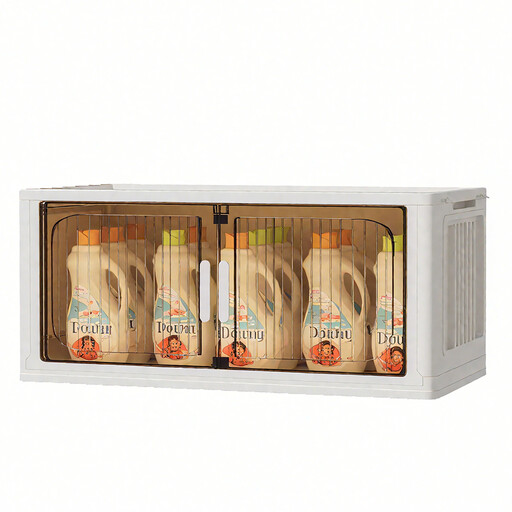
Why It Stands Out: This system moves away from the traditional open-cube design. Each of the four 48-litre boxes is a self-contained, foldable unit with a front-access door. They stack securely to form a cabinet-style tower, offering concealed storage that looks neat and tidy.
Pros:
Who is it for? This is a great choice for students, renters or anyone who needs a flexible storage solution that can be set up or packed away in minutes. It's ideal for storing clothes, linens or accessories in a bedroom or wardrobe.
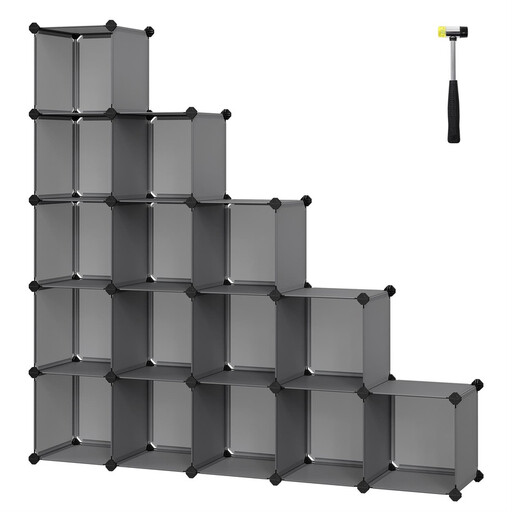
Why It Stands Out: This is a classic example of a DIY storage organiser. With 16 individual cubes, it offers immense flexibility. You can build it as a large square, a tall tower or two smaller units. The simple, interlocking design makes assembly straightforward.
Pros:
Who is it for? Anyone who enjoys a bit of DIY and needs a truly versatile system. It works equally well as a cube bookshelf in a study, a toy organiser in a playroom or a shoe storage cabinet in a hallway.
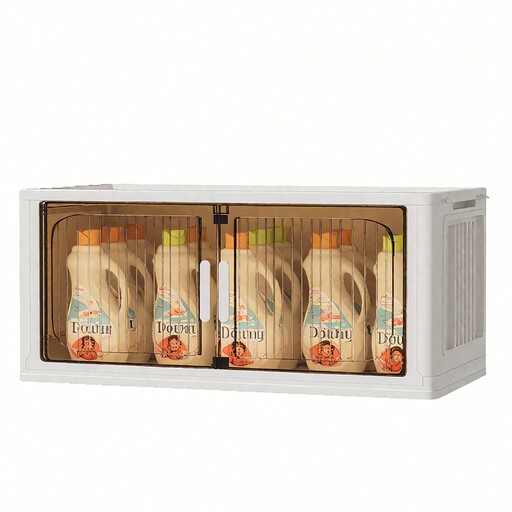
Why It Stands Out: Offering a significant step up in volume, this 84-litre set provides ample space for bulkier items. It shares the same convenient foldable and stackable design as its smaller sibling, combining large capacity with easy setup and storage.
Pros:
Who is it for? Families needing to get a handle on household clutter. It’s perfect for organising a child's bedroom, a utility room or for storing seasonal clothing.
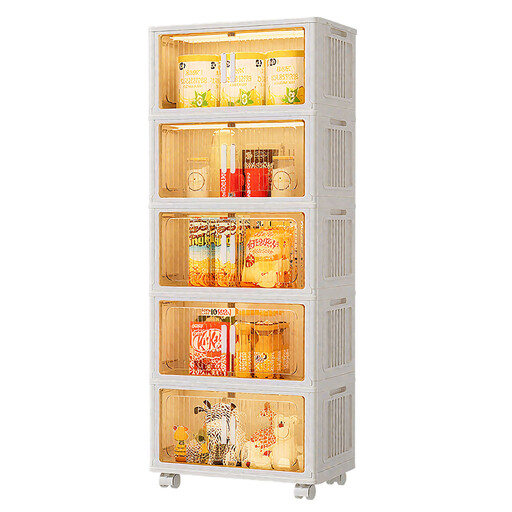
Why It Stands Out: When maximum capacity is the priority, this 107-litre set delivers. These are impressively large containers, designed to hold bulky items that won't fit in standard storage cubes, such as duvets, pillows or large winter coats.
Pros:
Who is it for? Homeowners or families who need serious storage for seasonal items, bedding or other large household goods that need to be kept organised and accessible.
While open cubes are great for access, sometimes you want to hide the clutter completely. If you prefer a cleaner look with solid doors, there are many options available.
For a more enclosed solution, explore our full range of Cube Storage with Cupboards for options that keep everything neatly out of sight.
1. How much weight can a cube storage unit hold? This varies significantly depending on the model and materials. A standard plastic storage cube with a wire frame typically supports around 10 kg. More robust, pre-assembled boxes or those with reinforced structures can often hold between 15 kg and 25 kg per layer. Always check the manufacturer's specifications and distribute weight evenly.
2. Are plastic storage cubes durable? Yes, for their intended purpose. They are generally made from PP plastic panels and ABS connectors, which are resistant to water and easy to clean. The metal frames add rigidity. While they are sturdy enough for books, clothes and toys, it's important not to overload them. For longevity, avoid using them outdoors, as exposure to direct sunlight and rain can degrade the materials over time.
3. Can you stack cube storage units? Absolutely. Stacking is a core feature of modular shelving. The interlocking connectors or purpose-built stacking grooves are designed to create stable vertical structures. For any unit that exceeds 60 cm in height, it is highly recommended to use the anti-tip devices that are often included to secure the unit to a wall for safety.