Traditional raita makers
If you want cucumber pieces rather than a puréed dip, grate or finely chop the cucumber and mix it into yoghurt by hand. Good Food’s recipe calls for lightly squeezing grated cucumber first; a blender is optional.


You do not need a blender for classic cucumber raita: Good Food’s recipe grates and lightly squeezes the cucumber before it goes into the yoghurt. If you also want to blend flavourings, a small blender keeps the appliance compact; a jug blender makes more sense when you will use it for sauces, dips or larger batches too, but takes up more space and adds washing-up.
If you want cucumber pieces rather than a puréed dip, grate or finely chop the cucumber and mix it into yoghurt by hand. Good Food’s recipe calls for lightly squeezing grated cucumber first; a blender is optional.
If you mainly want to process a small amount of flavourings, consider the size and cleaning needs of a mini blender. As a capacity reference, Bosch UK lists its MMB2111SG mini blender with a 0.6 L usable volume and dishwasher-safe parts.
If smoothies, sauces or dips are also on the menu, a jug blender gives you a larger vessel to consider. For example, nutribullet UK specifies a 1.6 L jug for its Blender 1000W; allow room to store and wash the appliance.
Decide whether the cucumber needs blending at all, then choose capacity and cleaning arrangements around the other food you plan to prepare.
| Concern | What to check | Who this matters to |
|---|---|---|
| Raita texture | Grate or finely chop and squeeze the cucumber before mixing it in. If blending flavourings, check whether the appliance has a pulse control. | I want cucumber pieces in thick yoghurt, not cucumber puréed into a loose dip. For around 50% of consumers, keeping that texture would be the primary concern. |
| Packing and cleaning | Check usable capacity and which removable parts can be washed in the way available at the cottage. | With limited room for luggage and washing-up, I want a small appliance I can put away easily; roughly 30% of consumers would put compactness and clean-up first. |
| Shared meals and other recipes | Check jug capacity and controls if you will also blend sauces, dips or larger quantities. | I need to prepare food for several people and would use the appliance beyond raita. That wider use would come first for about 20% of consumers. |
Good Food’s raita recipe grates and lightly squeezes cucumber. Blending does not remove the liquid that squeezing takes out, and it changes the cucumber’s texture.
If raita is your only planned use, start with a grater, bowl and spoon. Consider an appliance if you also want it for flavourings or other recipes.
Otherwise, it is another item to pack, store and wash during the stay.
Capacity affects how much you can prepare at once. Bosch UK specifies 0.6 L usable volume for the MMB2111SG mini blender, while nutribullet UK specifies a 1.6 L jug for its Blender 1000W.
Match the vessel to your intended batch. For a large bowl of textured raita, hand-mixing the squeezed cucumber remains an option.
A cup that is too small for the planned quantity can mean repeat batches and more washing-up.
Cleaning instructions vary by model. Bosch UK lists dishwasher-safe parts for the MMB2111SG; nutribullet UK says the components of its Blender 1000W are dishwasher-safe except for the power base.
Check the instructions for the exact model and whether the cottage has a dishwasher. Keep the power base out of water and the dishwasher unless its manufacturer explicitly permits that cleaning method.
Worth considering if you are deciding between a compact personal blender and a jug model for other holiday meals.
A reference point for comparing a small blending vessel with food-prep appliances that can chop or shred.
Relevant if you are weighing up a conventional blender against a compact food-prep appliance for several cottage recipes.
These appliances cover small-format blending, a jug blender and a hand blender with food-prep accessories. For textured cucumber raita, prepare and squeeze the cucumber separately; compare these products around the other blending or chopping you expect to do.
 No image available
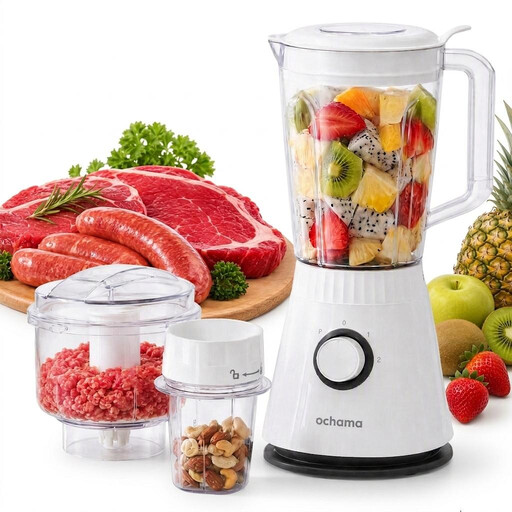
Consider its 900ml cup for small batches of blended flavourings while keeping grated, squeezed cucumber separate. Check that the cup size and available controls suit what you intend to prepare.
 No image available
The 1.5L jug is an option if you plan to blend sauces or other ingredients for a shared meal as well as make raita. The product name lists three speed settings and a spice grinder; check the exact cleaning instructions and whether you need a pulse control.
 No image available
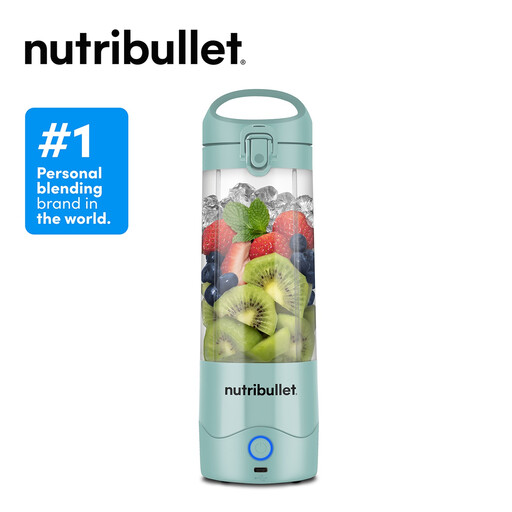
Consider this smaller portable format if packing space matters more than preparing a shared batch. Its product name lists a 475ml cup and USB-C charging cable; check the controls and intended ingredients if you want to process raita flavourings.
 No image available
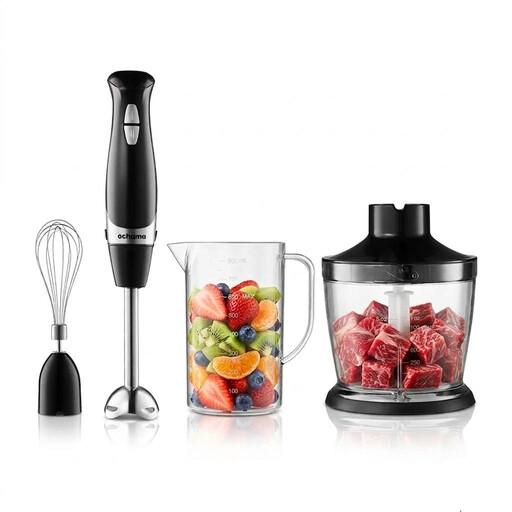
The 500ml chopper cup offers a small food-prep option without a jug blender; prepare cucumber separately if you want it textured. The product name also lists an 800ml beaker, whisk and two speed settings. Follow the appliance instructions for blade handling, cleaning and operating time.
No. Good Food’s raita recipe uses grated, lightly squeezed cucumber, which you can mix into yoghurt by hand. A blender is an optional tool for other ingredients or recipes, not a requirement for the cucumber.
Prepare the cucumber separately: grate or finely chop it, squeeze out excess liquid, then fold it into the yoghurt after processing any optional flavourings. Good Food’s recipe specifically calls for lightly squeezing grated cucumber.
The British Dietetic Association’s cucumber-raita recipe says the prepared dish can be refrigerated for up to two days and cannot be frozen. Follow the yoghurt pack’s use-by date and storage instructions if they are more restrictive.
Check the appliance, cable and plug for visible damage, and follow its instructions for use and cleaning. For products supplied in Great Britain, the Office for Product Safety and Standards explains that the Electrical Equipment (Safety) Regulations 2016 place requirements on businesses before electrical equipment is put on the market; product marking is not a substitute for checking the appliance before use.