
24/7 Customer Support

Free returns

Same-day & Next-day Delivery

Quality Guaranteed

Unlock Your Welcome Offers: FREE Delivery | Up to 80% OFF | Free 30-day JoyPlus trial
Download the APP
As a Joybuy Product Recommendation Officer, my role is to help you navigate the crowded marketplace. When it comes to a pantry staple as fundamental as culinary salt, the sheer variety can be baffling. From vibrant Himalayan pink salt to delicate sea salt flakes, it’s easy to feel lost. More importantly, it's easy to spend money on products that don't deliver on their promise or are simply wrong for your cooking style.
Before you fill your basket, let’s look at two common pitfalls that UK shoppers encounter. Understanding these will help you make a more informed choice and ensure you get real value.
To avoid these traps, focus on a few core parameters. These objective factors, not the marketing hype, will determine how the salt performs in your kitchen.
The physical form of the salt is arguably its most important feature. It dictates how it dissolves, how it feels, and where it should be used.
The source of the salt influences its mineral content and, to a subtle degree, its flavour.
Finally, consider what else might be in your salt.
Based on these practical considerations, here are a few recommendations matched to different types of cooks and their needs.
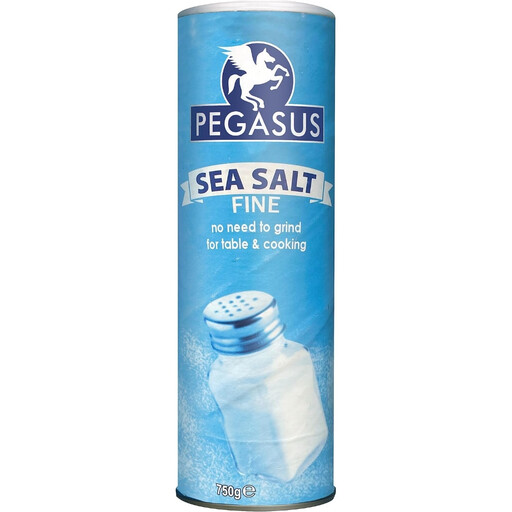
Why This Fits Their Persona: This is a workhorse salt for the busy UK kitchen. The fine texture is perfect for everything from seasoning a bolognese to baking a Victoria sponge, and the large 750g drum offers great value for families and frequent cooks.
It avoids the "gourmet" trap by focusing on function over flair. It's a pure, fine sea salt in practical packaging, delivering exactly what's needed for daily cooking without an inflated price.
Its ultra-fine texture dissolves quickly and evenly, preventing gritty results. The resealable drum protects against moisture and clumping.
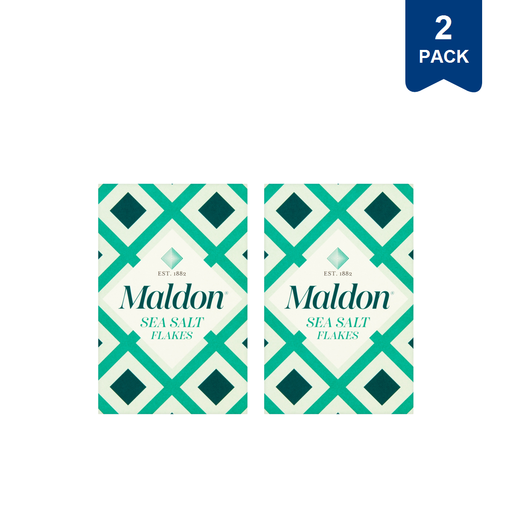
Why This Fits Their Persona: For the cook who appreciates the final flourish, Maldon's iconic pyramid flakes are a must. It's the quintessential finishing salt, perfect for adding textural contrast and a clean, briny pop to dishes right before they hit the table.
This is a case where the premium is justified by a unique physical property. It avoids the texture mismatch pitfall by being specifically designed for finishing, providing a delicate crunch that fine or coarse salts cannot replicate.
The soft, crunchy texture of the pyramid-shaped salt flakes is its main advantage. It has a clean flavour and dissolves pleasantly on the palate.

Why This Fits Their Persona: For those seeking a natural, unrefined seasoning, this Himalayan pink salt is an excellent choice. It's free from additives and retains its natural mineral content. The coarse texture makes it a perfect salt for grinders.
This product delivers on the "natural" promise. It is an unrefined rock salt, which is exactly what a health-conscious consumer is often looking for, avoiding the trap of products with misleading "natural" labels that still contain anti-caking agents.
It is an additive-free, unrefined salt sourced from ancient deposits. The coarse crystals are versatile for grinding, roasting and seasoning.
We have compiled a complete, real-time list of products that fully satisfy these strict selection criteria and UK safety regulations.
The main differences lie in processing, texture and mineral content. Table salt is typically mined from underground deposits and heavily refined to remove other minerals, leaving pure sodium chloride. It often contains anti-caking agents and may be fortified with iodine. Sea salt is produced from evaporated seawater and is usually less processed, so it can retain trace minerals that add subtle flavour and colour.
Most coarse salts are suitable for grinders, but it's worth checking the product description. The ideal salt for grinders has a dry, hard crystal structure that grinds cleanly. Some sea salts can retain a higher moisture content, which may cause them to clog certain types of grinders over time. Coarse rock salt and many coarse sea salts are specifically intended for this purpose.
Himalayan pink salt is an unrefined rock salt that contains trace amounts of over 80 minerals and elements, which give it its pink colour. While it is less processed than table salt, it is still composed of approximately 98% sodium chloride. The quantity of trace minerals is very small, so while it's a pure, natural option, it should be consumed in moderation, just like any other salt. Its primary appeal lies in its purity and lack of additives.