
24/7 Customer Support

Free returns

Same-day & Next-day Delivery

Quality Guaranteed

Unlock Your Welcome Offers: FREE Delivery | Up to 80% OFF | Free 30-day JoyPlus trial
Download the APP
Choosing cups with lids sounds straightforward until the first spill, loose lid or awkward cleaning routine appears. A cup may look suitable in a product photograph but prove inconvenient on a crowded commute, at a student desk or during a busy café service.
The main traps are rarely dramatic. They are usually small design details that affect everyday use:
Capacity is one of the most useful specifications for comparing hot and cold drink cups. In the UK, common drink sizes vary between cafés, offices and home use, so match the cup to your usual serving:
Also check the overall height and width. A cup may fit a car holder, kitchen shelf or desk area differently from another with the same capacity.
For coffee cups with lids, confirm that the listing states whether the cup is intended for hot drinks. Glass, plastic and disposable fibre-based products can have different handling characteristics. A clear plastic cup may make drink identification easy, while tempered glass can provide a reusable option with a different appearance and weight.
For glass cups with lids, inspect the listing for information about the glass type, handle, straw and cleaning instructions. Tempered glass is identified in the product name of one option below, but buyers should still follow the supplied care guidance and avoid sudden temperature changes unless the manufacturer specifically states that the product can handle them.
If you are buying for a café, caterer or workplace, check the product information for food-contact suitability and any relevant care instructions before placing a larger order. Do not assume that a decorative finish, lid or straw is suitable for every temperature or cleaning method.
The lid is often the component that determines whether a cup works in practice. Look for:
Cups with lids and straws are convenient for iced coffee and smoothies, but the straw, seal and lid opening create additional parts to wash. For disposable coffee cups with lids, check how many lids are included and whether each cup has a matching lid before relying on the set for an event.
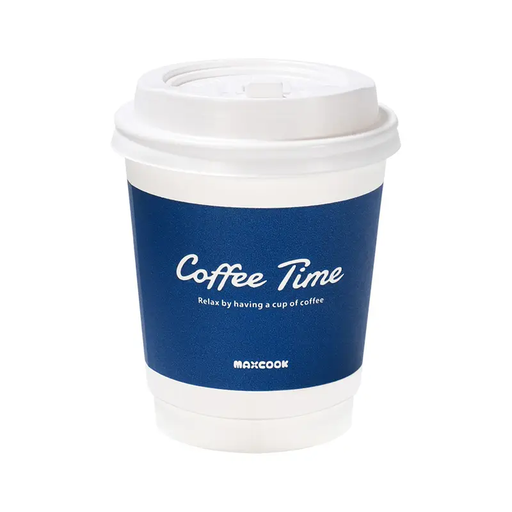
Why This Fits Their Persona: A 25-piece pack gives students, home users and occasional hosts multiple single-use cups for gatherings, packed lunches or shared refreshment service.
The listing specifies 280ml capacity, hot and cold beverage use, and matching lids, making the intended serving format clearer than a vague generic listing.
25 cups are supplied, each listed at 280ml, with lids intended for hot and cold beverages.
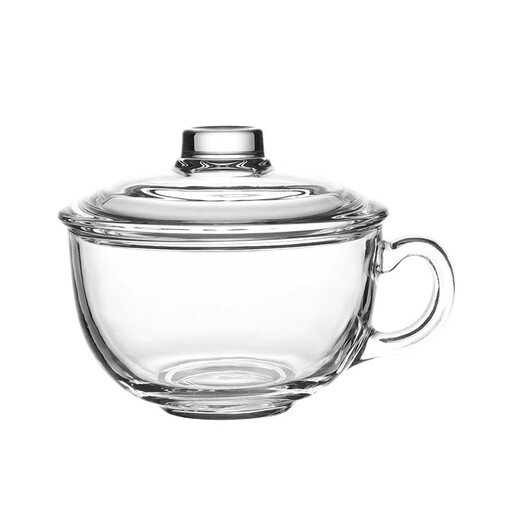
Why This Fits Their Persona: Its 520ml format is suited to home users who want a larger reusable glass cup for milk drinks, oatmeal-style servings or everyday refreshments.
The product name identifies tempered glass and a stated 520ml capacity, helping buyers compare material and serving size directly.
Tempered glass construction is specified, with a comparatively generous 520ml capacity and a lid.
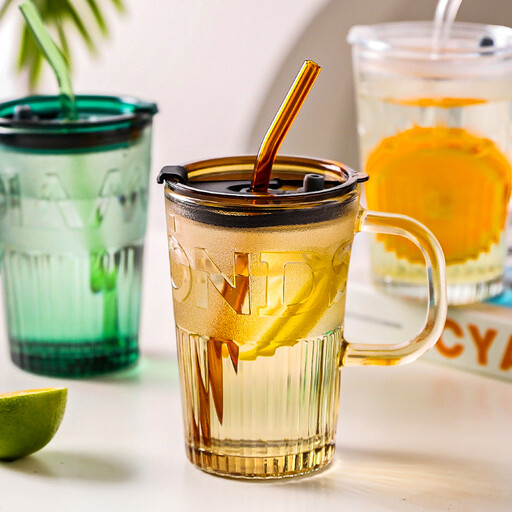
Why This Fits Their Persona: The 400ml glass tumbler is shaped around iced coffee, smoothies, juice and other cold drinks for home use or short-distance travel.
The listing clearly identifies a lid and straw, rather than leaving buyers to assume that a decorative tumbler includes drinking accessories.
400ml capacity, ribbed glass construction, lid and straw are specified for cold drinks.
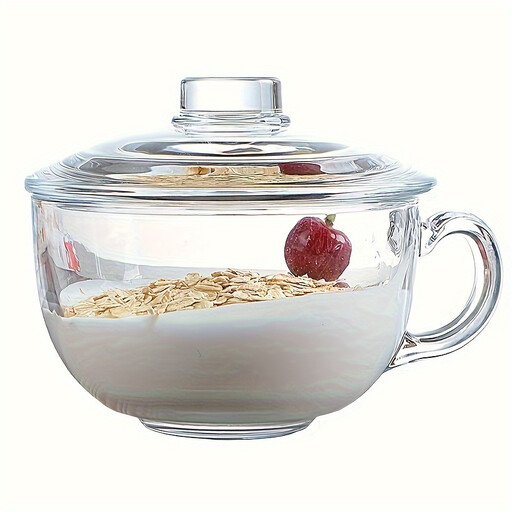
Why This Fits Their Persona: A handle can be useful for desk-based work, breakfast routines and relaxed home use where a secure grip matters more than compact storage.
The product name specifies both a lid and handle, so these practical features are part of the listed set rather than assumed from the image.
Glass cup supplied with a lid and handle in a one-set format.
We have compiled a complete, real-time list of products that fully satisfy these strict selection criteria and UK safety regulations.
Some are, but a lid alone does not guarantee that a cup can be carried in a handbag or backpack. Look for a product specifically described as leak-proof or leak-resistant, and keep the cup upright unless the manufacturer confirms otherwise. Glass options may also be heavier and more vulnerable to impact than disposable or plastic alternatives.
Reusable cups can reduce the need to buy replacements for repeated personal use, but the total cost depends on the purchase price, cleaning routine and how long the cup remains usable. Disposable cups with lids may be more economical for one-off parties, catering or large gatherings because they require no collection and washing after service.
There is no single lifespan for every cup. Reusable glass cups can remain in use while the cup, lid and accessories stay intact and suitable for their intended purpose. Inspect lids for cracks, distortion or a deteriorating seal, and replace damaged parts where compatible replacements are available. For disposable cups, treat them as single-use items unless the product information clearly states otherwise.