For small batches of dry curry powder, start with a compact electric grinder that its maker explicitly says can grind spices; a removable or separate bowl makes changing blends easier. A mortar and pestle suits very small amounts if you prefer grinding by hand, while a larger machine makes sense only if your batch size and frequency justify its storage space. Check the exact model’s dry-spice and cleaning instructions before choosing.
Who each option suits
Small-batch curry-blend cooks
If you grind modest amounts of dry whole spices and have limited storage space, look for a compact model explicitly intended for spices. Cuisinart UK describes the SG21U as suitable for small quantities; Salter lists dry spices among the EK6136’s uses.
Households that switch ingredients
If you alternate between curry spices, coffee or nuts, consider how you will keep ingredients apart and clean the bowl. Cuisinart UK lists two bowls for the SG21U, while Salter lists a removable bowl for the EK6136.
Frequent batch-prep cooks
If you regularly prepare larger quantities, a larger bowl may be worth accommodating. Nisbets lists a 650ml bowl for the Waring WSG60K, but also a 2.8kg weight, so measure your storage space before choosing that model.
What matters when choosing
For dry curry powder, decide first how much you grind at once and whether you need an electric or manual tool. Then consider how often you change ingredients and where the tool will live between uses.
| Concern |
What to check |
Who this matters to |
| Small-batch powder |
Check that the exact model is intended for dry spices and what its maker says about grinding small quantities and controlling texture. |
I want to turn a modest mix of whole spices into curry powder without assuming that a coffee-only grinder can do the job. Around 42% of consumers put small-batch powder texture first. |
| Cleaning and separation |
Look for removable or separate bowls and follow the model’s cleaning instructions; separate food-business allergen controls still matter where applicable. |
When I move between pungent spices, coffee and nuts, I want a practical way to clean the bowl and keep ingredients apart. For around 33% of consumers, that separation is the primary concern. |
| Storage and batch size |
Measure your storage space and compare it with the machine’s dimensions, weight and bowl capacity where listed. |
I make curry powder occasionally and do not want a machine sized for batches I rarely prepare. Keeping the appliance manageable matters most to around 25% of consumers. |
Buying pitfalls
-
Assuming any coffee grinder will handle curry spices
A coffee-grinder label alone does not establish that a model is intended for dry spices.
Check the exact manufacturer’s permitted ingredients. Both Cuisinart UK and Salter explicitly describe the models discussed here as suitable for spices.
-
Overlooking flavour carry-over
Strongly flavoured ingredients can affect what you grind next. Removable or separate bowls make cleaning and ingredient separation more practical, but a bowl arrangement alone is not an allergen-control system.
Follow the cleaning instructions between ingredients. If you prepare food for sale or catering, follow the allergen-management requirements applicable to your business.
-
Choosing batch capacity without checking storage
Nisbets lists the Waring WSG60K with a 650ml bowl, a 2.8kg weight and a 292mm height. Those measurements matter if you usually grind only a small amount and have limited cupboard space.
Compare your usual batch with the bowl capacity, then measure the place where you would keep the machine.
Brands to consider
Cuisinart
The SG21U is a domestic spice-and-nut grinder to consider for small dry-spice blends and for switching between ingredients.
- Cuisinart UK lists two stainless-steel grinding and storage bowls with sealed lids, and says the bowls and lids are dishwasher-safe.
- Separate bowls help organise ingredients, but cleaning remains necessary between uses; confirm which other parts can be washed and how.
Salter
The EK6136 is a domestic coffee-and-spice grinder for dry spices, herbs, nuts and coffee.
- Salter lists a 200W motor, a removable 70g bowl, one-touch operation and a transparent lid.
- Salter describes fine, medium and coarse results in terms of grinding time, rather than a fixed texture setting.
Waring
The WSG60K is a commercial-oriented option to assess if you prepare larger or more frequent spice batches.
- Nisbets lists a 650ml bowl, two bowls and continuous operation for the WSG60K.
- Nisbets also lists a 2.8kg weight and dimensions of 292 × 165 × 216mm; check whether it fits your kitchen and batch size.
Joybuy products for this use
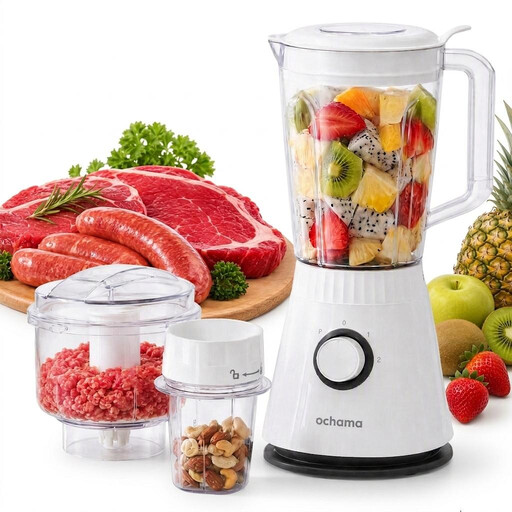
This multifunction blender lists spice grinding alongside blending and chopping. Consider it if you want one appliance for several tasks, but check its grinding arrangement against your usual dry-spice batch before choosing it for curry powder.
 No image available
ochama Multifunction Blender 600W, 1.5L
Consider this model if you want blending and chopping as well as its listed spice-grinding function. Its title states 600W, 1.5L and three speed settings, but the 1.5L figure does not establish the capacity of its spice-grinding chamber. Check the attachment used for dry spices, the quantity it can grind and its cleaning instructions if your aim is a small batch of fine curry powder.
View on Joybuy
Common questions
Can I use any coffee grinder to make curry powder?
No: check whether the exact model’s maker explicitly permits grinding spices. Salter lists spices among the EK6136’s uses, and Cuisinart UK describes the SG21U for spice blends; a coffee-only label is not enough to establish suitability.
What helps when switching between curry spices and coffee?
A removable or separate bowl makes cleaning and ingredient separation more practical. Cuisinart UK lists two bowls for the SG21U, while Salter lists a removable 70g bowl for the EK6136; follow the cleaning instructions for whichever model you choose.
Are separate bowls enough when preparing food for sale?
No. Separate bowls do not replace allergen management in food preparation for sale or catering. Food Standards Agency guidance for food businesses addresses handling allergens during preparation; check the requirements that apply to your business.
Where can I take an old electric spice grinder?
Check your local council’s electrical recycling arrangements or whether a retailer offers a take-back route. Collection options vary by location.


