Choose a 1kg ready-to-serve carton if several people will have custard, or if you can use what remains within the pack’s opened-storage period. Ambrosia and Sainsbury’s each state eight servings for their cited 1kg cartons; a 400g tin is worth considering for a smaller spread, while powder allows more control over preparation but takes time to make. If you prefer a chilled custard, check its use-by date and refrigeration instructions, and check allergens on the current pack whichever format you choose.
Who each format suits
Hosts serving a breakfast table
If several people will have custard with fruit, pastries or pancakes, start with the stated servings and decide whether you can use any remainder after opening. Ambrosia and Sainsbury’s each describe their cited 1kg cartons as containing eight servings.
Small groups planning around leftovers
A 400g ready-to-serve tin may fit better than a 1kg carton when only a few people want custard or it will be served as a topping. Check how much you intend to serve and the tin’s instructions for storing anything left over.
Breakfast cooks who want recipe control
Bird’s custard powder is a preparation-based alternative if you want to adjust the thickness or added sugar. Allow time to make it and check the directions on the pack you buy.
What matters when choosing
For a shared weekend breakfast, decide how much custard you need, whether you want to prepare it, and what will happen to any remainder. Check the exact pack for ingredient, date and storage instructions.
| Concern |
What to check |
Who this matters to |
| Enough to share |
Compare pack weight and stated portions with the number of people eating. The cited Ambrosia and Sainsbury’s 1kg cartons each state eight servings. |
If several people want a serving at the same breakfast, running short matters more than keeping the pack small. About 36% of consumers put serving enough people first. |
| Preparation time |
Check whether custard is ready to serve hot or cold, or must be made from powder. Read the heating or preparation directions for the product you choose. |
When breakfast needs to go straight onto the table, preparing and stirring custard may not fit the plan. Around 29% of consumers make ease of serving their primary concern. |
| Ingredients and nutrition |
Compare finished products per 100g and read the current ingredient and allergen declarations. For powder, account for what you add during preparation. |
If someone at the table has an allergy, or you are choosing between different recipes, the exact ingredients take priority over the pack format. About 21% of consumers put the ingredient or nutrition profile first. |
| Leftovers and storage |
Check the date marking, refrigeration requirements and instructions for the opened pack. Do not assume a chilled custard has the same storage requirements as an ambient tin. |
A large pack is less practical if the remaining custard cannot be used within its stated period. Roughly 14% of consumers make managing leftovers and storage their main concern. |
Mistakes to avoid
-
Assuming every custard comes ready to share
A 1kg carton, 400g tin, chilled custard and powder differ in serving quantity, preparation and storage. A powder also needs ingredients and preparation before it can be served.
Decide how many people you are serving and whether you want ready-to-serve custard before comparing pack sizes.
-
Comparing nutrition on different bases
Bird’s published prepared-custard figures use semi-skimmed milk; the result you make will depend on the ingredients you use. Portion figures can also refer to different serving sizes.
Compare ready-to-serve products per 100g where possible, and check the milk and sugar used when making powder.
-
Giving every opened pack the same fridge life
The cited Ambrosia and Sainsbury’s 1kg cartons specify consumption within three days of opening, while M&S Silky Smooth Custard specifies two days. The chilled M&S luxury custard has a use-by date and requires storage at 0°C to +5°C.
Plan how you will use the remainder, then follow the date and storage directions on the exact pack.
An unfinished sharing pack may have to be discarded if it cannot be used within its stated opened-storage period.
-
Assuming a richer recipe suits everyone
M&S Collection Madagascan Vanilla Luxury Custard contains milk and egg and is marked unsuitable for people with nut or peanut allergies. Its chilled storage also changes how you plan the meal.
Check the current allergen declaration for everyone you are serving before choosing a recipe for its flavour or texture.
Custard brands to consider
Ambrosia
Ambrosia offers ready-to-serve Devon Custard in a 1kg carton and 400g can, alongside a Light 1kg variant.
- Its cited 1kg cartons state eight servings and can be served hot or cold.
- The cited 1kg products contain milk ingredients. Check the current pack for allergens and follow its opened-storage instructions.
Bird’s
Bird’s custard powder is for shoppers willing to prepare a batch rather than open ready-to-serve custard.
- Bird’s published directions allow adjustments to thickness and added sugar.
- Preparation takes time. Its published nutrition for prepared custard uses semi-skimmed milk, so check the basis before comparing it with a finished product.
Tesco
Tesco lists a 400g own-label ready-to-serve custard in its tinned-custard range.
- The 400g format is a smaller-pack option to consider for a modest breakfast spread.
- Check the exact pack for ingredients, nutrition and opened-storage directions.
Sainsbury’s
Sainsbury’s lists a 1kg own-label ready-to-eat custard for a larger sharing format.
- The cited pack states eight servings and gives directions for serving hot or cold.
- Its ingredients include reconstituted skimmed cows’ milk powder; check the current allergen declaration before serving.
Asda
Asda lists an own-label ready-to-serve custard as another supermarket option.
- Read the product label for the pack size, ingredients and storage directions relevant to your breakfast.
M&S
M&S has an ambient 400g Silky Smooth Custard and a separate chilled 500g Madagascan Vanilla Luxury Custard.
- The two products offer a choice between an ambient smaller pack and a chilled recipe containing cream and egg yolk.
- The ambient product says to eat it within two days of opening. The chilled luxury product requires refrigeration at 0°C to +5°C and is marked unsuitable for people with nut or peanut allergies.
Joybuy custard selections
These selections cover a 1kg ready-to-serve carton, smaller 400g custard cans and powder for making custard. Match the format to your group size and preparation plans, then check the current pack before serving.
 No image available
Ambrosia Light Devon Custard 1kg
Consider this 1kg carton when several people will share custard or you have a plan for what remains. Ambrosia describes its Light 1kg custard as eight servings and says it can be served hot or cold; check the current pack for milk allergens and opened-storage instructions.
Joybuy
 No image available
Ambrosia Devon Custard 400g
The 400g can is worth considering for a smaller group or topping portions. Its Joybuy listing gives 130g as a one-third-can portion; use that as a quantity reference rather than assuming everyone will want the same amount. Check the pack for allergens and how to store any remainder.
Joybuy
 No image available
Ambrosia Low Fat Custard 400g
This 400g can offers a smaller-pack option when you do not want to open a 1kg carton. If its nutrition profile matters to your choice, compare the current per-100g label with the specific custard you would otherwise buy; also check how much your group will need.
Joybuy
 No image available
Ambrosia Strawberry Flavour Devon Custard 400g
Choose this 400g variant if strawberry flavour suits the breakfast menu and a smaller can fits the group. Decide how many cans you need from your intended portions, and check the current pack’s allergen and opened-storage directions.
Joybuy
 No image available
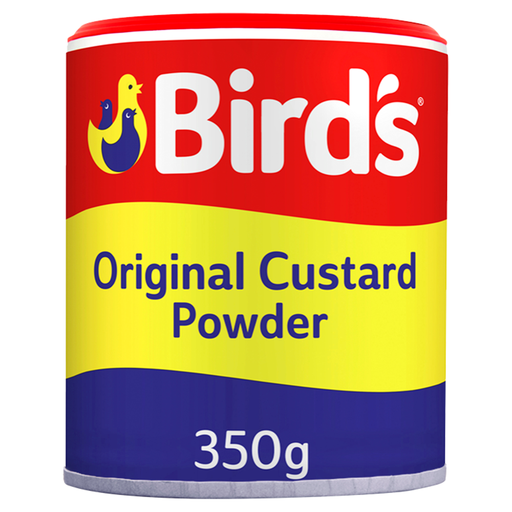
Bird’s Custard Powder 350g
Powder suits a breakfast where you have time to make custard rather than serve it straight from a pack. Check this 350g pack’s directions, required ingredients and batch yield to plan enough for your group, and read its allergen declaration before serving.
Joybuy
Questions about serving and storage
How much ready-to-serve custard should I buy for a shared breakfast?
Start with the pack’s stated servings and the portions you plan to offer. Ambrosia and Sainsbury’s each state eight 125g servings for their cited 1kg cartons; you may use less when custard is a topping and more when it is a substantial part of the dish.
Can I serve ready-to-serve custard cold?
Yes, for the cited Ambrosia and Sainsbury’s 1kg cartons: both describe hot-or-cold serving. If you warm custard, follow the heating instructions on the product you buy rather than applying another pack’s directions.
How long can I keep custard after opening it?
Follow the exact product’s refrigerated-storage instruction. The cited Ambrosia and Sainsbury’s 1kg cartons specify consumption within three days of opening; M&S Silky Smooth Custard specifies two days.
What should I check when serving custard to someone with an allergy?
Read the allergen information on the current pack before purchase and serving. The cited Ambrosia and Sainsbury’s ready-to-serve custards list milk ingredients, while M&S Madagascan Vanilla Luxury Custard contains milk and egg and is marked unsuitable for people with nut or peanut allergies.
Does a best-before date mean the same thing as a use-by date?
No. GOV.UK explains that a use-by date concerns food safety, while a best-before date concerns quality. Check both the date marking and storage directions on your custard: the cited M&S chilled luxury product has a use-by date, so do not treat it like an ambient product with best-before dating.


